
Buongiorno and welcome to RomeCabs’ Italy Blog!
When Rome comes to mind, a myriad of iconic landmarks rushes into your thoughts—the Colosseum, the Pantheon, the Vatican, and, of course, the legendary Spanish Steps. However, when it comes to this renowned staircase, a question lingers: is it truly worth a visit?
It’s a common concern among travelers who’ve heard the complaints that the Spanish Steps often become a swarming backdrop of visitors, obscuring the view and diminishing the appreciation of their significance.
Yet, the Spanish Steps are celebrated for their exceptional beauty, historical richness, and their role as a vibrant cultural nexus, making them an indispensable part of any Roman itinerary. It’s no wonder the Spanish Steps is one of the most popular Roman landmarks on our tours of Rome.
In this blog, we’ll embark on a captivating journey through the Spanish Steps’ history, investigating the origins of their fame, unraveling their intriguing past, uncovering the source of their name, and ultimately affirming why they should unquestionably be on your list of must-see attractions.
BONUS: At the end of our blog below, we will share with you a secret about how to enjoy the Spanish Steps without the crowds and have it all to yourself (well, almost!)
.

.
.
The Allure of the Spanish Steps: Why They’re So Famous
The Spanish Steps hold a special place in the hearts of Romans and tourists alike for several compelling reasons:
- Stunning Architecture: Designed by the talented Francesco de Sanctis and Alessandro Specchi, the Spanish Steps are not merely a staircase but a work of art. They were constructed between 1723 and 1726 and exemplify the elegant Baroque style, featuring a symmetrical design and the use of travertine stone.
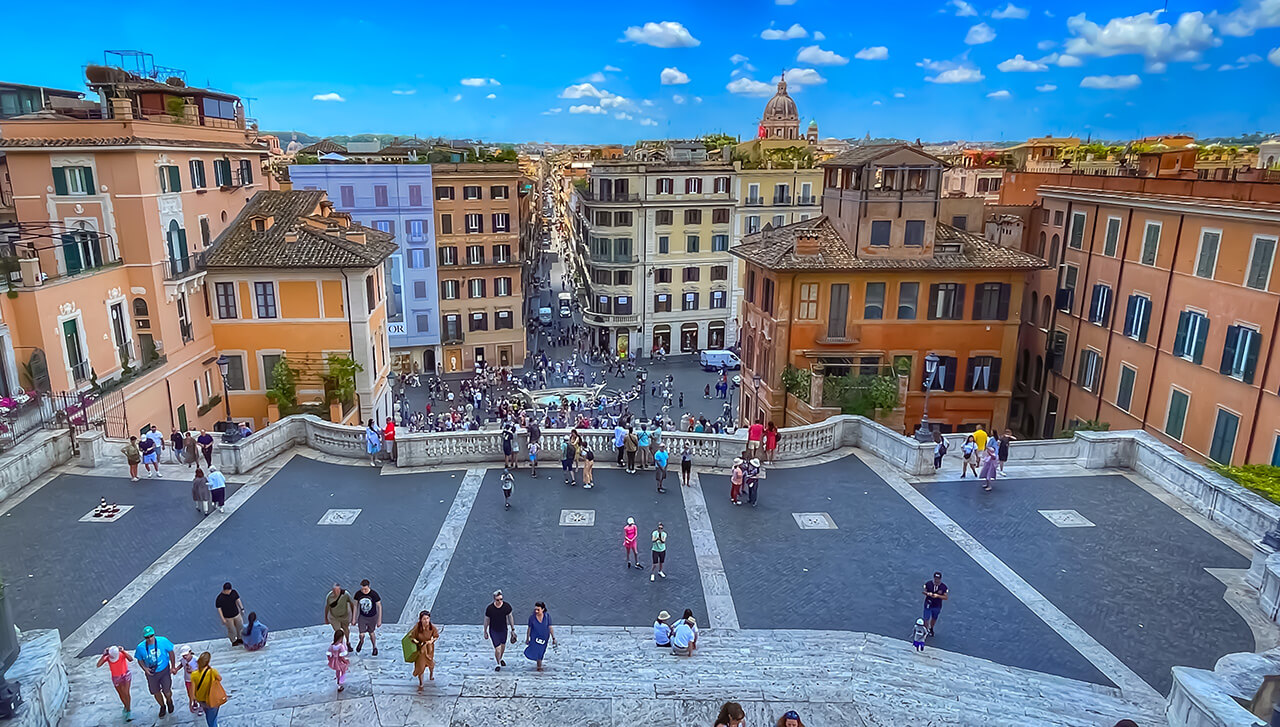
- Awe-Inspiring View: The top of the Spanish Steps offers a breathtaking panoramic view of Rome, with the imposing Trinità dei Monti church at the summit and the bustling Piazza di Spagna at its base. It’s an excellent spot to take in the city’s beauty and capture memorable photographs.
- Cultural Significance: The Steps have been featured in countless films and books, making them a cultural landmark. They serve as a meeting point and an artistic backdrop for performances and events.
- Historic Connections: The Steps have witnessed significant historical events, including the inauguration of the poet John Keats, who lived nearby and died in Rome in 1821. He is now commemorated in the Keats-Shelley House museum, located just around the corner.
- Shopping Paradise: The Piazza di Spagna at the base of the Steps is home to some of the most prestigious fashion boutiques and designer shops in the world a long Via dei Condotti. It’s a shopping paradise that attracts fashion enthusiasts from around the globe.

.
The Spanish Steps: A Historical Journey
To truly understand the allure of the Spanish Steps, we must delve into their rich history. The Steps were commissioned by Pope Benedict XIII to link the Bourbon Spanish Embassy (hence the name “Spanish Steps“) to the Trinità dei Monti church. The motive behind their construction was to celebrate the peace between France and Spain after the Spanish Succession War.
The project became a testament to Baroque architecture, blending grandeur with artistic finesse. The designer, Francesco de Sanctis, envisioned an iconic staircase that would create a lasting impression and stand as a symbol of elegance. The Steps, characterized by their sinuous shape and inviting design, certainly achieved this vision.
.

.
The Spanish Steps’ Unique Design
What sets the Spanish Steps apart from other staircases is their unusual butterfly design, with the two sections of the staircase fanning out like wings from the Piazza di Spagna. The gentle descent creates a welcoming atmosphere, encouraging people take in the views.
.
The Fountain of the Old Boat: La Barcaccia
As you make your way up the Spanish Steps, you’ll encounter the Fontana della Barcaccia, or the Fountain of the Old Boat, at the base of the staircase. This charming and unique fountain, designed by Pietro Pietro, symbolizes a sinking ship. It’s an artistic marvel that adds to the aesthetic appeal of the entire ensemble.

.
The Keats-Shelley House: A Literary Connection
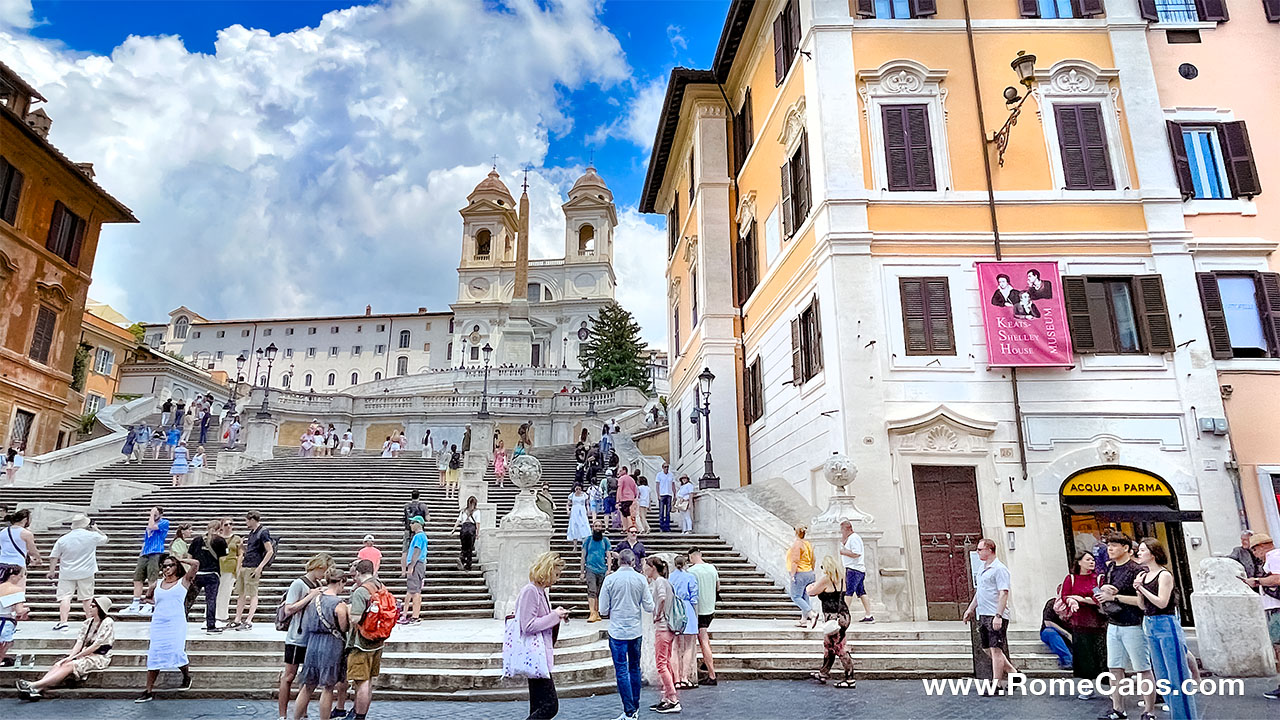
The Spanish Steps have a unique literary connection, thanks to the nearby Keats-Shelley House. This museum is dedicated to the lives and works of Romantic poets John Keats and Percy Bysshe Shelley. Keats, in particular, has a strong association with the Spanish Steps, as he resided in a building overlooking the Steps before his untimely death in 1821.
The Keats-Shelley House now serves as a tribute to these poets and a treasure trove of literary history. It contains a remarkable collection of books, manuscripts, and artifacts related to the Romantic poets, making it a must-visit destination for literature enthusiasts.
.
..
The Scalinata di Trinità dei Monti: A Celebration of Beauty
The Spanish Steps consist of 135 steps spanning three terraces, creating a harmonious and balanced composition that is a treat for the eyes. At the top of the steps stands the Trinità dei Monti Church, a French church that dates back to the 16th century. The church’s dual towers add to the picturesque view from below, inviting visitors to ascend the grand staircase.
.
The Spanish Steps Today
Today, the Spanish Steps continue to be a beloved destination for locals and tourists. As you climb the steps, you’ll be rewarded with a panoramic view of the Piazza di Spagna below, where the impressive Palazzo di Spagna stands. The piazza is a bustling hub of activity, with numerous cafes, shops, and boutiques lining the elegant streets.
.
.
How to enjoy the Spanish Steps without crowds and take stunning photos!
Remember that even in the busiest hours, the Spanish Steps are a magnificent sight, and they can still be enjoyed amid the crowds. However, if you’re seeking a more tranquil experience, these tips will help you savor the beauty and ambiance of this iconic location without the hustle and bustle of the crowds.
Visit Spanish Steps Early in the Morning:
The Spanish Steps are usually less crowded in the early morning. Arriving early morning right after sunrise can offer a serene and tranquil atmosphere, allowing you to appreciate the beauty without the crowds.
Consider booking accommodations in the vicinity of the Spanish Steps. This way, you can explore the area during the quieter hours before the crowds arrive and minimize your need for public transportation in Rome.
Off-Season Travel:
If possible, plan your visit during the off-season months when tourist numbers are lower. Late fall, winter, and early spring are great times to enjoy the Steps with fewer crowds.
.

.
In answer to the question, “Is it worth seeing the Spanish Steps in Rome?” the resounding response is a definitive YES. The Spanish Steps embody the heart and soul of Rome, blending art, history, and culture in an enchanting setting. They offer an opportunity to witness Baroque grandeur, partake in leisurely pastimes, and connect with the city’s rich heritage.
.
ALSO READ:
Beyond the Colosseum: Exploring Rome’s Hidden Architectural Gems
Piazza Navona – discover the charms of Rome, Italy
.
So, when in Rome, make sure to visit the famous Spanish Steps. Take a moment to savor the stunning architecture, bask in the atmosphere, and appreciate the historical and cultural significance of this iconic landmark. The Spanish Steps are not merely a staircase; they are a symbol of Rome’s enduring allure, inviting you to become a part of its timeless story.
.
Find RomeCabs online also on:
- RomeCabs FACEBOOK
- RomeCabs PINTEREST
- RomeCabs TWITTER
- RomeCabs INSTAGRAM
- RomeCabs FLICKR Photo Gallery
- Rome Cabs Recommended on Cruise Critic
.
.

 RomeCabs Blog Italy - Italy Private Excursions, Rome Tours, Civitavecchia Transfers
Leave a Reply