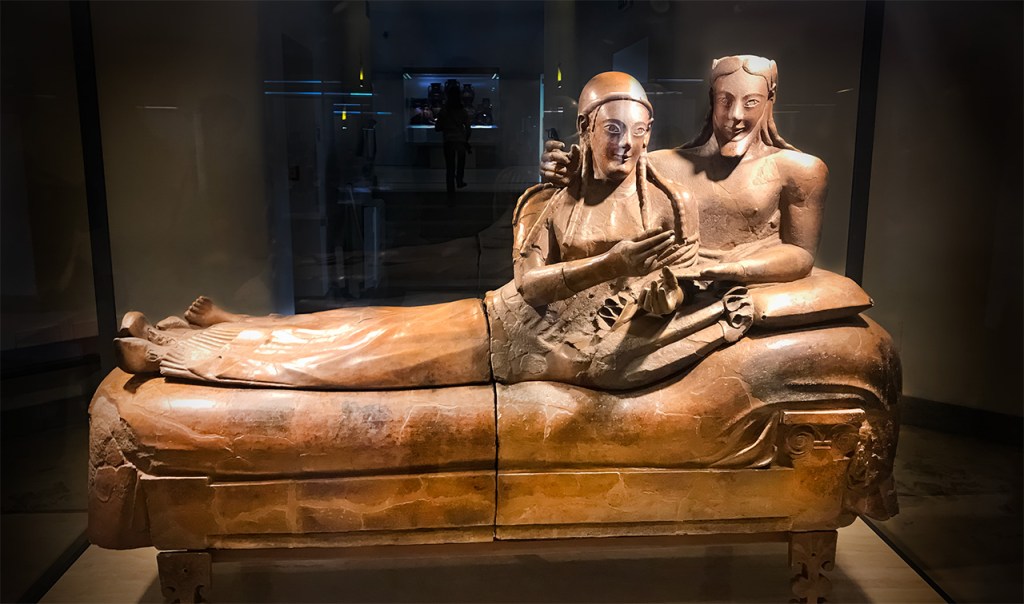
Buongiorno and welcome to RomeCabs Italy Travel Blog! Many of our day tours from Rome , Shore Excursions from Civitavecchia, and after-cruise tours from Civitavecchia explore ancient Etruscan places from Cerveteri to Tarquinia. The Etruscans not only inspired civilizations after them (primarily the Romans), but also left many of their captivating masterpieces behind for posterity that we may admire and learn from today. From their exquisite metalwork and pottery to the monumental tombs and temples that exemplify their architectural prowess and cultural sophistication, the Etruscans were truly Italy’s forgotten masters. In this blog, we will cover in a nutshell some highlights about Etruscan art and architecture.
But first, who were the Etruscans?
.
Who were the Etruscans?
.

.
Within the ancient landscapes of Italy during the Iron Age, the Etruscans emerged as a fascinating and influential civilization, occupying a region that roughly corresponds to present-day Tuscany, western Umbria, and northern Lazio. Flourishing from the 8th to the 3rd centuries BCE, the Etruscans wielded significant cultural and artistic influence across the Italian peninsula before eventually succumbing to Roman domination.
The origins of the Etruscans are steeped in intrigue, with theories proposing a blend of indigenous Italian traditions and external influences from Anatolia and the eastern Mediterranean. By the 8th century BCE, the Etruscans had established a network of thriving city-states, including prominent centers like Tarquinia, Vulci, Cerveteri, Veii, and Clusium. Despite their autonomy, these city-states shared cultural traits while maintaining distinct identities, collectively shaping the rich tapestry of Etruscan civilization.
Let’s explore some of the profound artistic legacy left behind by this ancient civilization.
.
Etruscans were skilled in metalwork and goldsmithing
The Etruscans were renowned throughout the ancient Mediterranean for their exceptional craftsmanship, particularly in the domain of metalwork. Skilled artisans, they demonstrated a mastery of various metals, producing exquisite bronze statues, ornamental objects, and jewelry that captivated contemporaries and continue to awe modern audiences.
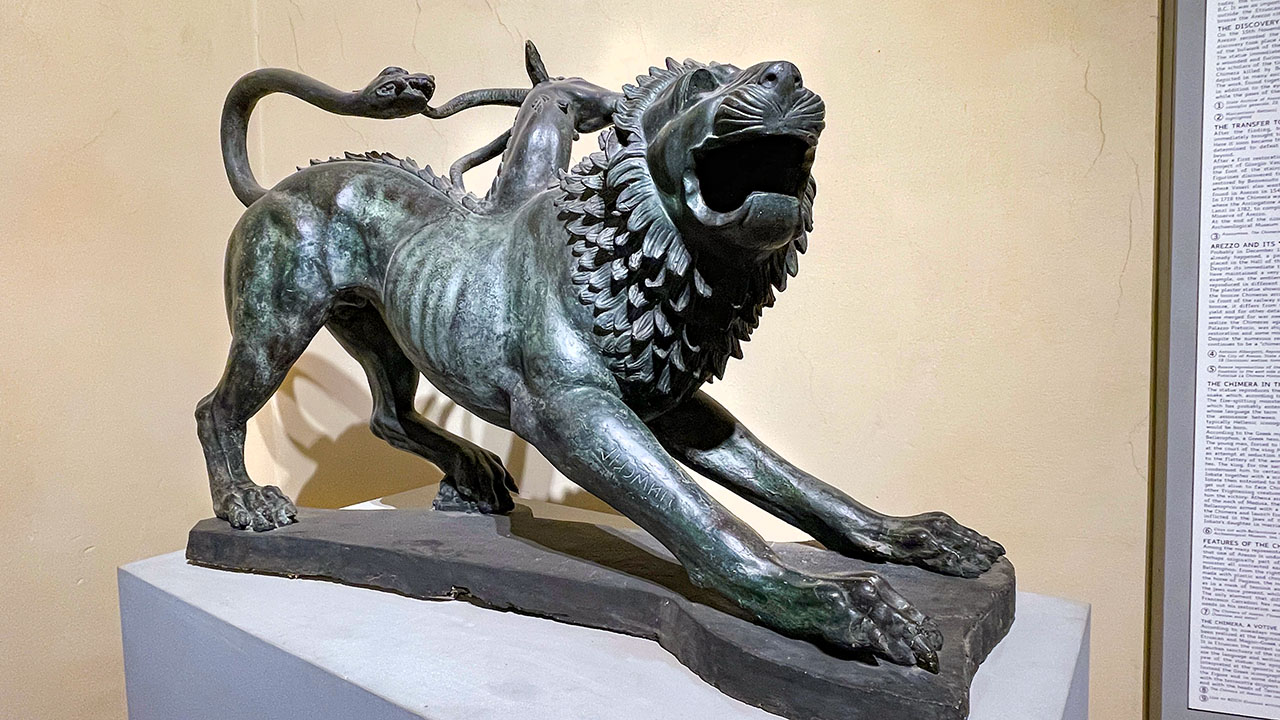
Among the most famous examples of Etruscan metalwork is the “Chimera of Arezzo“, a remarkable bronze sculpture discovered in Arezzo, Italy. This iconic piece, dating back to the 5th century BCE, depicts a fantastical creature composed of a lion’s body with a serpent for a tail, and a goat emerging from its back. The Chimera showcases the Etruscans’ technical skill in metal casting, with intricate details and a dynamic composition that epitomizes their artistic ingenuity.
.
.
In addition to bronze casting, the Etruscans were pioneers in goldsmithing, particularly known for their unique technique of gold granulation. This intricate process involved fusing tiny granules of gold onto a larger surface, creating elaborate patterns and designs.
Etruscan goldsmiths utilized granulation to embellish jewelry, such as earrings, necklaces, and fibulae (ancient brooches), with exquisite precision and artistry.
.

.
The delicate nature of Etruscan granulation exemplifies their mastery of metalworking techniques and their dedication to achieving unparalleled craftsmanship.
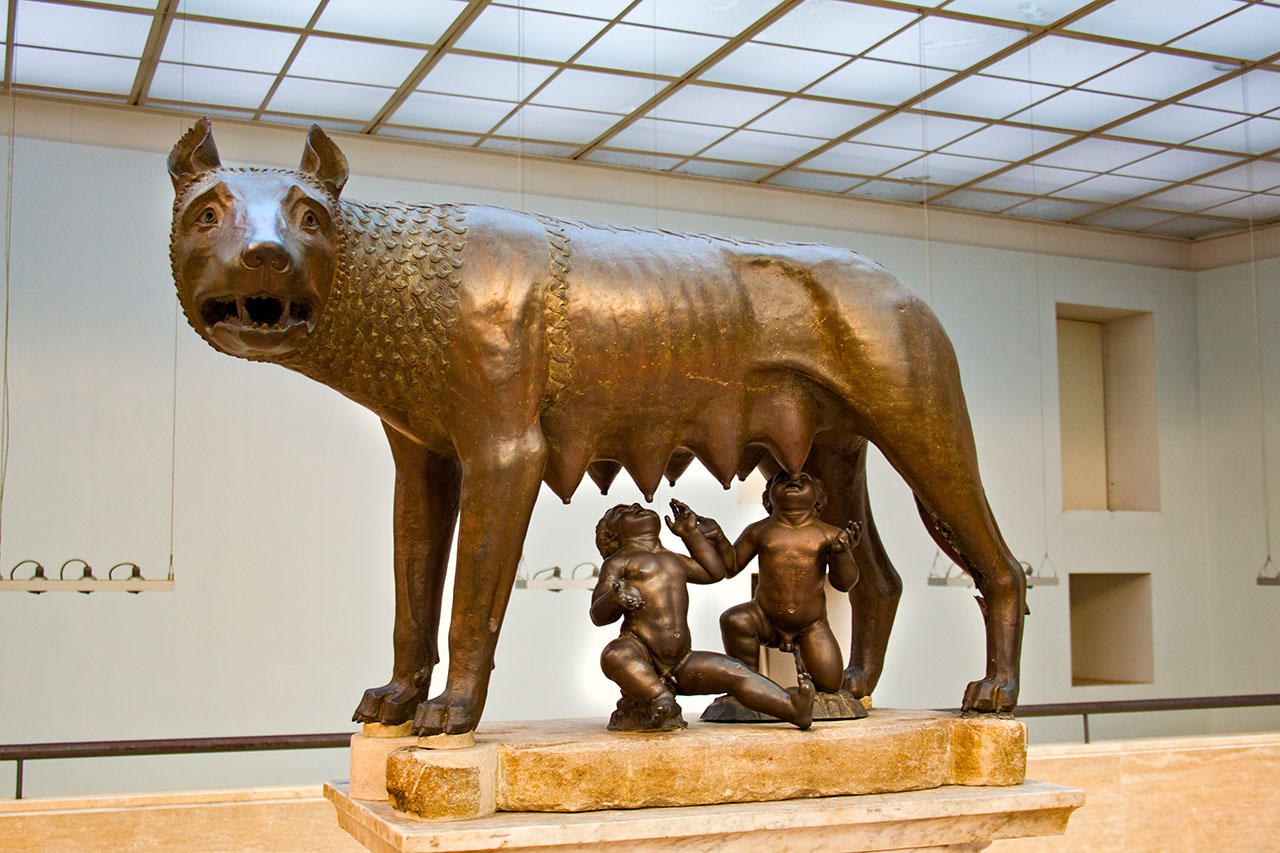
The “Capitoline Wol,,” an iconic bronze statue depicting a she-wolf nursing Romulus and Remus, symbolizes the mythological foundation of Rome. Originally Etruscan in origin, the statue exemplifies the Etruscans’ influence on early Roman culture and their contribution to the artistic heritage of Italy.
.
.
.
Etruscan pottery was sophisticated
Etruscan pottery represents a pinnacle of artistic achievement in ancient Italy, blending indigenous techniques with influences from Greece to create distinctive and sophisticated ceramic works.
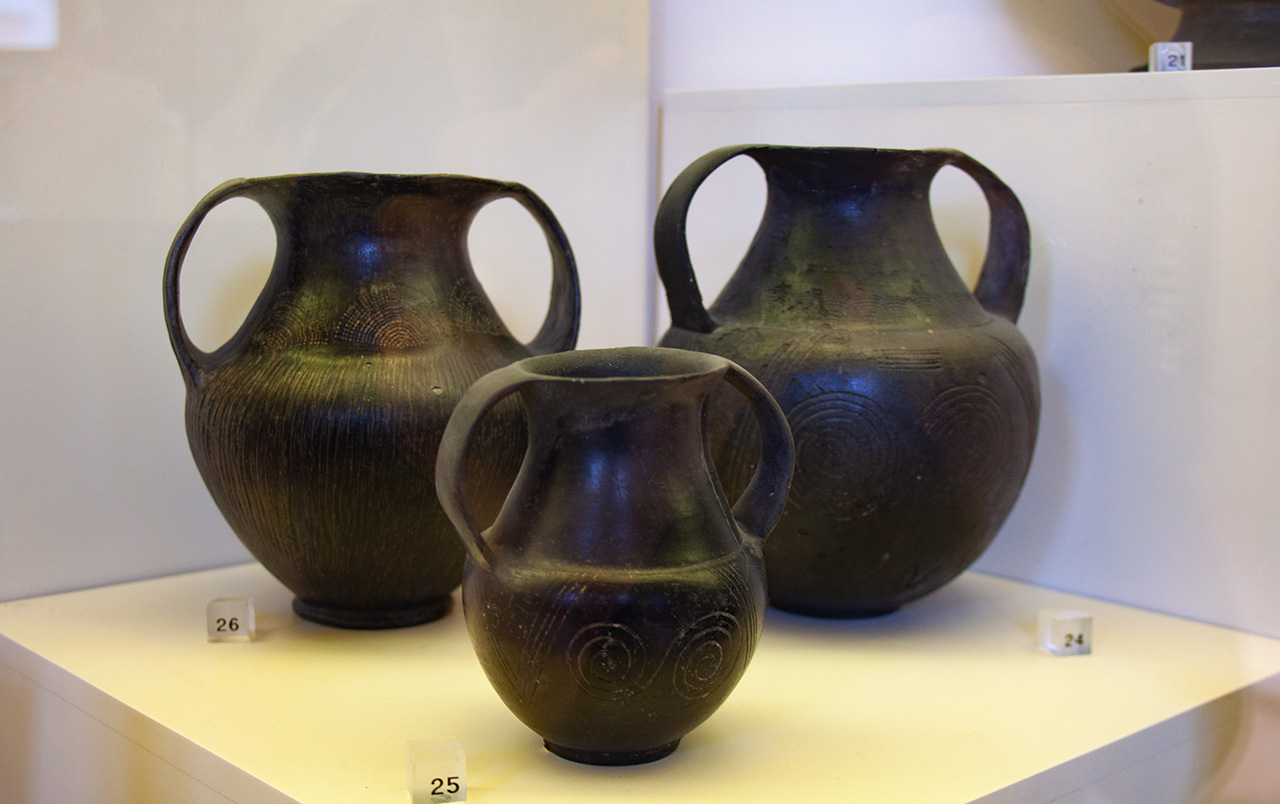
Among the most notable styles developed by Etruscan ceramicists is the “Bucchero” ware, recognized for its striking glossy black surface and elegant forms. This unique style of pottery was achieved through a specialized firing process that resulted in a smooth, lustrous finish, setting it apart from contemporaneous ceramic traditions.
.
.
The necropolis of Cerveteri, one of the principal Etruscan cities, has yielded a treasure trove of exquisitely crafted pottery that provides valuable insights into Etruscan burial customs and artistic sensibilities.
Funerary urns discovered in Cerveteri and other Etruscan sites are often adorned with intricate designs, including geometric patterns, stylized animals, and mythological motifs. These decorations not only served a decorative purpose but also carried symbolic significance related to beliefs about the afterlife and the journey of the deceased.
.

.
Another notable form of Etruscan pottery is the “red-figure” style, which emerged later and was influenced by Greek techniques. Etruscan red-figure pottery, found in sites like Vulci, Cerveteri, and Tarquinia, showcases scenes from mythology, daily life, and religious rituals rendered with exquisite detail and vibrant colors. This style reflects the Etruscans’ engagement with Greek culture and their adaptation of foreign artistic traditions to suit their own artistic preferences and cultural context.
.

.
.
Etruscan architectural achievements were impressive
Etruscan architectural achievements were equally impressive. One of the most striking manifestations of Etruscan architecture is seen in their monumental tombs, particularly the necropolises of Cerveteri (Banditaccia) and Tarquinia (Monterozzi).
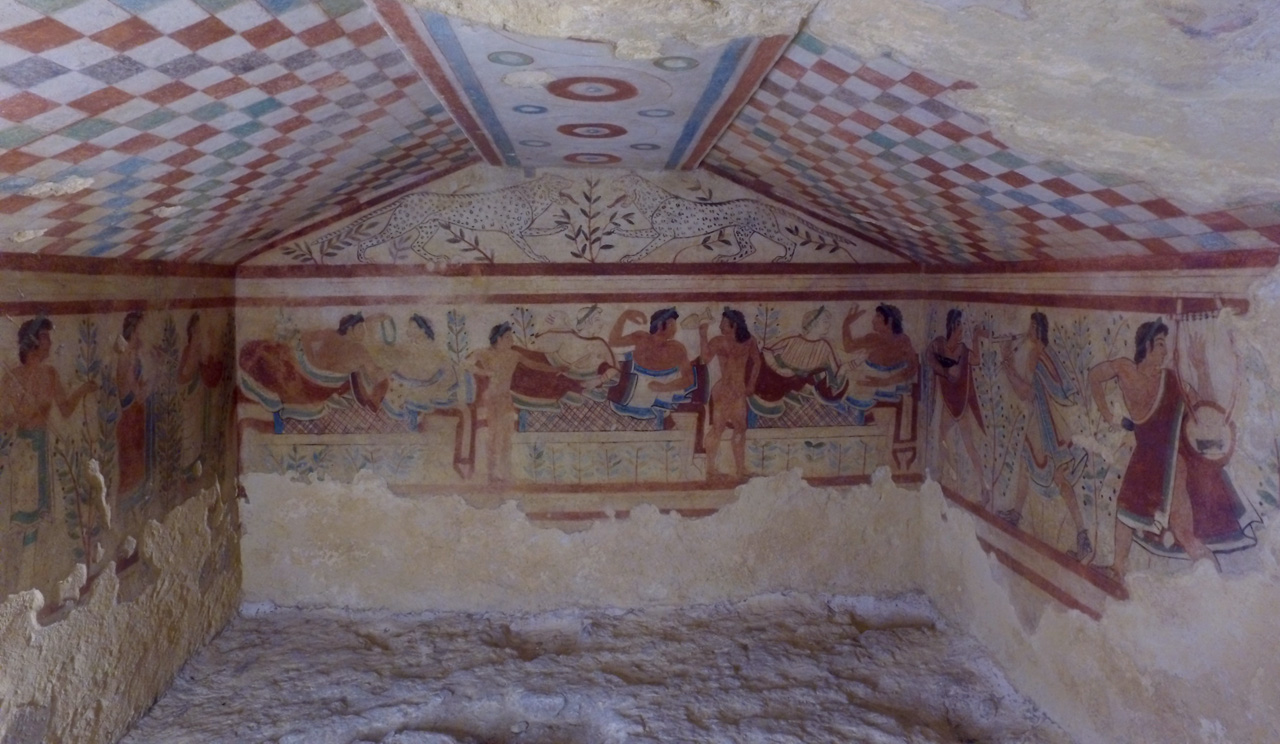
These necropolises are remarkable for their extensive networks of subterranean chambers, known as “hypogea“, carved deep into the earth. The tombs, intended as eternal dwellings for the deceased, were adorned with colorful frescoes that depicted scenes of daily life, banquets, and religious rituals.
The Tomb of the Leopards in Tarquinia, for example, is renowned for its vibrant frescoes depicting dancers and musicians, providing valuable insights into Etruscan social customs and beliefs about the afterlife.
.
.
In addition to their burial monuments, the Etruscans constructed temples that influenced subsequent Roman temple architecture. Etruscan temples were characterized by unique features, including a deep front porch supported by columns (called “antae“), a raised podium or platform (called “podium“), and a three-cell layout with a central chamber flanked by smaller rooms.
Etruscan architects also employed terracotta decoration extensively in their buildings, using ornamental tiles (known as “acrotaria“) to embellish roof edges and gables. The roof was typically made of timber and covered with terracotta tiles.
.

.
Terracotta sculpture adorned the pediments of temples, depicting mythological scenes and divine figures. This use of terracotta as a decorative element was adopted by the Romans and became a hallmark of their architectural style.
.
Etruscan urban planning inspired civilizations
Etruscan urban planning represents a remarkable aspect of their civilization, characterized by well-organized cities that served as centers of commerce, culture, and governance. Cities like Veii, Tarquinia, and others boasted layouts carefully designed on a grid system, demonstrating the Etruscans’ advanced understanding of urban design.
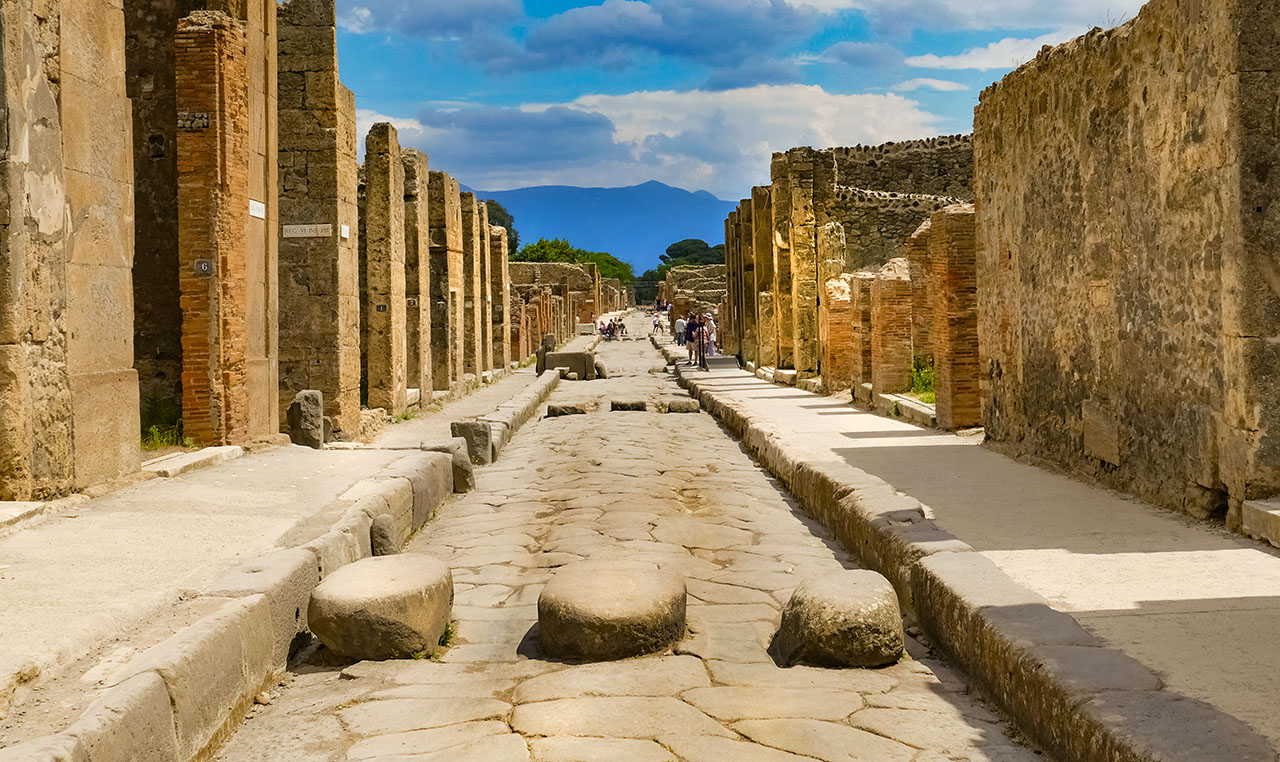
One notable feature of Etruscan city planning was the use of grid roads (decumanus and cardo), a layout later adopted by the Romans. The decumanus was the east-west oriented main street, while the cardo was the north-south oriented main street, intersecting at right angles to form a grid pattern.
This grid system ( which is evident in Pompeii, Herculaneum, and Ostia Antica as the Romans continued the Etruscan urban planning methods), facilitated efficient movement through the city and organized the urban space into distinct blocks. Each block served specific purposes such as residential areas, workshops, marketplaces, and public buildings.
.
.
In addition to their grid-based layouts, Etruscan cities were often enclosed by fortified walls, attesting to their strategic importance and defensive capabilities. The walls of cities like Veii, which famously clashed with Rome during the 4th century BCE, were constructed using advanced techniques such as the “opera quadrata” (rectangular masonry), showcasing the Etruscans’ expertise in engineering and fortification.
Within these urban centers, public buildings played a crucial role in civic life and cultural expression. The Etruscans constructed temples, forums, and public baths, often adorned with terracotta decorations and architectural sculptures that reflected their artistic sensibilities and religious beliefs. The urban layout encouraged social interaction and facilitated economic activities, contributing to the prosperity and vitality of Etruscan society.
.

.
Wrapping up, the enduring legacy of Etruscan art, architecture, and urban planning underscores the remarkable creativity and cultural depth of this ancient civilization. Their monumental tombs, adorned with intricate frescoes depicting daily life and religious rituals, along with temples embellished with unique terracotta decorations, reveal profound spiritual beliefs and societal ideals.
Despite being assimilated into Roman culture, the Etruscans continue to captivate as a fascinating chapter in the saga of Western art and civilization, leaving behind an indelible mark on Italy’s rich history.
.
.
We invite you to visit our website and browse through our Rome Countryside Tours and either book our Countryside Splendor Tour from Rome which includes a visit to Cerveteri Banditaccia Necropolis.
Or check out our Mysterious Etruscans Countryside Tour with RomeCabs that goest to Tuscania and Tarquinia Monterozzi Necropolis.
.
.
Find RomeCabs online also on:
- RomeCabs FACEBOOK
- RomeCabs PINTEREST
- RomeCabs TWITTER
- RomeCabs INSTAGRAM
- RomeCabs FLICKR Photo Gallery
- Rome Cabs Recommended on Cruise Critic
.

 RomeCabs Blog Italy - Italy Private Excursions, Rome Tours, Civitavecchia Transfers