Buongiorno and welcome to RomeCabs Italy Travel Blog! Rome, often referred to as the Eternal City, is a treasure trove of history, culture, and art. Its streets and piazzas are dotted with magnificent churches, many of which house some of the world’s most significant artistic masterpieces. For art lovers, these churches are more than places of worship; they are living museums that capture the essence of Rome’s artistic heritage. Make your Roman holiday extraordinary by including some of these churches in your trip itinerary. Here are five Rome churches for artistic treasures you can’t miss if you want to experience the city’s rich artistic treasures.
.
1. St. Peter’s Basilica: A Renaissance Masterpiece
.
First on our list of 5 Rome churches for artistic treasures you can’t miss is the biggest and most famous church in all of Christendom! St. Peter’s Basilica, located in the heart of Vatican City, stands as the epitome of Renaissance art and architecture. As one of the most iconic churches in the world, it attracts millions of visitors each year. Designed by a stellar lineup of Renaissance architects including Michelangelo, Gian Lorenzo Bernini, and Donato Bramante, the basilica is a monumental testament to the grandeur and magnificence of the Renaissance era.
The history of St. Peter’s Basilica dates back to the 4th century when the first basilica was constructed over what is believed to be the tomb of St. Peter, one of Jesus Christ’s apostles and the first Pope. The current basilica was initiated in 1506 by Pope Julius II and took over a century to complete, with its consecration occurring in 1626. The lengthy construction period saw contributions from a series of master architects, each bringing their own unique vision to the project.
St. Peter’s Basilica is a marvel of Renaissance architecture, blending elements of classical antiquity with innovative designs.
The grand facade, designed by Carlo Maderno, is an imposing structure that welcomes visitors with its Corinthian columns and statues of Christ, the apostles, and St. John the Baptist. The portico features intricate mosaics and the famous Holy Door, which is opened only during Jubilee years.
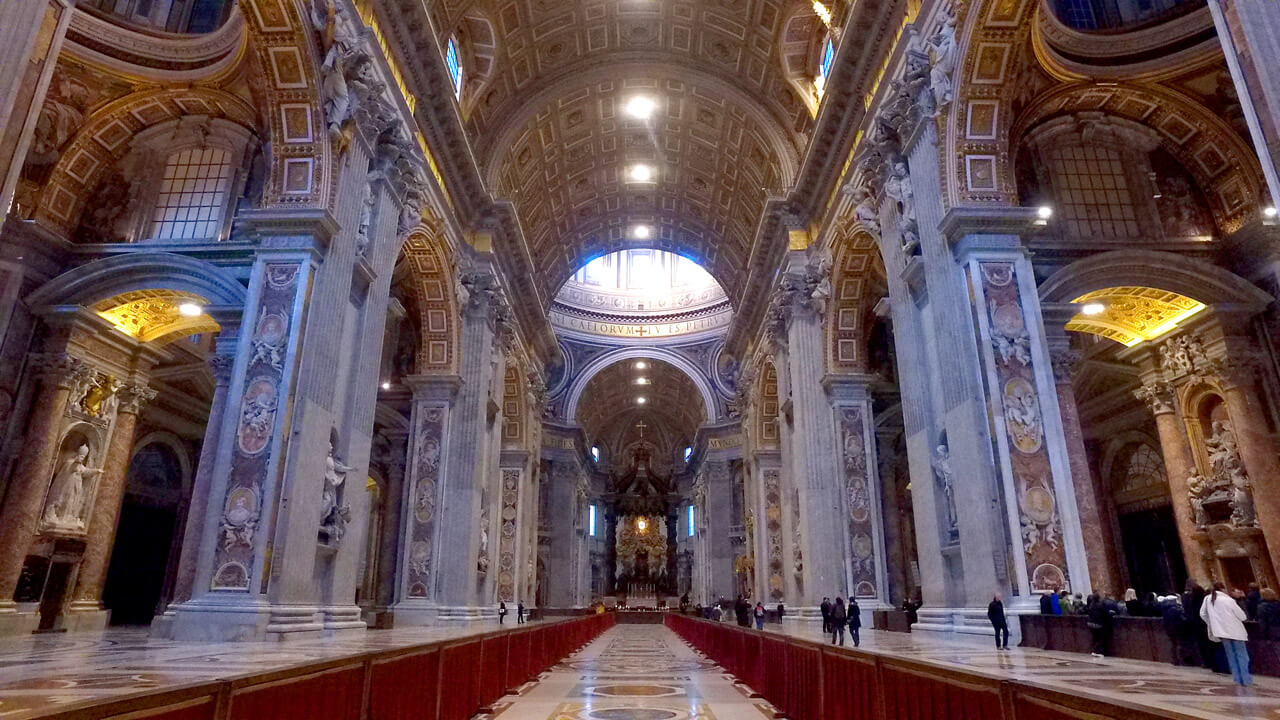
The basilica’s nave is vast and richly decorated, with a coffered ceiling and elaborate marble floors. The interior space is designed to inspire awe, with its monumental scale and opulent decorations.
.
.
.
Artistic Highlights of Saint Peter’s Basilica
.
Michelangelo’s Pietà
Near the entrance of the basilica, on the right, stands Michelangelo’s Pietà, one of the most celebrated sculptures in art history. Michelangelo completed this masterpiece when he was just 24 years old. The sculpture depicts the Virgin Mary holding the lifeless body of Christ after his crucifixion.
Michelangelo’s exceptional ability to render emotion and detail in marble is evident in the tender expressions and the delicate folds of Mary’s garments. The Pietà is enclosed in bulletproof glass after it was damaged by an attacker in 1972, ensuring its preservation for future generations.
.

.
Bernini’s Baldachin
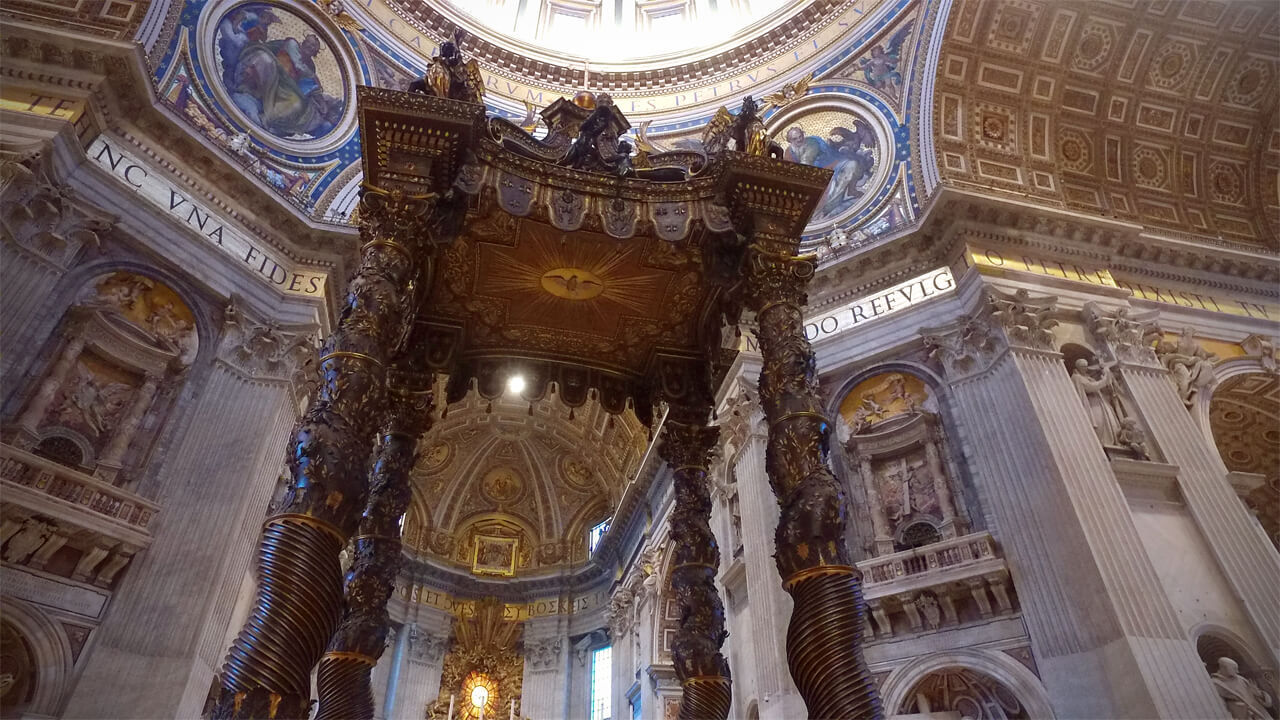
Over the main altar and the tomb of St. Peter stands Bernini’s Baldachin, a colossal bronze canopy that exemplifies the grandeur of Baroque art.
Commissioned by Pope Urban VIII, the baldachin stands nearly 30 meters (98 feet) high and is adorned with intricate designs, including twisting Solomonic columns and detailed figures of cherubs and angels. The structure is both a functional and decorative piece, symbolizing the link between Heaven and Earth.
.
.
St Peter’s Basilica Dome
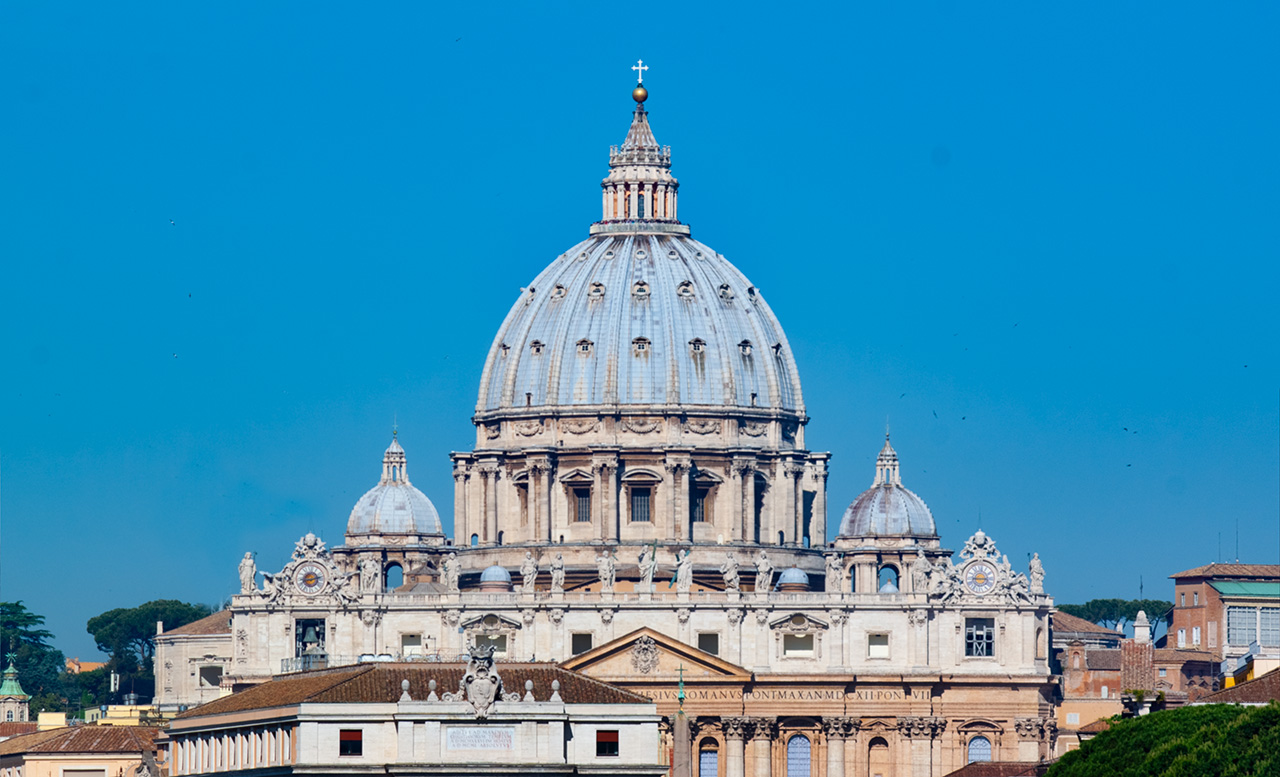
One of the most iconic features of St. Peter’s Basilica is its magnificent dome, designed by Michelangelo. Although Michelangelo did not live to see its completion, his design was faithfully executed by Giacomo della Porta and Domenico Fontana.
The dome rises to a height of approximately 136 meters (446 feet) and is an architectural marvel, providing a breathtaking focal point for the basilica. Visitors can climb to the top of the dome, via a combination of elevators and stairs, for a panoramic view of Rome and an up-close look at the dome’s intricate interior mosaics.
.
.
Additional Highlights of St Peter’s Basilica
St. Peter’s Chair (Cathedra Petri): Another masterpiece by Bernini, the Chair of St. Peter is an elaborate bronze throne encasing a wooden relic traditionally believed to be the chair used by St. Peter himself. It is located in the apse of the basilica and is flanked by statues of the Four Doctors of the Church.
The Tombs of the Popes: Beneath the basilica lies the Vatican Grottoes, where many popes, including St. Peter, are buried. The grottoes are a place of pilgrimage and reflection, offering a historical journey through the papacy.
The Treasury Museum: This museum houses a collection of religious artifacts, vestments, and other treasures from the basilica’s history, providing deeper insights into the rich heritage of St. Peter’s.
.

.
Visiting Tips for St Peter’s Basilica
Best Times to Visit: St. Peter’s Basilica is one of the most popular tourist destinations in Rome, so it’s best to visit early in the morning or late in the afternoon to avoid the largest crowds. Early arrival also allows for a more serene experience when exploring the basilica’s sacred spaces. Be prepared to pass security checkpoints, which very often include waiting in unpredictably long lines. By arriving first thing in the morning just before the basilica opens, you will improve your chances for short security lines and quick entrance.
Modest Dress Code: As a place of worship, visitors are required to dress modestly. Ensure that shoulders and knees are covered. Security checks are also in place, so be prepared for these when entering.
Climbing the Dome: If you plan to climb the dome, be aware that the ascent includes many narrow and steep steps, especially near the top. While the climb can be strenuous, the panoramic views from the top are well worth the effort.
Guided Tours: Consider joining a guided tour to gain deeper insights into the basilica’s history, art, and architecture. Knowledgeable guides can provide fascinating details that might be missed during a self-guided visit.
.
.
2. Basilica of Santa Maria del Popolo: A Hidden Gem of the Renaissance and Baroque
.
Second on our list of Rome churches for artistic treasures you can’t miss is the historic church located next to Piazza del Popolo. The Basilica of Santa Maria del Popolo is a remarkable yet often overlooked treasure in Rome. This basilica is a veritable museum of Renaissance and Baroque art, housing an impressive collection of works by some of the most renowned artists of the era. Its rich history, architectural beauty, and artistic masterpieces make it a must-visit for anyone interested in exploring the depths of Rome’s cultural heritage.
The origins of Santa Maria del Popolo date back to the 11th century when a chapel was built on the site where Emperor Nero was believed to have been buried. In 1472, Pope Sixtus IV commissioned the reconstruction of the chapel into a larger church, which was later remodeled and expanded during the Renaissance and Baroque periods. The basilica’s various transformations reflect the evolving artistic and architectural styles of these eras, making it a fascinating site for art and history enthusiasts.
.
.
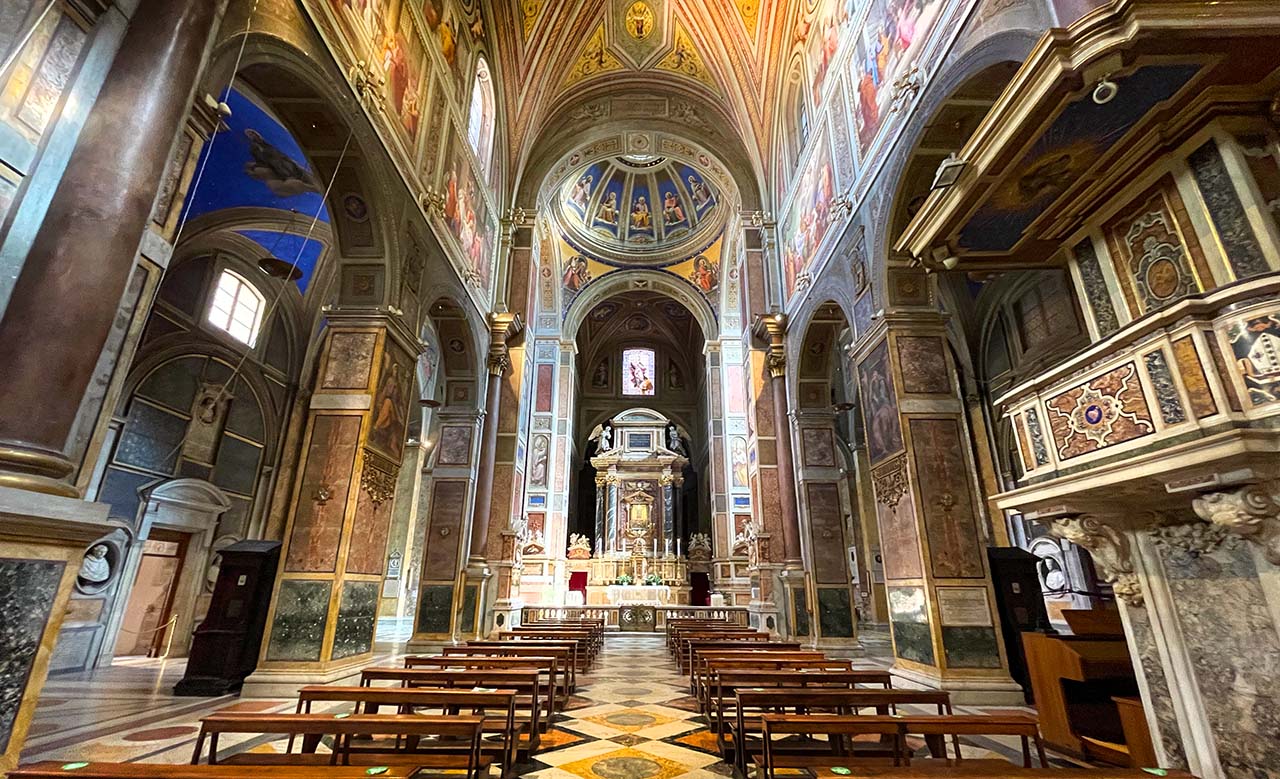
Santa Maria del Popolo’s architecture is a blend of Renaissance and Baroque styles, with contributions from several renowned architects.
The church’s facade, designed by Andrea Bregno, is a fine example of Renaissance architecture. It features classical elements such as pilasters, arches, and decorative friezes, creating a harmonious and elegant appearance.
The interior of the basilica is equally impressive, with a central nave flanked by side chapels, each adorned with exquisite artworks and intricate decorations. The harmonious blend of Renaissance and Baroque elements throughout the church showcases the seamless transition between these two artistic periods.
.
Artistic Highlights of Santa Maria del Popolo
.
Caravaggio Paintings
The Cerasi Chapel, located in the left transept, is home to two of Caravaggio’s masterpieces: “The Conversion of St. Paul” and “The Crucifixion of St. Peter”. These paintings are quintessential examples of Caravaggio’s dramatic use of chiaroscuro (the contrast between light and dark) and his realistic depiction of human figures.
The Conversion of St. Paul: This painting captures the moment when Saul, later known as Paul, is struck by a divine light on his way to Damascus, leading to his conversion to Christianity. Caravaggio’s use of light to illuminate Paul’s figure while casting the surrounding scene in shadow creates a powerful and dramatic effect.
The Crucifixion of St. Peter: In this work, Caravaggio depicts the martyrdom of St. Peter, who requested to be crucified upside down out of humility. The painting’s stark realism and the emotional intensity of the figures convey the gravity of the moment.
.

.
Raphael’s Chigi Chapel
The Chigi Chapel, designed by Raphael and completed by Bernini, is a stunning example of Renaissance architecture and sculpture. Commissioned by the wealthy banker Agostino Chigi, the chapel is adorned with beautiful mosaics, sculptures, and frescoes that reflect the grandeur and sophistication of the Renaissance.
Raphael’s Architectural Design: Raphael’s design for the chapel combines classical elements with innovative features, creating a harmonious and balanced space. The dome, decorated with mosaics of celestial bodies, symbolizes the cosmos and adds a sense of grandeur to the chapel.
Bernini’s Sculptures: Gian Lorenzo Bernini, one of the leading figures of the Baroque era, completed the chapel’s decoration with his exquisite sculptures. The statues of Habakkuk and the Angel and Daniel in the Lion’s Den, positioned in niches within the chapel, are celebrated for their dynamic composition and lifelike details.
.

.
Bernini’s Sculptures
In addition to his work in the Chigi Chapel, Bernini also contributed several other notable sculptures to Santa Maria del Popolo.
Habakkuk and the Angel: This sculpture, located in the Chigi Chapel, depicts the biblical prophet Habakkuk being led by an angel. Bernini’s skillful use of movement and expression brings the scene to life, creating a sense of interaction between the two figures.
Daniel in the Lion’s Den: Also in the Chigi Chapel, this sculpture shows Daniel calmly praying in the midst of ferocious lions. Bernini’s ability to capture the tension and emotion of the moment is evident in the lifelike details of the figures.
.

.
Santa Maria del Popolo Visiting Tips
\
Less Crowded Experience: Santa Maria del Popolo is generally less crowded than other major churches in Rome, providing a more peaceful and intimate setting to enjoy its artistic treasures. This makes it an ideal location for those looking to appreciate art without the bustling crowds.
Accessibility: The church is easily accessible via the Flaminio metro station, which is just a short walk away. Its central location also makes it convenient to visit other nearby attractions such as Piazza del Popolo and the Pincio Gardens.
.
.
3. San Luigi dei Francesi: A Baroque Wonder
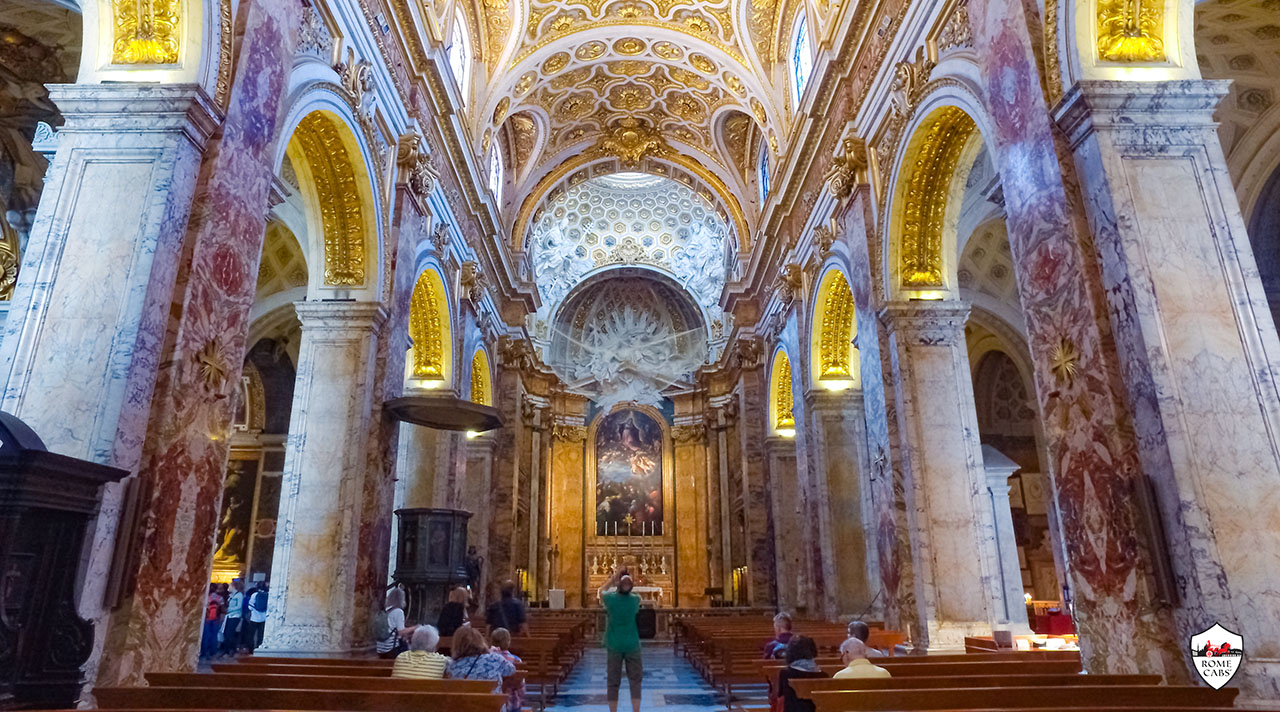
Next on our list of 5 Rome churches for artistic treasures you can’t miss is this amazing yet often overlooked church in the center of Rome. San Luigi dei Francesi, also known as the Church of St. Louis of the French, is a magnificent Baroque church situated between Piazza Navona and the Pantheon. Commissioned by the French community in Rome, it stands as a testament to the deep cultural ties between France and the Eternal City. The church is renowned not only for its architectural beauty but also for housing some of the most significant works of art from the Baroque period.
San Luigi dei Francesi was built between 1518 and 1589, designed by the architect Giacomo della Porta, with significant contributions by Domenico Fontana. The church was funded by donations from French monarchs, particularly Henry II and his wife, Catherine de’ Medici. It serves as the national church of France in Rome, dedicated to St. Louis IX, the patron saint of France.
The façade of San Luigi dei Francesi is a classic example of Roman Baroque architecture. Designed by Giacomo della Porta, it features a harmonious combination of classical elements, such as columns and pilasters, with intricate decorative details that are characteristic of the Baroque style. The three portals are adorned with relief sculptures that depict scenes from the life of St. Louis IX, adding to the church’s regal and spiritual aura.
.
.
.
San Luigi dei Francesi Artistic Highlights
.
Caravaggio St. Matthew Cycle
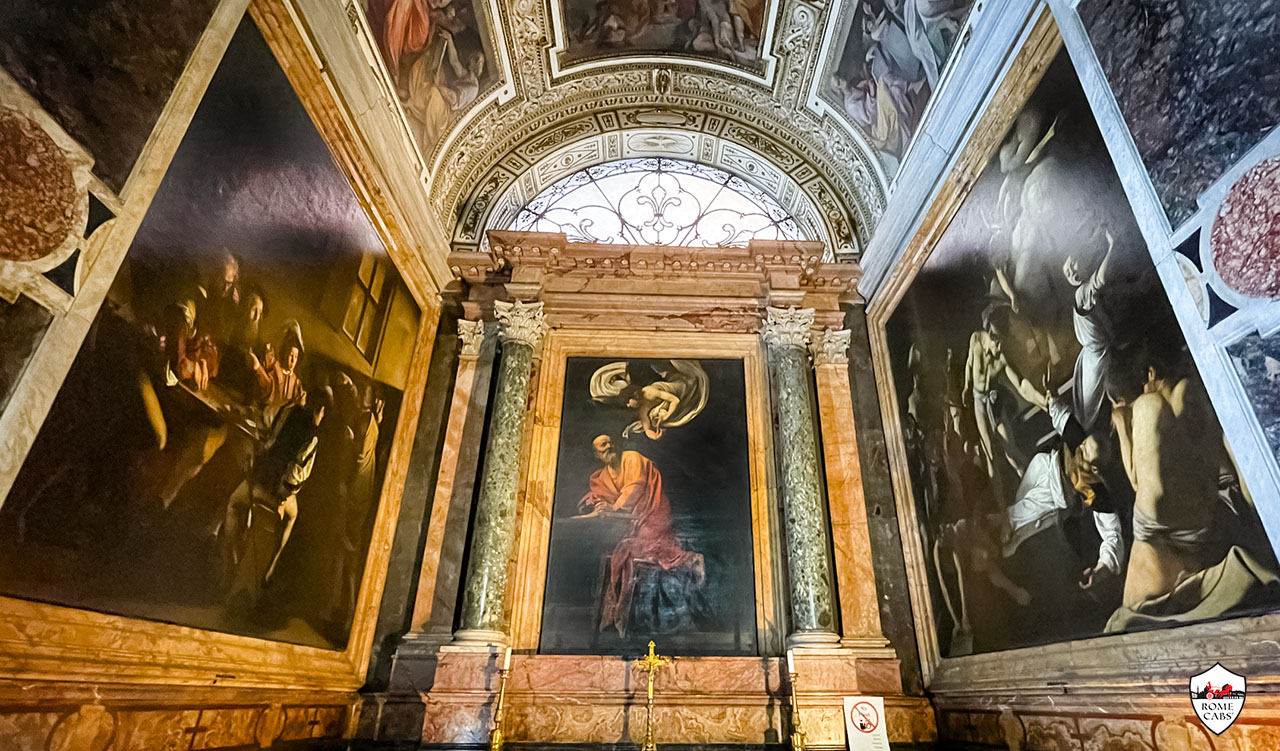
One of the most compelling reasons to visit San Luigi dei Francesi is the Contarelli Chapel, which houses a series of three paintings by Michelangelo Merisi da Caravaggio. These works are among the most significant in the history of art, showcasing Caravaggio’s revolutionary use of light and his realistic portrayal of human figures.
The Calling of St. Matthew: This painting captures the moment when Jesus calls Matthew, a tax collector, to follow him. Caravaggio uses dramatic chiaroscuro (the contrast between light and dark) to highlight the figures, creating a sense of divine illumination. The composition directs the viewer’s attention to Matthew, who is depicted in a moment of stunned realization.
The Inspiration of St. Matthew: In this work, Caravaggio portrays St. Matthew receiving divine inspiration to write his Gospel. An angel guides his hand, symbolizing the divine assistance provided to him. The painting’s dynamic composition and intense realism convey the spiritual significance of the moment.
The Martyrdom of St. Matthew: This painting depicts the martyrdom of St. Matthew, with Caravaggio’s characteristic use of dramatic lighting and realistic figures. The chaos and violence of the scene are rendered with startling clarity, emphasizing the saint’s courage and faith.
.
.
Domenichino’s Frescoes
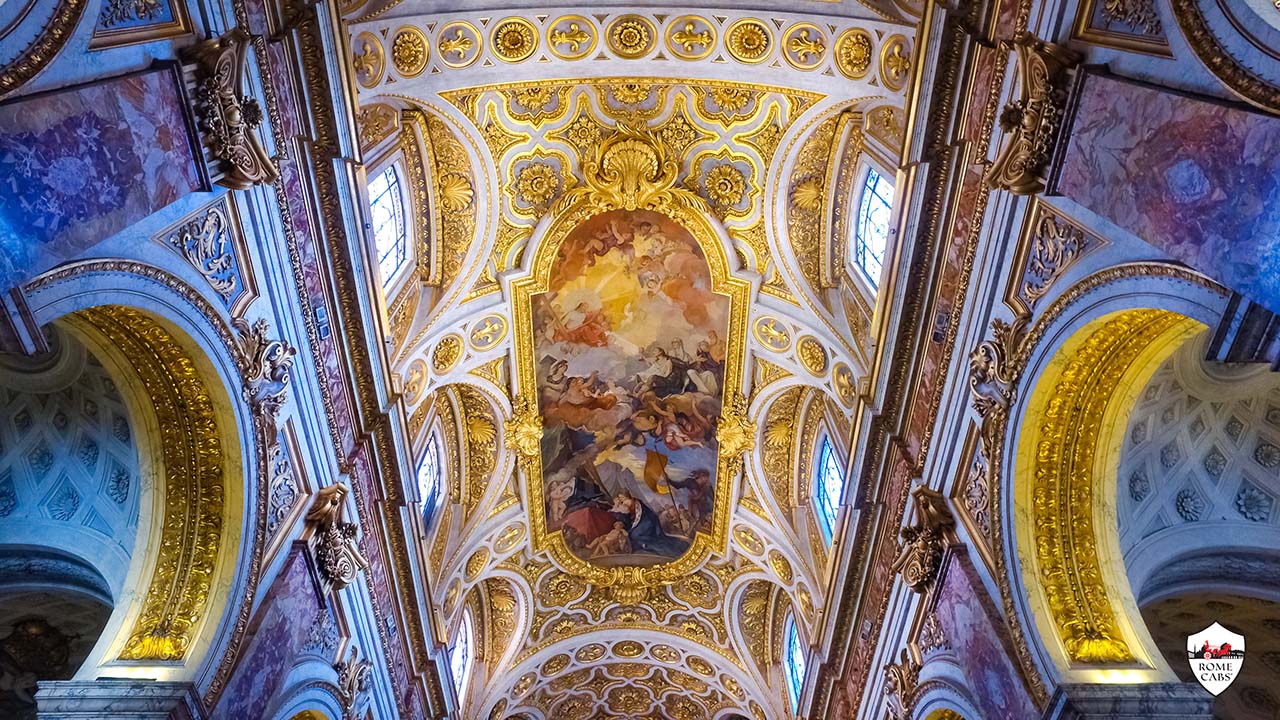
The church also features beautiful frescoes by Domenichino (Domenico Zampieri), an important Baroque painter and a student of the Carracci. Domenichino’s frescoes in the Polet Chapel, located in the right transept, depict scenes from the life of St. Cecilia, the patron saint of music.
The Martyrdom of St. Cecilia: This fresco shows the saint’s steadfast faith during her martyrdom, rendered with delicate colors and intricate details.
St. Cecilia Distributing Alms: Another fresco captures St. Cecilia’s charity and kindness, reflecting Domenichino’s skill in creating vivid, lifelike scenes.
.
.
San Luigi dei Francesi Visitor Tips
San Luigi dei Francesi is situated in a lively area close to many of Rome’s major attractions, making it a convenient stop on any itinerary. Here are some tips to make the most of your visit:
Timing Your Visit: Given its proximity to Piazza Navona and other popular sites, the church can get busy. Visiting early in the morning or late in the afternoon can help you avoid the crowds and enjoy the art in a more tranquil setting.
.
.
4. Santa Maria della Vittoria: A Baroque Jewel in Rome
.
Next to last on our list of 5 Rome churches for artistic treasures, you can’t miss is this small church that is nothing short of a jewel! Santa Maria della Vittoria, located near Piazza della Repubblica, stands as a quintessential example of Baroque architecture and art in Rome. Despite its relatively modest size, this church is brimming with artistic and architectural splendor that offers a rich visual and spiritual experience to its visitors.
Santa Maria della Vittoria was initially constructed in the early 17th century, designed by the architect Carlo Maderno. The church was built for the Discalced Carmelites and originally dedicated to St. Paul. However, after a miraculous victory attributed to the Virgin Mary during the Battle of White Mountain in 1620, it was rededicated to Our Lady of Victory (Santa Maria della Vittoria).
The church’s façade, completed by Maderno, is a masterpiece of Baroque design, characterized by its dynamic lines, intricate carvings, and dramatic use of space. This inviting entrance sets the tone for the opulence within.
.

.
Santa Maria della Vittoria Artistic Highlights
Bernini’s Ecstasy of Saint Teresa:
Undoubtedly, the most famous artistic treasure housed in Santa Maria della Vittoria is Gian Lorenzo Bernini’s sculpture, the “Ecstasy of Saint Teresa”. This masterpiece is located in the Cornaro Chapel, the left transept of the church.
The sculpture depicts a vision described by St. Teresa of Ávila in her autobiography, where an angel pierces her heart with a golden spear, symbolizing divine love. Bernini captures this moment with extraordinary skill, rendering St. Teresa in a state of rapturous ecstasy, her face expressing both pleasure and pain. The angel, delicate and serene, gazes upon her with a gentle smile.
The entire composition is bathed in golden light from hidden windows above, enhancing the supernatural atmosphere. Surrounding the scene are members of the Cornaro family, sculpted in relief, observing the mystical event as if from theater boxes, adding a dramatic narrative element typical of Baroque art.
.

.
.
Santa Maria della Vittoria’s Baroque Interior:
The interior of Santa Maria della Vittoria is a dazzling display of Baroque decoration. The nave is adorned with gilded stuccoes, frescoes, and marble, creating a rich and vibrant visual tapestry. Every surface is meticulously decorated with intricate designs and religious motifs.
The ceiling fresco, painted by Giovanni Domenico Cerrini, depicts the Virgin Mary surrounded by angels and saints, ascending gloriously to heaven. The use of light and shadow in the frescoes and sculptures creates a sense of movement and drama, drawing the viewer’s eyes upward and enhancing the spiritual experience.
.
5. Santa Maria Sopra Minerva: A Gothic Marvel in the Heart of Rome
.
Last on our list of Rome churches for artistic treasures you can’t miss is Santa Maria Sopra Minerva. Tucked away behind the Pantheon in the bustling heart of Rome, Santa Maria Sopra Minerva stands out as one of the city’s rare Gothic churches. This church, with its rich history, stunning architecture, and remarkable artistic treasures, is a must-visit for anyone seeking to delve deeper into Rome’s multifaceted religious and cultural heritage.
Santa Maria Sopra Minerva was built in the late 13th century by the Dominican Order on the site of a temple dedicated to the Egyptian goddess Isis, often mistaken for the Roman goddess Minerva, hence the church’s name “Sopra Minerva” (above Minerva). The church has undergone several renovations and restorations over the centuries, blending various architectural styles while maintaining its Gothic essence.
As Rome’s only significant Gothic church, Santa Maria Sopra Minerva boasts a unique architectural style compared to the predominantly Baroque and Renaissance churches in the city.
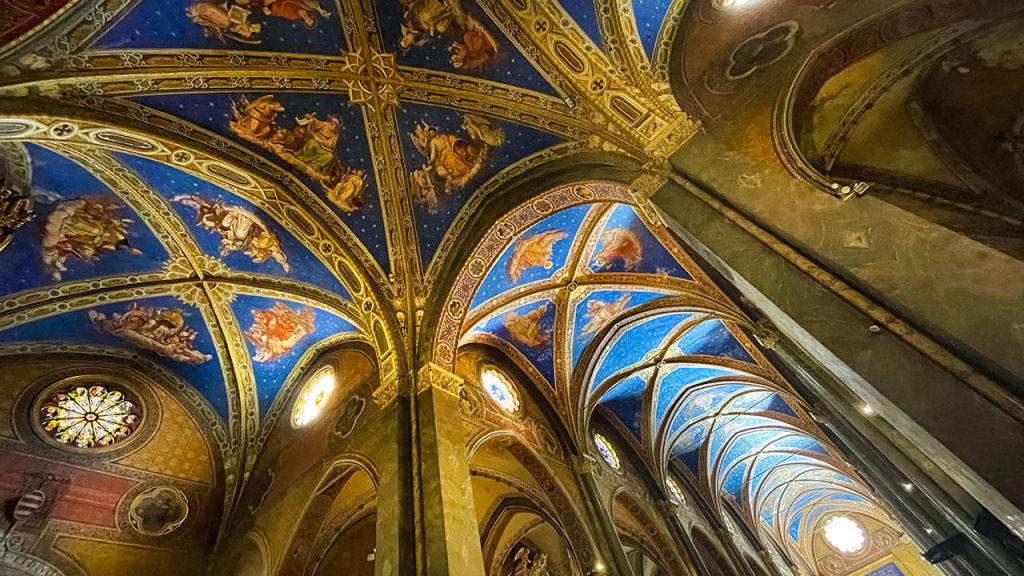
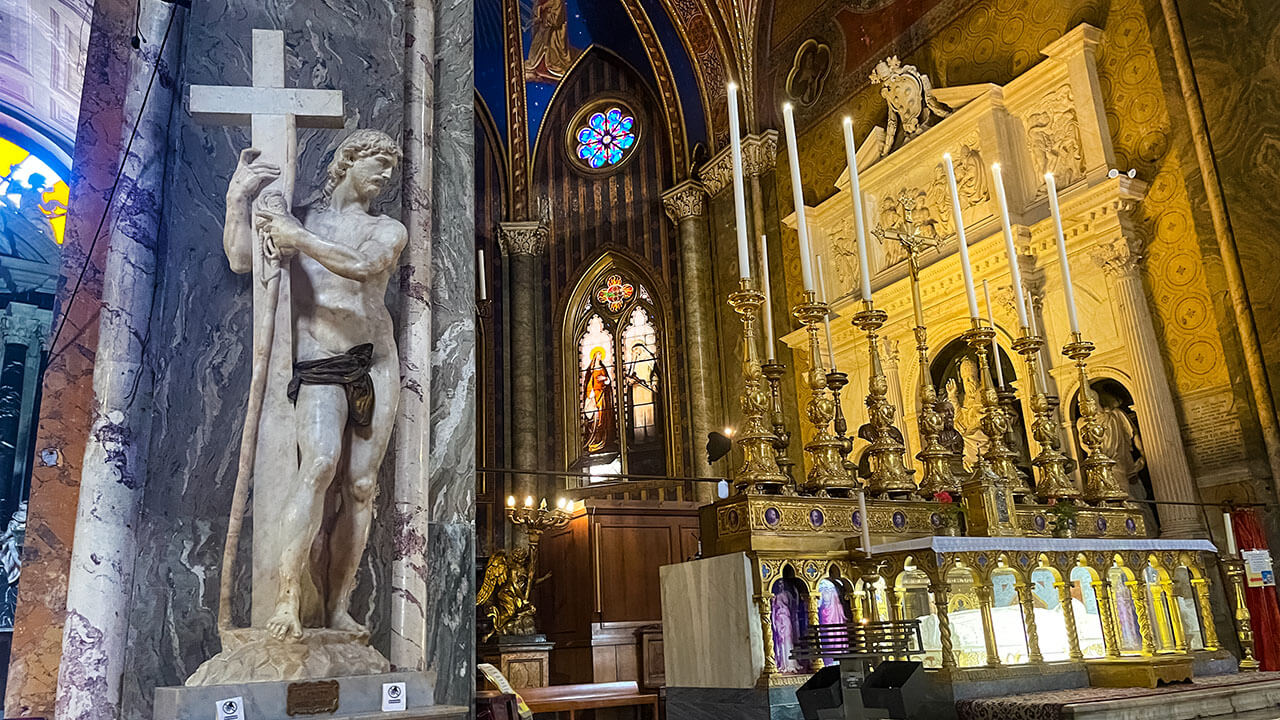
The church’s interior features soaring pointed arches, ribbed vaults, and tall, narrow windows, typical of Gothic architecture. The overall ambiance is one of verticality and lightness, drawing the eye upwards towards the heavens.
One of the most striking features is the deep blue vaulted ceiling adorned with golden stars, creating a celestial canopy that adds to the church’s ethereal atmosphere.
.

.
Santa Maria Sopra Minerva Artistic Treasures
Santa Maria Sopra Minerva is home to an impressive collection of artworks by some of Italy’s greatest masters, making it a treasure trove for art enthusiasts.
Michelangelo’s Christ the Redeemer: This marble statue, located to the left of the main altar, depicts a risen Christ holding the cross. Michelangelo’s mastery is evident in the statue’s lifelike details and serene expression. Originally, the statue was intended to be nude, but a strategically placed bronze drapery was added later for modesty.
.
.
Filippino Lippi’s Frescoes: The Carafa Chapel, located in the right transept, is adorned with stunning frescoes by Filippino Lippi. These works, which depict scenes from the life of the Virgin Mary and St. Thomas Aquinas, are celebrated for their vibrant colors and intricate details.
Bernini’s Elephant and Obelisk: Just outside the church, in Piazza della Minerva, stands one of Bernini’s charming creations—a marble statue of an elephant carrying an ancient Egyptian obelisk on its back. This whimsical yet symbolic sculpture is a favorite among visitors and a testament to Bernini’s genius.
.

.
.
Religious Significance of Santa Maria Sopra Minerva
Santa Maria Sopra Minerva is not only an artistic haven but also a site of great religious importance. It serves as the burial place for several notable figures and houses important relics.
Tomb of St. Catherine of Siena: The remains of St. Catherine of Siena, one of the patron saints of Italy, are interred beneath the high altar. St. Catherine played a crucial role in the return of the Papacy to Rome from Avignon and is revered for her theological writings and spiritual insights.
Tomb of Fra Angelico: The renowned early Renaissance painter and Dominican friar, Fra Angelico, is also buried here. His simple tomb lies in the nave and is a place of pilgrimage for art lovers and those who admire his devout and delicate works.
.

.
.
Santa Maria Sopra Minerva Visiting Tips
Santa Maria Sopra Minerva is centrally located, making it easily accessible from many of Rome’s major attractions. Here are a few tips to enhance your visit:
- Opening Hours: The church is generally open from early morning and then again in the late afternoon, but it’s wise to check ahead as hours can vary, especially around religious holidays.
- Time your Visit: Plan your church visit around your visit to the Pantheon as they are in close proximity. If you book any of the RomeCabs Rome Limousine tours that include a stop in Pizza della Rotonda, you can venture behind the Pantheon to visit this magnificent church.
.
Rome’s churches are more than places of worship; they are repositories of some of the greatest artistic treasures in the world. From the grandeur of St. Peter’s Basilica to the hidden gems of Santa Maria della Vittoria, each church offers a unique glimpse into Rome’s rich artistic and historical heritage. Whether you’re an art aficionado or a casual visitor, these churches are not to be missed on your Roman adventure.
Thank you for reading our travel blog 5 Rome churches for artistic treasures you can’t miss. We look forward to sharing with you more amazing places in Rome!
.
.
.
.
.
.
Find RomeCabs online also on:
- Facebook: https://www.facebook.com/RomeCabsToursAndTransfers
- RomeCabs Pinterest: https://www.pinterest.it/romecabs
- RomeCabs Twitter: https://twitter.com/RomeCabs
- RomeCabs Instagram: https://www.instagram.com/romecabs/
- RomeCabs Flickr Photos: https://www.flickr.com/photos/romecabs/
- RomeCabs Recommended on Cruise Critic
.
.
 RomeCabs Blog Italy - Italy Private Excursions, Rome Tours, Civitavecchia Transfers
Leave a Reply