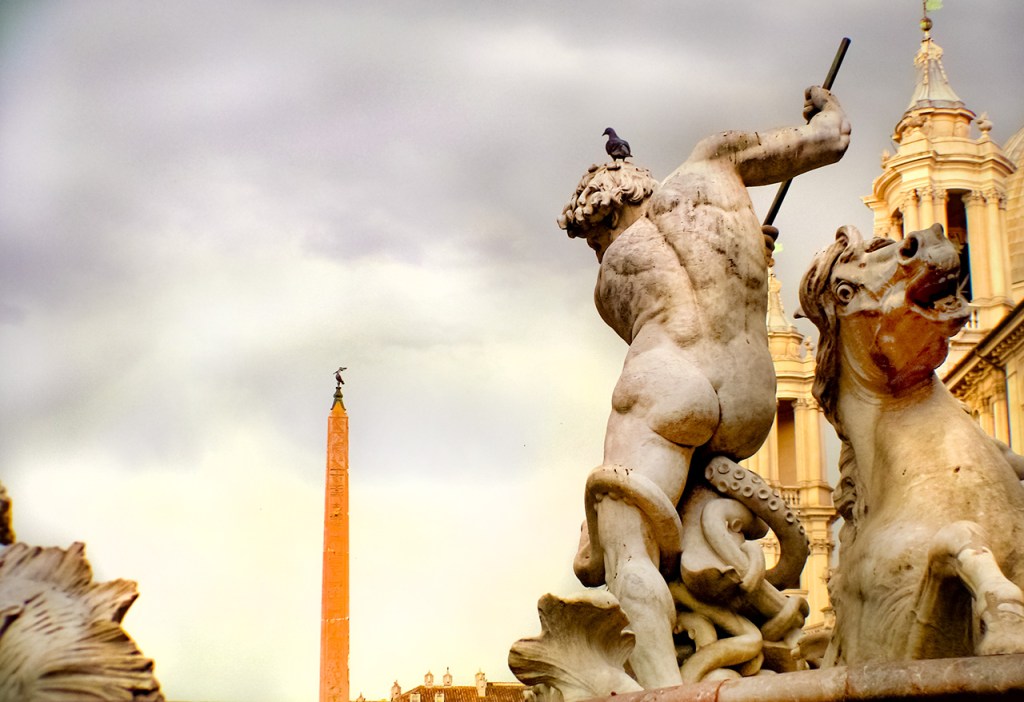
Buongiorno and welcome to the RomeCabs Travel Blog! Piazza Navona stands as one of Rome’s most iconic and enchanting squares, evolving from its origins as an ancient Roman stadium to a Baroque masterpiece in Rome. Steeped in rich history and adorned with artistic splendor, this vibrant square is a must-visit for anyone exploring the Eternal City.
Join us as we unravel the fascinating history behind Piazza Navona’s transformation, from its ancient roots to its present-day magnificence. Marvel at its splendid fountains and architectural marvels, which collectively make this square a timeless emblem of Rome’s artistic legacy. Get ready to be enthralled by the seamless fusion of history, art, and culture that defines Piazza Navona.
.
The Fascinating Ancient History of Piazza Navona
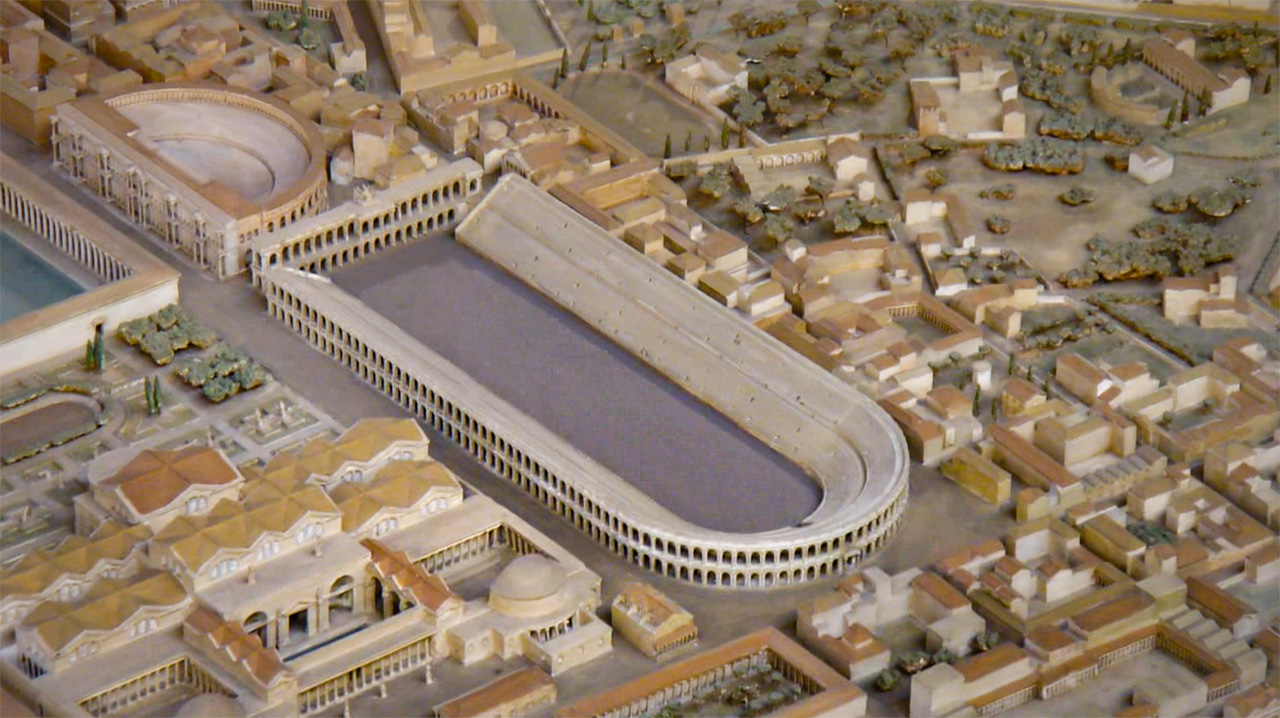
Here’s Piazza Navona’s captivating secret: it was built on the site of the ancient Stadium of Domitian. This connection to Rome’s past enhances Piazza Navona’s allure, blending historical intrigue with modern charm.
.
.
The Stadium of Domitian: Rome’s Ancient Roman Arena
At the core of Piazza Navona’s fascinating history lies the Stadium of Domitian, an architectural marvel of its time. Completed in 86 AD, this grand structure was designed to host large-scale athletic competitions, echoing the spirit of the Greek Olympics. With a capacity to seat up to 30,000 spectators, the stadium was a centerpiece of public entertainment in ancient Rome.
The stadium’s design was both innovative and monumental. It featured a long, oblong shape, which is directly reflected in the layout of the present-day Piazza Navona. As you walk through the square, you’re essentially tracing the outline of this grand arena. The stadium’s footprint laid the foundation for the square’s unique shape, creating a physical link between ancient Rome’s sporting spectacles and contemporary public life.
The archaeological site below Piazza Navona reveals portions of the stadium’s structure, including the remains of the original seating and walls. These ruins provide valuable insights into how Romans celebrated athletic prowess and entertained large audiences. Walking through these ancient remnants, you can almost feel the excitement and energy that once filled the arena.
.
The Magnificent fountains of Piazza Navona:
One of the most enchanting features of Piazza Navona is its trio of magnificent fountains, each with its own unique story and artistic significance.
The Fountain of the Moor: A Baroque Marvel with a Nautical Flair
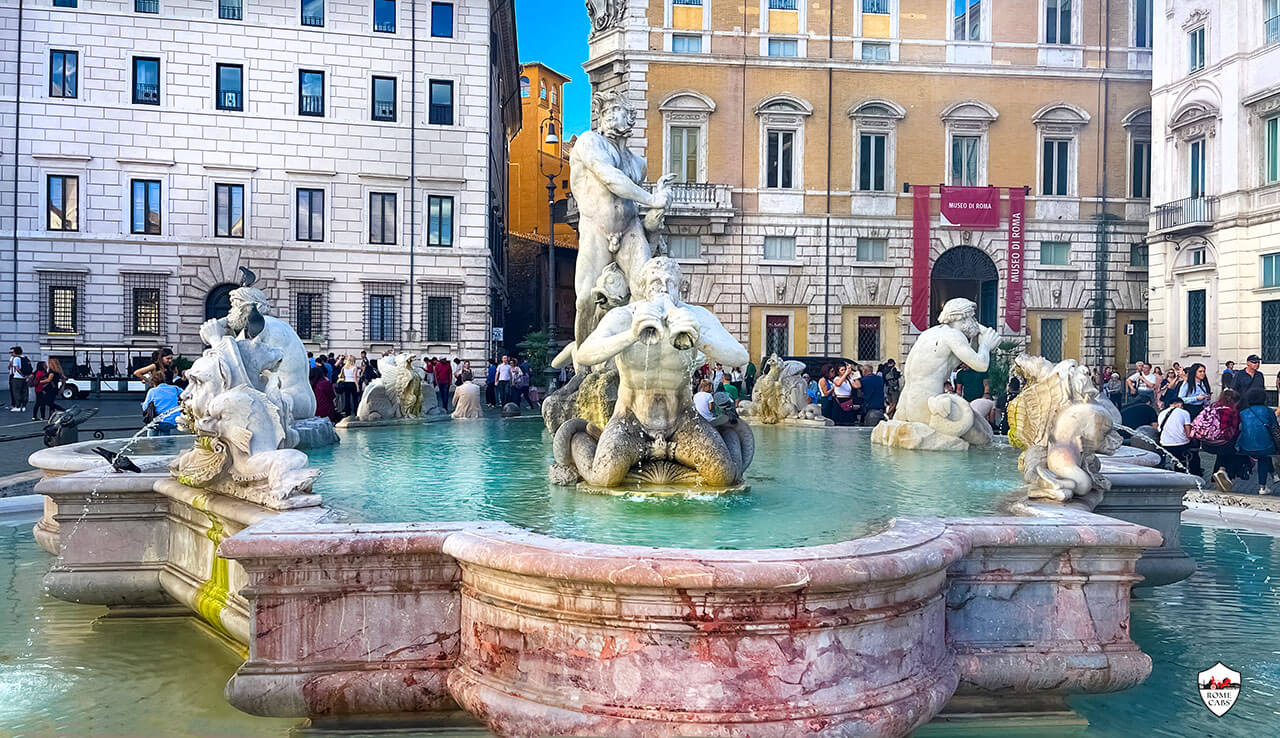
At the southern end of Piazza Navona, one of Rome’s most iconic squares, stands the magnificent Fountain of the Moor (Fontana del Moro). This Baroque masterpiece is a harmonious blend of dramatic artistry and nautical symbolism, embodying the opulence and dynamic energy of 17th-century Roman art.
.
.
Design and Features of Fountain of the Moor
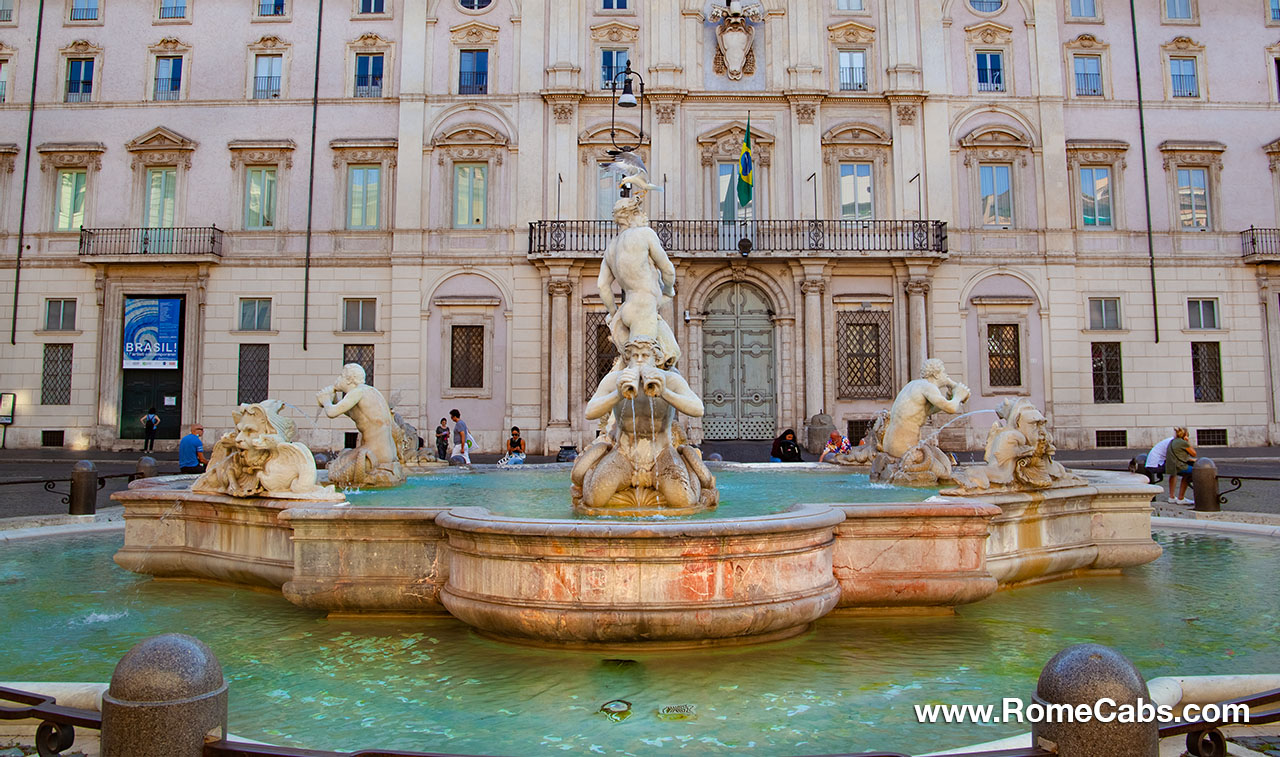
The Fountain of the Moor commands attention with its grand, circular basin crafted from elegant rose-colored marble. The fountain’s basin is surrounded by four striking Tritons—mythological sea deities with human torsos and fish-like lower bodies. Each Triton is intricately carved, blowing water from ornate shells, and is flanked by pairs of dolphins and dragons that also contribute to the water display. The interplay of these elements—dolphins spouting water from their mouths and dragons with their own streams—creates a mesmerizing, dynamic spectacle.
At the heart of the fountain is the central figure, a Moor wrestling with a dolphin, which has sparked much debate over its intended representation. Originally, there was speculation that this figure might have been meant to depict Neptune, the Roman god of the sea. Today, however, the figure is widely recognized as a Moor, a powerful visual centerpiece that stands atop a conch shell. This central figure was sculpted by Giovanni Antonio Mari, using a detailed terracotta modello created by the renowned Gian Lorenzo Bernini.
.
.
Giacomo della Porta’s Original Design of Fountain of the Moor
Giacomo della Porta, a master of late Renaissance architecture, designed the Fountain of the Moor in the 1570s. His original vision for the fountain featured a large, circular basin supported by four Tritons, each depicted in the act of blowing water from a shell. The initial concept included a central rock formation, which was later replaced by a more elaborate centerpiece.
Della Porta’s design also incorporated four heads that spouted water, flanked by dolphins and dragons—a nod to Pope Gregory XIII’s coat-of-arms, which featured a dragon. The fountain was originally intended to channel water from the Acqua Vergine aqueduct, and it was adorned with travertine balustrades. These balustrades were later removed, leaving the focus on the intricate and dynamic sculptures.
.
Bernini’s Refurbishment
In 1651, Pope Innocent X, impressed by Gian Lorenzo Bernini’s work on the Fountain of the Four Rivers, commissioned him to refurbish the Fountain of the Moor. Bernini’s restoration involved significant changes: he removed the original balustrade and introduced a new, more elaborate basin. His initial design included three fish with tails raised to support a shell that spouted water, but this was deemed insufficiently grand by the Pope.
Bernini’s subsequent design proposal featured two Tritons holding four dolphins, though this was never implemented. Instead, Bernini refined the central figure, placing the Moor atop the conch shell in a dramatic pose of struggle. The final version of the fountain included two steps within the basin, enhancing its visual depth and grandeur. Bernini’s terracotta modello of the Moor is renowned for its refined details and classical influences, demonstrating his mastery of capturing both motion and emotion.
The Fountain of the Moor stands as a quintessential example of Baroque art’s fascination with dynamic movement and emotional intensity. The Moor’s powerful stance and fierce expression encapsulate the dramatic flair of the Baroque era, while the surrounding Tritons, dolphins, and dragons contribute a rich layer of mythological and nautical symbolism. The intricate design of these elements creates a vibrant and engaging visual experience, showcasing the Baroque period’s theatricality.
The use of rose-colored marble and elaborate water-spouting features underscores the fountain’s grandeur and complexity. This combination of classical motifs with Baroque innovation highlights the transitional nature of the fountain’s artistic evolution.
.

.
.
Restoration and Modern Challenges
Over the centuries, the Fountain of the Moor has faced several challenges, including restoration efforts to preserve its historical and artistic integrity. In 1874, some of the original sculptures were moved to the Galleria Borghese, and in 2011, the fountain was vandalized, prompting further restoration work. Despite these issues, the fountain continues to be a beloved and admired feature of Piazza Navona, celebrated for its artistic beauty and historical significance.
Today, the Fountain of the Moor remains a captivating focal point in Piazza Navona, drawing visitors with its intricate design and rich history. Its presence adds to the square’s vibrant atmosphere, making it an essential stop for anyone exploring the Eternal City.
.
The Fountain of Neptune: A Symbol of Power and Harmony
.
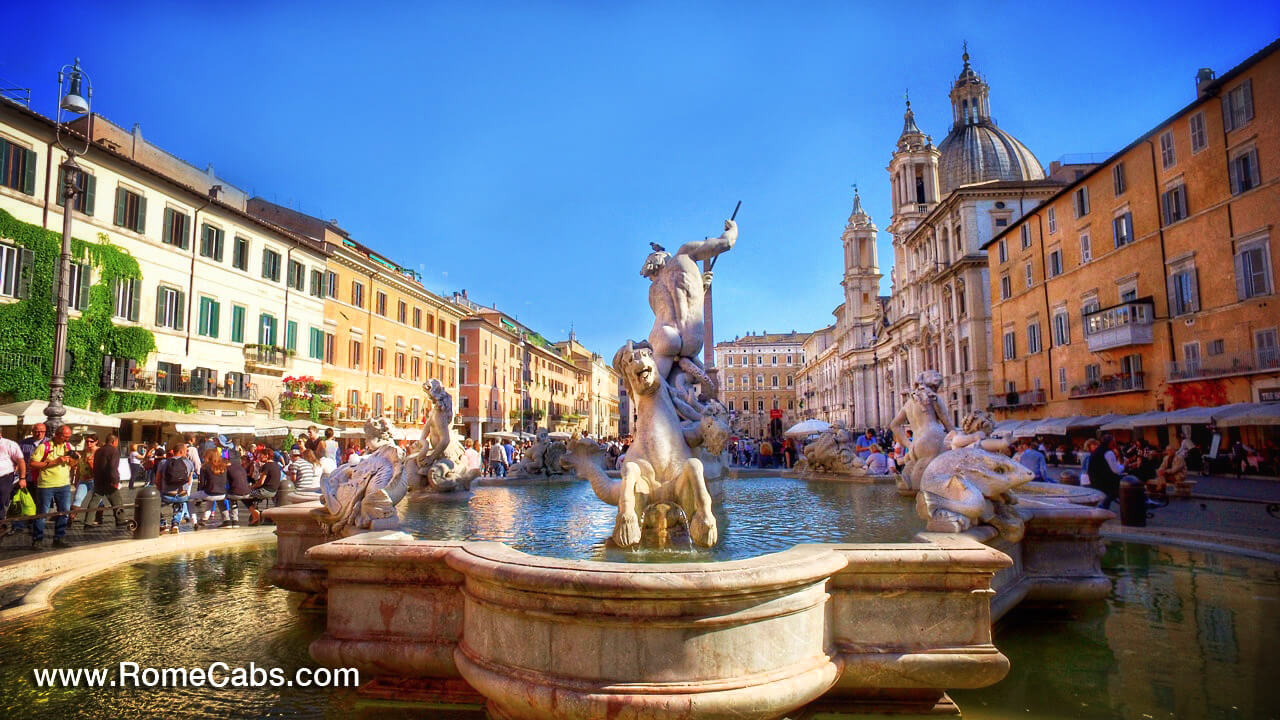
At the northern end of Piazza Navona, the Fountain of Neptune (Fontana del Nettuno) stands as a striking emblem of both strength and harmony. This magnificent fountain, which contributes to the square’s dramatic and cohesive aesthetic, has undergone a fascinating transformation from its original design to its present grandeur.
.
.
.
Neptune’s Triumph
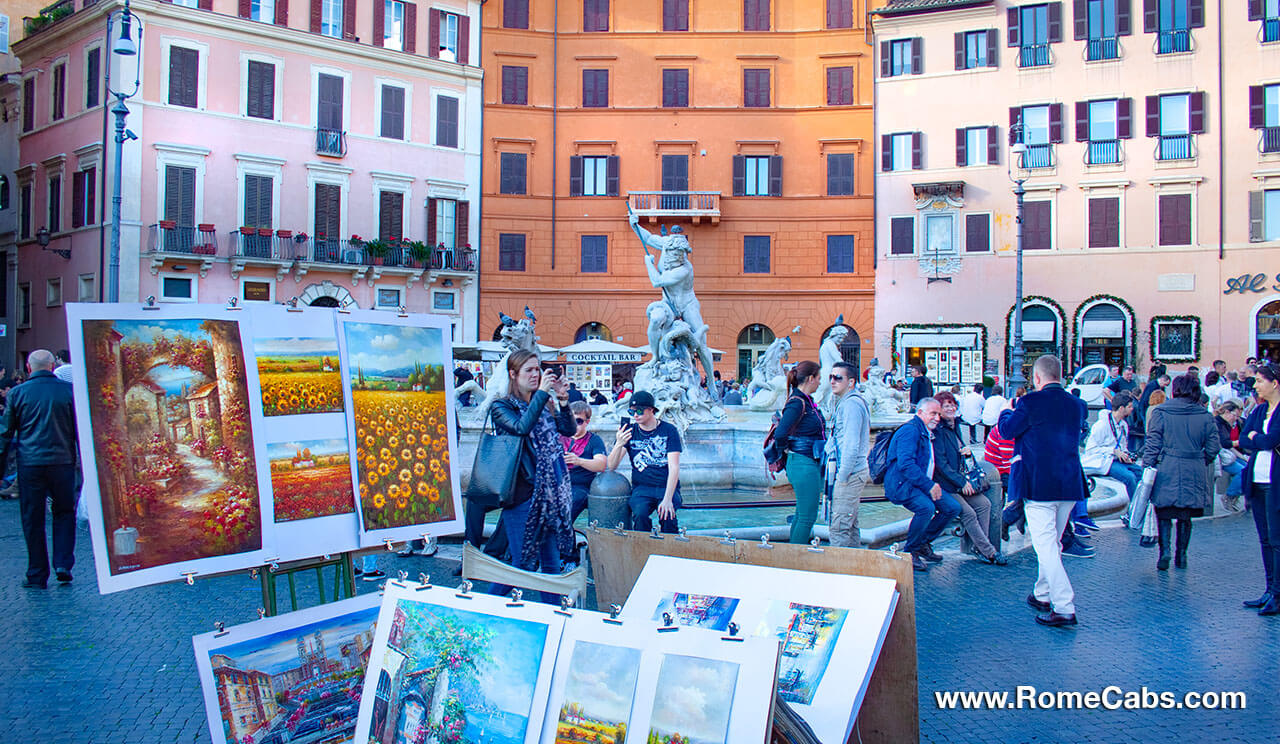
The centerpiece of the revamped fountain is the formidable figure of Neptune, the Roman god of the sea, depicted in a fierce struggle with an octopus. This dynamic sculpture, crafted from marble, captures Neptune’s commanding presence and the raw power of the ocean. With his trident firmly in hand, Neptune exudes strength and authority, embodying the Baroque fascination with motion and emotional intensity. The depiction of Neptune wrestling with the octopus underscores the dramatic tension and vitality that characterize this period’s artistic expressions.
.
Surrounding Figures
Enhancing Neptune’s dramatic presence are a series of supplementary sculptures, including sea nymphs, cherubs, and sea horses. These elements enrich the thematic unity of the fountain, blending elements of marine mythology with whimsical charm. The sea nymphs and cherubs are rendered in fluid, playful poses, while the sea horses—closely associated with Neptune—underscore the fountain’s nautical theme. Each sculptural element contributes to the overall narrative, adding layers of detail and visual interest.
.

.
.
Artistic and Symbolic Impact
The enhancements made in the 19th century revitalized the Fountain of Neptune, aligning it with the adjacent Fountain of the Moor and contributing to the square’s visual harmony. The incorporation of dramatic figures and intricate details introduced a renewed sense of grandeur and elegance, elevating the fountain’s artistic stature.
The interplay between Neptune and the octopus, alongside the surrounding figures, creates a dynamic focal point within Piazza Navona. This vibrant tableau of movement and stillness, combined with rich maritime symbolism, reflects the artistic ethos of the Baroque era while continuing to captivate modern audiences.
Today, the Fountain of Neptune remains a celebrated masterpiece in Piazza Navona, renowned for its dramatic sculptures and intricate craftsmanship. It continues to enchant visitors with its rich artistic legacy and its role in enhancing the square’s majestic ambiance.
.
Fountain of the Four Rivers: Bernini’s Ode to the World’s Great Rivers
.
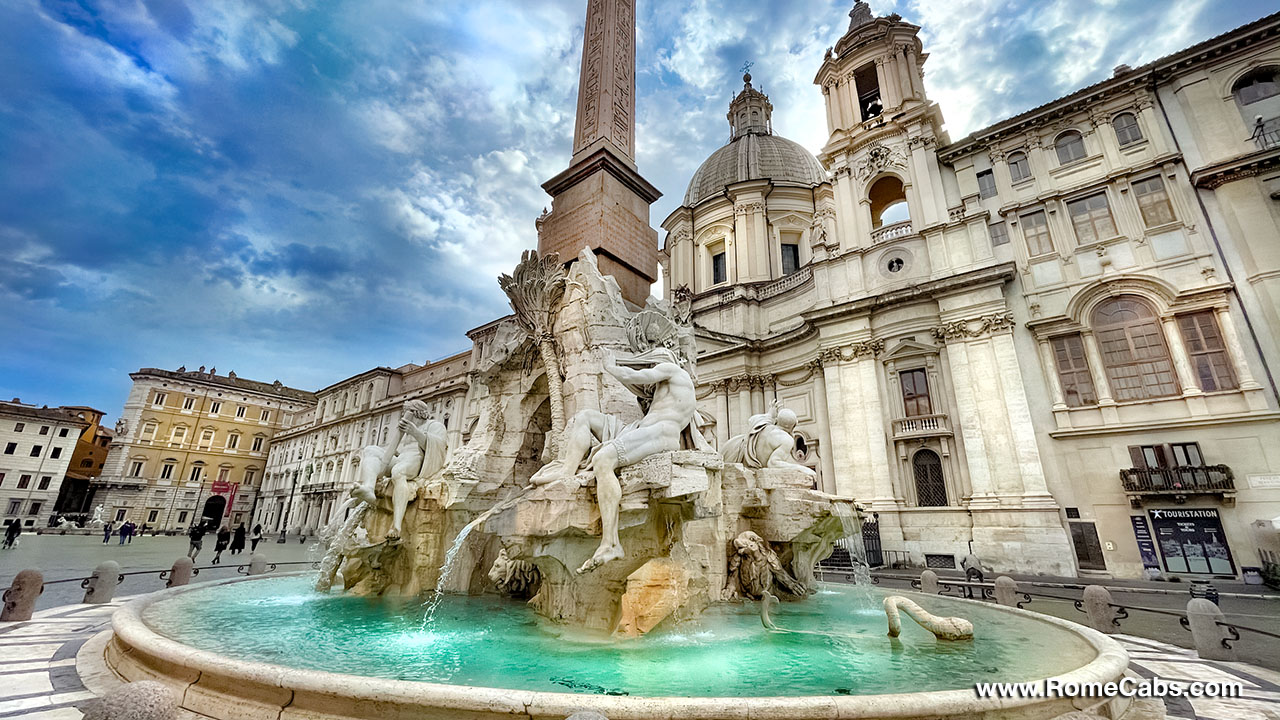
At the heart of Piazza Navona stands Gian Lorenzo Bernini’s magnum opus: the Fountain of the Four Rivers (Fontana dei Quattro Fiumi). Commissioned by Pope Innocent X and unveiled in 1651, this Baroque masterpiece encapsulates Bernini’s genius and reflects the grandeur of the Roman Empire through a dramatic fusion of art and symbolism. The fountain, a pinnacle of Baroque artistry, not only graces the square with its beauty but also serves as a testament to the era’s global aspirations and artistic innovation.
.
.
Design and Symbolism of the Fountain of the Four Rivers
The Fountain of the Four Rivers is a grandiose creation centered around an Egyptian obelisk, which was transported from the Circus of Maxentius near the Ancient Appian Way. This ancient monument, covered in hieroglyphs, adds a touch of exoticism and underscores Rome’s historical reach and fascination with Egypt. The obelisk, soaring 16 meters into the sky, stands as a symbol of the Pope’s power and the vastness of the Roman Empire.
Beneath the obelisk, Bernini has sculpted four river gods, each representing a major river from the four known continents of the time. This global representation highlights the fountain’s role as a symbol of the Church’s universal authority and the interconnectedness of different parts of the world. The river gods are:
The Nile: Representing Africa, the Nile River god is depicted with a mysterious, veiled face, symbolizing the unknown sources of the Nile, which were still a matter of curiosity in the 17th century. His posture is one of contemplation, leaning against a bundle of reeds with a head turned towards a hidden, symbolic representation of his river’s source.
The Danube: As the representative of Europe, the Danube River god is shown in a more robust, regal pose. He is accompanied by a lion, symbolizing the strength and significance of the Danube in European trade and agriculture. His presence conveys a sense of stability and might, reflecting Europe’s influence and power.
The Ganges: The Ganges River god embodies Asia with a dynamic, powerful stance. He is depicted in a moment of action, as though he is ready to rise from the fountain’s base. His presence is adorned with exotic elements, such as an intricate headdress and a coiled serpent, emphasizing the Ganges’s cultural and spiritual significance in Asia.
The Rio de la Plata: Representing the Americas, the Rio de la Plata is shown with a more contemplative demeanor, holding a large urn from which water flows. His figure is relaxed but firm, indicating the burgeoning influence and importance of the New World during the period of European exploration and colonization.
.

.
Artistic Composition of the Fountain of the Four Rivers
Bernini’s artistry is evident in the dynamic composition and intricate details of the fountain. Each river god is portrayed with a unique combination of mythological and natural elements, creating a vivid representation of their respective regions. The gods are set against a backdrop of lush foliage, rocks, and cascading water, which together create a sense of movement and vitality.
The fountain’s dramatic design is further enhanced by the interplay of light and shadow across the sculptural elements. The water flows from various points, including the gods’ symbolic attributes, creating a dynamic and ever-changing visual effect that captures the essence of Baroque art’s fascination with movement and drama.
.

.
Historical and Cultural Context of the Fountain of the Four Rivers
The Fountain of the Four Rivers was commissioned during a period of intense artistic competition in Rome. Pope Innocent X, known for his patronage of the arts, sought to make a bold statement with this fountain, reflecting the Catholic Church’s global reach and its central role in the cultural life of the city.
The fountain’s design and its incorporation of the obelisk from the Circus of Maxentius serve to connect Rome’s imperial past with its present, while also showcasing the era’s fascination with the exotic and the unknown. By representing rivers from each of the known continents, Bernini’s work symbolically encircles the world, illustrating the Church’s aspiration to unify diverse regions under its spiritual and temporal authority.
.

.
The Fountain of the Four Rivers remains a celebrated masterpiece, admired for its grandeur and artistic innovation. It continues to be a focal point of Piazza Navona, drawing visitors from around the world who come to marvel at its intricate design and historical significance. Over the centuries, the fountain has undergone various restorations to preserve its splendor, ensuring that it remains a testament to Bernini’s genius and a symbol of Rome’s enduring legacy.
In summary, the Fountain of the Four Rivers is not just a remarkable piece of Baroque art but also a profound representation of the Catholic Church’s global vision during the 17th century. Its majestic design, combined with the rich symbolism of the river gods and the imposing Egyptian obelisk, makes it a timeless masterpiece that continues to captivate and inspire.
.
The Majestic Sant’Agnese in Agone Church in Piazza Navona
.
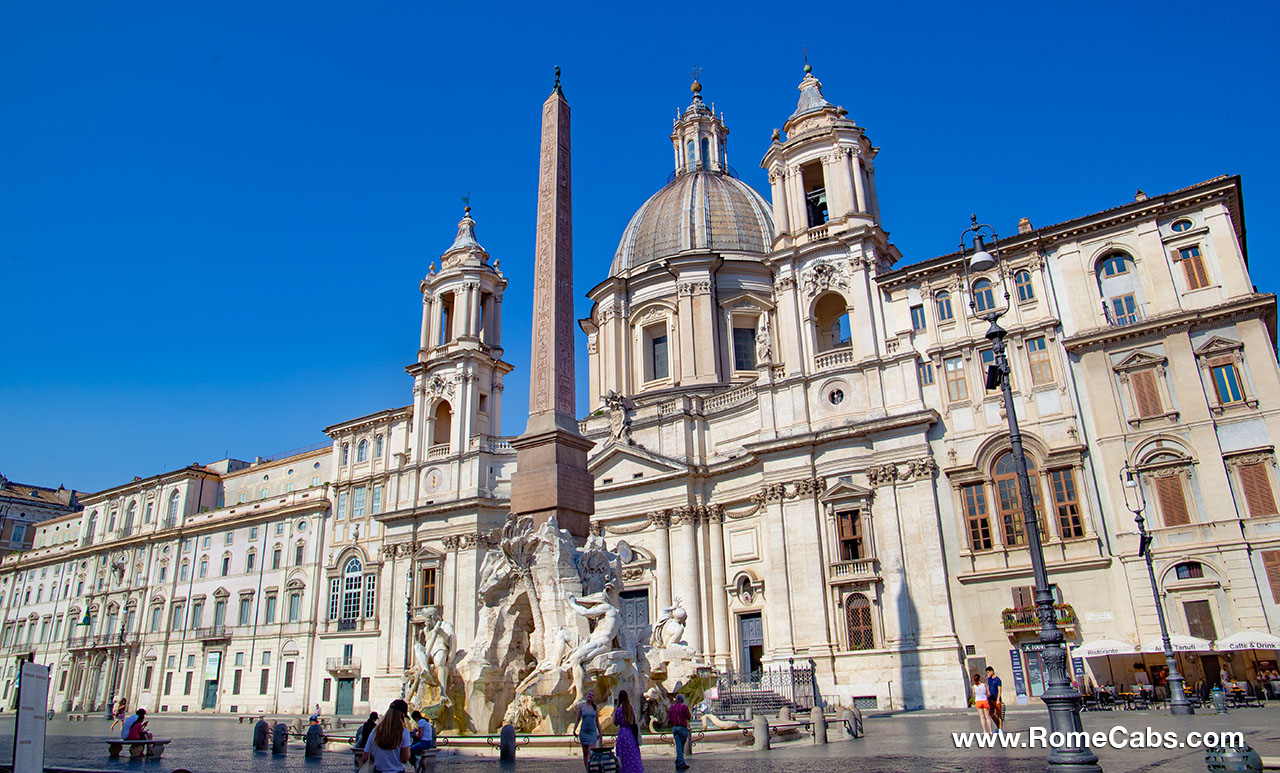
Dominating the view of Piazza Navona, the Sant’Agnese in Agone Church stands as a magnificent testament to 17th-century Baroque artistry. Dedicated to Saint Agnes, the church is not only a place of worship but also a vibrant symbol of Rome’s rich history and architectural brilliance.
.
.
The Sant’Agnese in Agone Church stands as a quintessential example of Baroque architecture, masterfully designed by Francesco Borromini. Its facade is a tour de force of dynamic design, characterized by fluid, undulating curves that create a dramatic interplay of light and shadow, a departure from the rigid lines of classical architecture. Borromini’s facade includes a series of concave and convex elements, complemented by elaborate sculptural details such as angelic figures and intricate reliefs framing the entrance. The grand pediment, with its swirling composition, draws the eye upward, emphasizing the church’s vertical grandeur.
Inside, the church reveals its opulent Baroque splendor. The interior follows a Latin cross layout, leading visitors through a richly adorned sanctuary where the main altar, crafted by Carlo Rainaldi, features a poignant statue of Saint Agnes in flames, symbolizing her martyrdom. This centerpiece embodies the movement and emotional intensity typical of Baroque art. The church’s ceiling and vaults are decorated with celestial frescoes by renowned artists, depicting scenes from Saint Agnes’ life and other religious themes, which enhance the sense of spiritual elevation.
The side chapels of Sant’Agnese in Agone are equally impressive, each adorned with intricate marble altarpieces, sculptural groups, and elaborate stucco work. These chapels, dedicated to various saints and religious figures, showcase the artistic richness of the Baroque period and reflect the creativity and craftsmanship of the era.
.

.
Martyrdom of Saint Agnes
The church’s connection to Saint Agnes is both profound and historical. Saint Agnes, a young Christian martyr from the early 4th century, is remembered for her unwavering faith and courage in the face of persecution. According to tradition, Agnes was executed for her beliefs in the Stadium of Domitian, an ancient arena that once stood on the very grounds where Piazza Navona now lies. This stadium, a remnant of Rome’s imperial past, was known for its grand athletic and public spectacles, and it is believed that Agnes met her martyrdom here, making it a site of significant historical and spiritual importance.
The construction of Sant’Agnese in Agone was initiated to honor her sacrifice and to provide a sacred space dedicated to her veneration. The church not only marks the traditional location of her martyrdom but also serves as a testament to her enduring legacy and the impact of her faith. As a focal point for the worship and commemoration of Saint Agnes, the church integrates her story into its architectural and artistic elements. The dramatic main altar, designed by Carlo Rainaldi, features a striking statue of Saint Agnes engulfed in flames, vividly portraying the moment of her martyrdom. This representation captures the essence of her bravery and serves as a powerful symbol of her steadfastness and spiritual resolve.
.
Piazza Navona is one of the Liveliest Squares in Rome!
.
Piazza Navona is one of the liveliest squares in Rome, buzzing with activity day and night. The square itself is alive with visitors and locals alike who gather to enjoy the atmosphere. Street performers entertain the crowds with music, juggling, and other acts, adding to the square’s festive vibe. Artists set up their easels, offering painted masterpieces and caricatures as memorable vacation souvenirs. The vibrant scene is a feast for the senses, with the sounds of music and laughter, the scent of delicious food wafting from nearby cafes, and the sight of colorful art and architecture.
.
Dining and Shopping in Piazza Navona
The square is lined with various shops, cafes, and restaurants, making it a perfect spot to relax and soak in the ambiance. Many of the outdoor cafes offer prime seating for people-watching while enjoying a cup of espresso or a glass of wine. The restaurants serve a range of Italian dishes, from classic pasta and pizza to gourmet specialties. Dining al fresco in Piazza Navona, with the Baroque fountains and historic buildings as your backdrop, is an experience not to be missed.
.

.
Events and Festivals in Piazza Navona
Piazza Navona is also a hub for events and festivals throughout the year. During the Christmas season, the square transforms into a festive market, with stalls selling holiday treats, decorations, and gifts. The Epiphany Fair, held in January, is a particularly popular event, featuring a large Christmas tree, a nativity scene, and a lively market. In the summer, the square hosts various cultural events, including outdoor concerts and art exhibitions, adding to its dynamic and ever-changing atmosphere.
.
Visiting Piazza Navona with Stefano’s RomeCabs
.
If you’d like to visit Piazza Navona, you can select any of the following Rome Limousine Tours provided by Stefano’s RomeCabs and Stefano Rome Tours, or request a visit to this fabulous square on any of our other tours that do not include it in its suggested itinerary.
.
Panoramic Rome for Cruisers Tour
If you’re arriving in Rome via a cruise, our Panoramic Rome for Cruisers Tour is an ideal choice. This tour provides a whirlwind overview of the city’s highlights, including a stop at Piazza Navona. You’ll be able to marvel at the square’s beauty and vitality before continuing on to other must-see attractions.
.

.
Rome Town and Country Tour
.
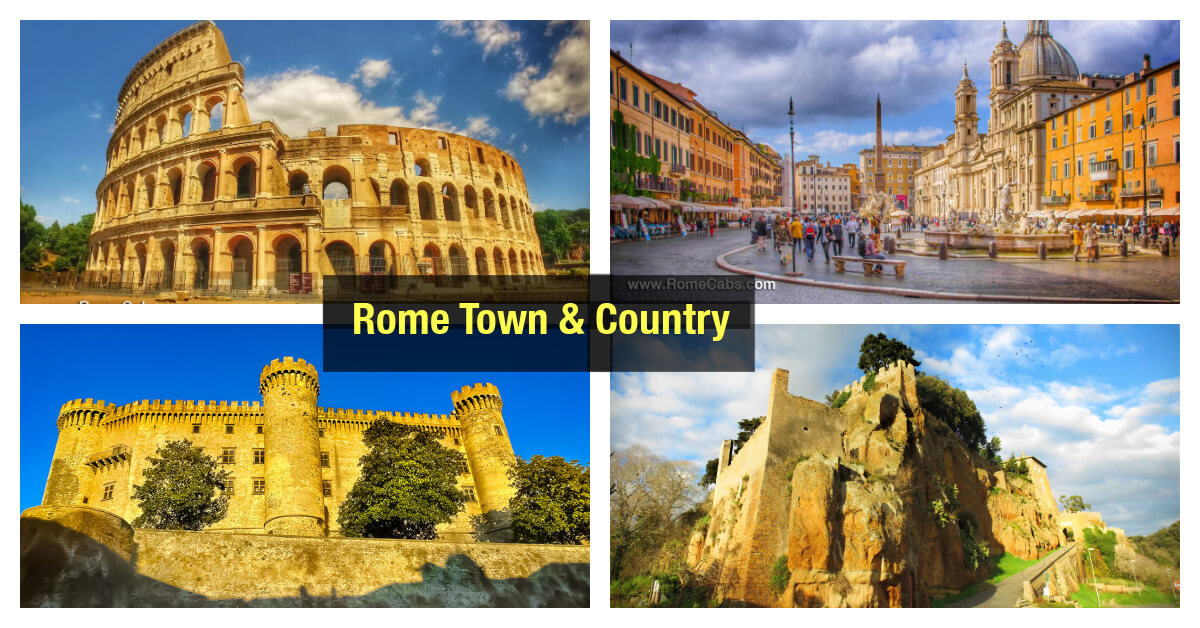
Our Rome Town and Country Tour offers the perfect blend of city and countryside, allowing you to experience the best of both worlds in just one day. Begin your journey in Rome, exploring its most popular squares and ancient monuments, including a visit to Piazza Navona. Then, venture into the Roman countryside to visit the historical town of Bracciano and the Medieval clifftop village of Ceri. Enjoy a traditional Italian lunch in Ceri before continuing to the Renaissance Castle of Bracciano, overlooking a pristine volcanic crater lake. This tour is ideal for travelers and cruisers who can’t choose between the charm of Rome and the beauty of the countryside.
.
.
Tour Rome as Romans Do
Experience Rome like a local on our Tour Rome as Romans Do. This carefully crafted chauffeur-driven tour takes you to many of Rome’s cherished landmarks, squares, and beloved sites, including Piazza Navona. Revel in the epochal wonders of Rome from the comfort of your private deluxe vehicle, with your English-speaking Driver guiding you through the city’s heart. You’ll see more of Rome in less time, maximizing sightseeing while minimizing walking distance. Indulge in a sumptuous lunch at a local trattoria in the vibrant Trastevere district, considered the soul of Rome, and save room for a mouthwatering gelato that will sweeten your memories of Rome forever. This tour is available both as a Day Tour from Rome and as a Shore Excursion from Civitavecchia.
.
.
.
Pre-Cruise Rome Tour with Civitavecchia Transfer
.
Maximize your sightseeing opportunities in Rome before your cruise departs with our Pre-Cruise Rome Tour with Civitavecchia Transfer. Spend your pre-cruise morning enjoying Rome’s most famous squares and monuments, including Piazza Navona, before heading to Civitavecchia to board your cruise ship. Your luggage will travel with you safely inside your private deluxe vehicle, allowing you to tour in comfort and style. Your driver will take you as close as possible to each site you visit, minimizing walking distance and ensuring a stress-free experience.
.
.
Piazza Navona is more than just a square; it’s a living testament to Rome’s rich history and vibrant culture. From its ancient roots as the Stadium of Domitian to its Baroque splendor and lively atmosphere, Piazza Navona offers a unique and unforgettable experience for visitors. Whether you’re admiring the stunning fountains, exploring the majestic Sant’Agnese in Agone Church, or simply enjoying a meal at an outdoor cafe, Piazza Navona is sure to captivate and delight.
Plan your visit to Piazza Navona with Stefano’s RomeCabs and discover the magic of one of Rome’s most beloved squares. We look forward to welcoming you on our tours and helping you create lasting memories in the Eternal City.
.
Find RomeCabs online also on:
- Facebook: https://www.facebook.com/RomeCabsToursAndTransfers
- RomeCabs Pinterest: https://www.pinterest.it/romecabs
- RomeCabs Twitter: https://twitter.com/RomeCabs
- RomeCabs Instagram: https://www.instagram.com/romecabs/
- RomeCabs Flickr Photos: https://www.flickr.com/photos/romecabs/
- RomeCabs Recommended on Cruise Critic
.
.
.
 RomeCabs Blog Italy - Italy Private Excursions, Rome Tours, Civitavecchia Transfers
Leave a Reply