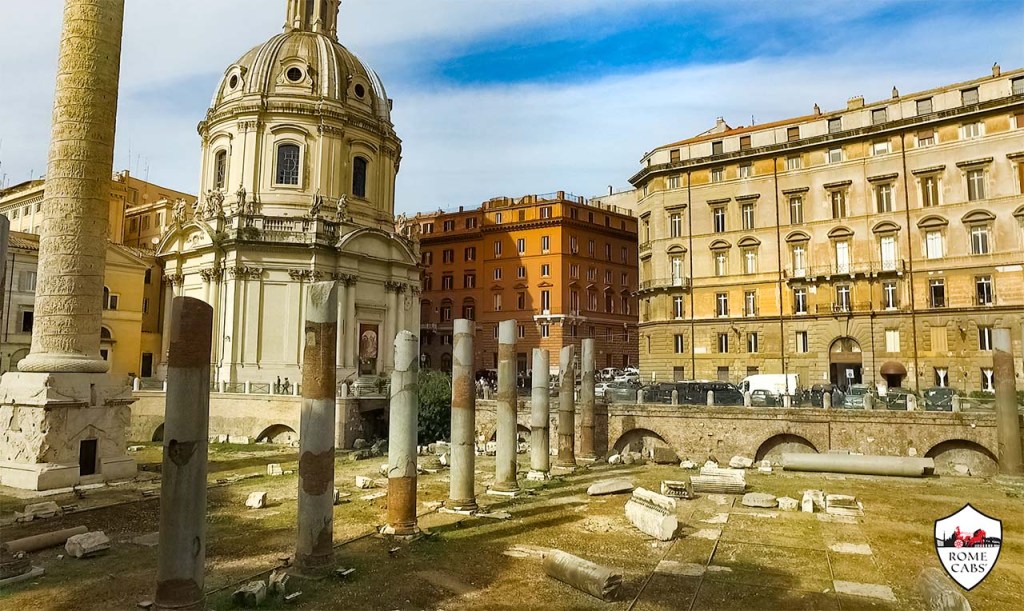
Buongiorno and welcome to the Rome Cabs Travel Blog! Today, we take you on a journey through one of ancient Rome’s most awe-inspiring sites: Trajan’s Forum – a pinnacle of Roman architectural and civic mastery. Situated near the iconic Trajan’s Column, this monumental complex, completed in 113 AD during the illustrious reign of Emperor Trajan, represents the pinnacle of Roman imperial ambition and architectural mastery. Far more than a mere symbol of power, Trajan’s Forum was a vibrant center for administrative, legal, and cultural activities, embodying the Roman Empire’s unparalleled expertise in urban planning and public architecture.
In this blog, we will shed some light on Emperor Trajan, the vision behind Trajan’s Forum, the ancient Roman architectural marvels that once graced this space, and other Ancient Roman wonders you can see and visit near Trajan’s Forum.
.
.
.
Emperor Trajan: The Vision Behind Trajan’s Forum
.
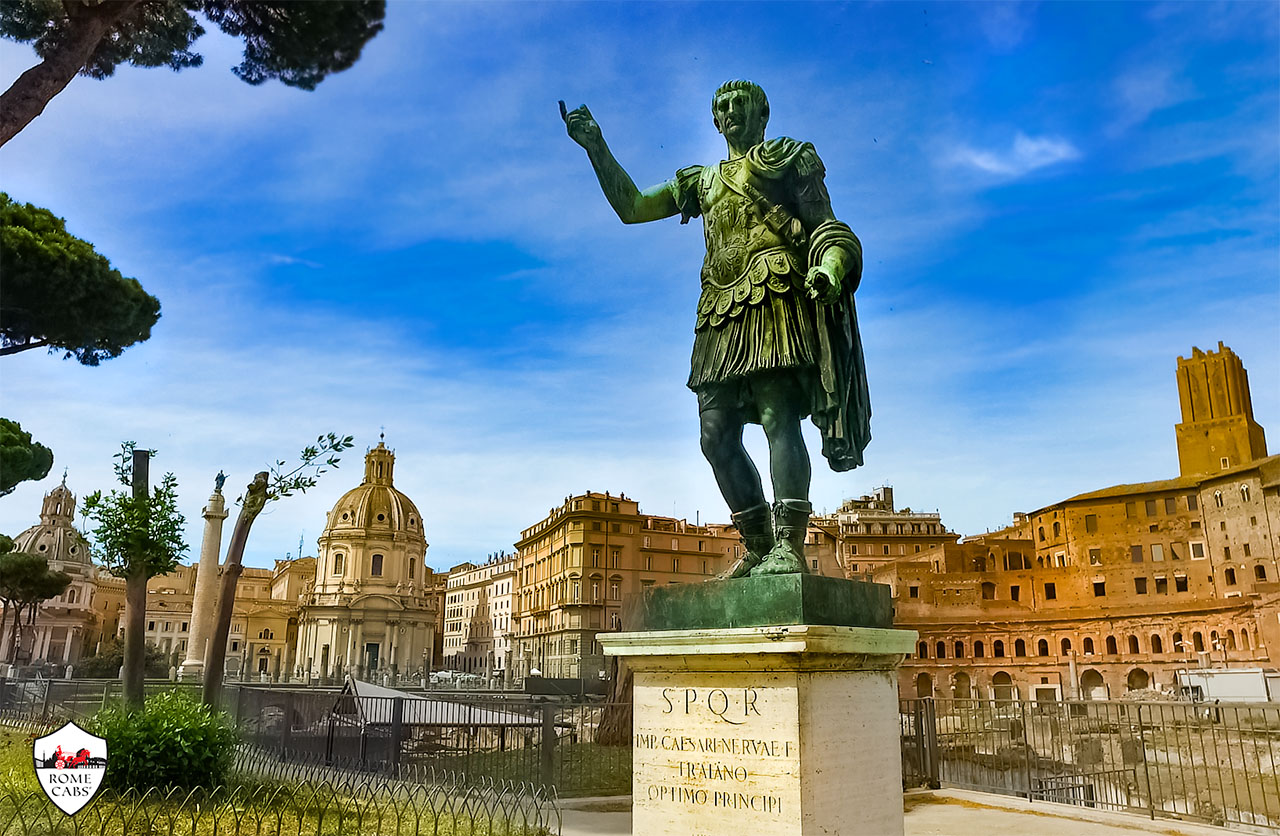
Emperor Trajan, born Marcus Ulpius Traianus on September 18, 53 AD in Hispania (modern-day Spain), is remembered as one of Rome’s most illustrious emperors. His reign from 98 AD to 117 AD was marked by significant military victories, ambitious architectural projects, and sweeping administrative reforms that profoundly shaped the Roman Empire.
Trajan’s rise to power was facilitated by his adoption by Emperor Nerva, a move that not only secured his claim to the throne but also set the stage for a period of remarkable expansion and consolidation.
.
.
Trajan’s Forum was more than an architectural achievement; it was a reflection of his strategic vision for Rome. Commissioned in the aftermath of his successful campaigns in Dacia, the Forum was built using the spoils from these victories.
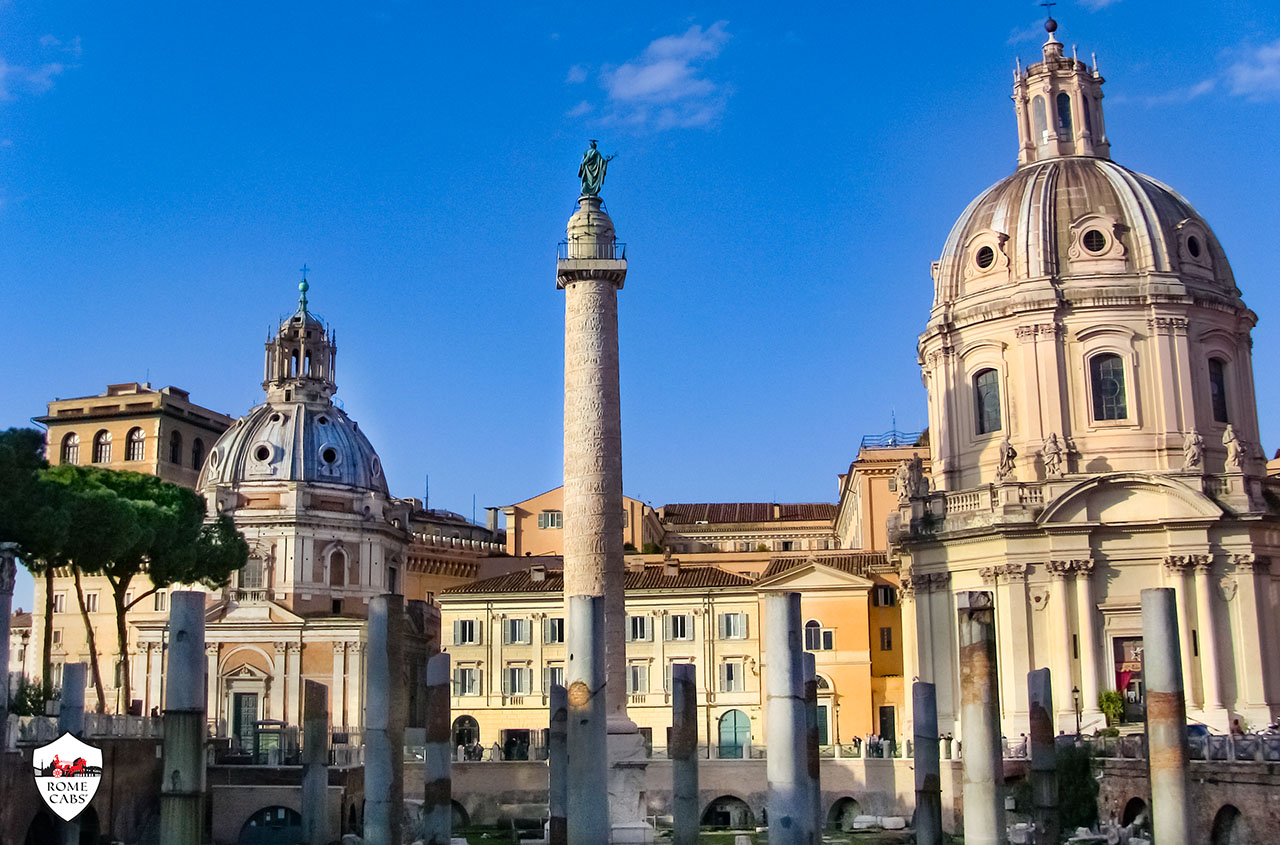
Construction began between 105 and 107 AD, following extensive excavations to level the site by removing a ridge that connected the Quirinal and Capitoline Hills. Over 300,000 cubic meters of soil and rock were excavated, demonstrating the scale of the project. The Forum was inaugurated in 112 AD, with Trajan’s Column, which celebrates his Dacian triumphs, being completed and dedicated in 113 AD.
.
Trajan’s motivation to build the Forum
Trajan’s decision to construct the Forum was driven by several key motivations. Firstly, it was a testament to the power and stability of his reign.
The grand design of the Forum, including its expansive piazza, monumental basilica, and triumphal arch, served to visually assert the strength of the Roman Empire and Trajan’s central role within it. The Forum was intended to symbolize the emperor’s authority and reinforce the empire’s grandeur.
Additionally, the Forum was a hub of administrative and judicial activity. The Basilica Ulpia, a central feature of the Forum, was designed to facilitate governmental functions and streamline the administration of justice. This focus on efficiency was part of Trajan’s broader efforts to improve the empire’s administrative apparatus and ensure effective governance.
.

.
Trajan’s commitment to intellectual and cultural advancement
Trajan’s commitment to intellectual and cultural advancement is prominently reflected in the Forum’s dual libraries. These libraries, dedicated to Greek and Latin texts, were designed to be centers of learning and scholarly exchange. By housing extensive collections of both Greek and Roman works, Trajan underscored Rome’s role as a custodian of classical knowledge and a center of intellectual life.
The Forum also served as a venue to celebrate Trajan’s military successes, particularly his victories in Dacia. The triumphal arch, a central feature of the Forum, was adorned with friezes depicting scenes from the Dacian Wars, honoring Trajan’s achievements and reinforcing his image as a divinely favored ruler. This arch was not only a monument to Trajan’s military prowess but also a powerful symbol of imperial triumph and divine favor.
.
.
Basilica Ulpia: A Monument of Imperial Ambition
.
At the heart of Trajan’s Forum stands the Basilica Ulpia, a defining masterpiece of Roman architecture and imperial ambition. Constructed between 106 and 113 AD, the Basilica Ulpia was not only one of the largest but also one of the most grandiose basilicas of its time. Named after Emperor Trajan (Marcus Ulpius Traianus), the basilica became a pivotal center for administrative, judicial, and public functions in Rome, surpassing even the earlier Basilicas Aemilia and Julia in importance until the construction of the Basilica of Maxentius and Constantine.
.
Architectural Grandeur and Design
The Basilica Ulpia was designed as a monumental space, measuring approximately 117 by 55 meters (385 x 182 feet). Its architectural layout featured a vast central nave flanked by four expansive side aisles—two on each side. The basilica’s grand entrance was located on the long east front, overlooking the Forum of Trajan.
This entrance was framed by three grand doorways and adorned with a portico featuring three projecting porches. The central porch, the most elaborate, was supported by ten columns of yellow marble and was topped with a gilded bronze quadriga (a four-horse chariot) accompanied by Victories. The flanking porches were decorated with bigae (two-horse chariots) and colossal statues of Trajan.
The Basilica Ulpia’s roof, soaring to a height of 50 meters (164 feet), was covered with gilded bronze tiles, reflecting both the grandeur and the wealth of the empire. The building’s interior was a testament to Roman engineering prowess, with its walls and columns crafted from precious marbles and adorned with elaborate decorative elements. Notably, the basilica’s design borrowed structural concepts from earlier architectural traditions, such as the Egyptian hypostyle halls, but it was innovatively adapted to the needs of Roman civic life.
.
.
Symbolism and Legacy of Basilica Ulpia
The basilica’s apses, located at the short sides of the structure, were potentially dedicated to Libertas, the Roman goddess of freedom, reflecting its role in administering justice and civic affairs. The walls and friezes of the basilica were decorated with war trophies and spoils from Trajan’s Dacian Wars, serving as a constant reminder of the emperor’s military successes. The frieze above the entrance famously inscribed the names of the victorious legions involved in these campaigns.
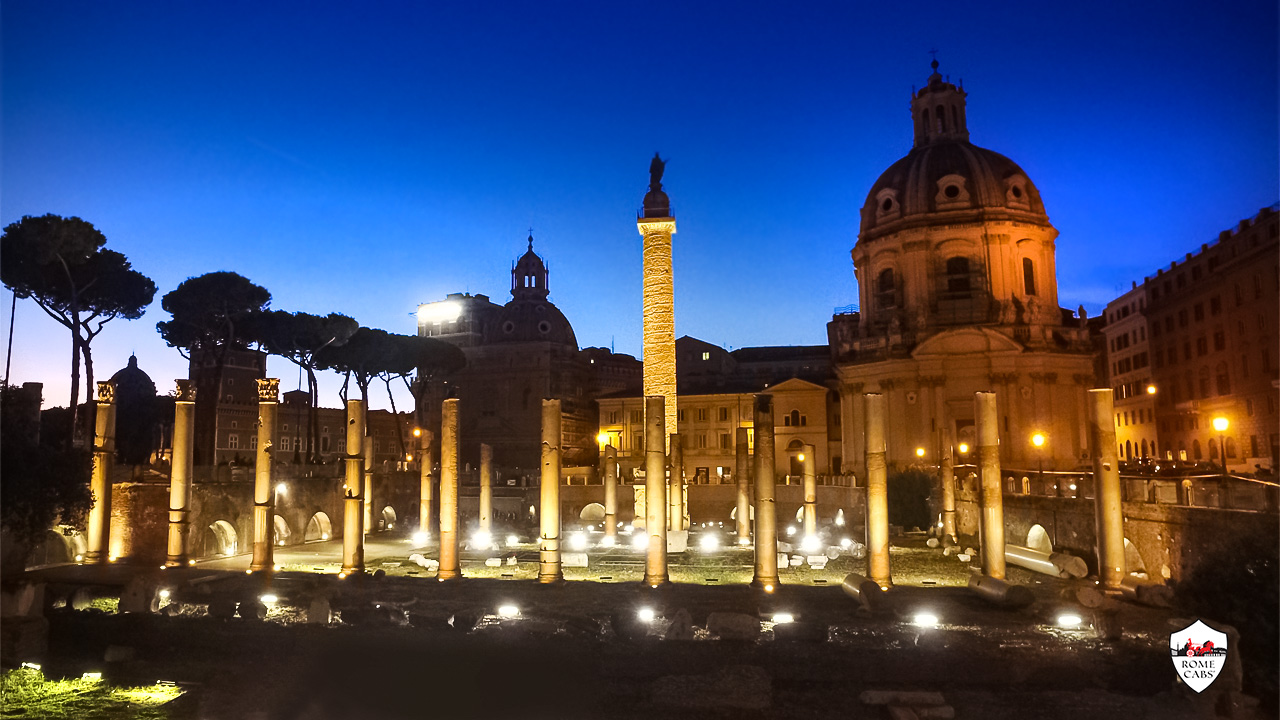
Beyond its functional and symbolic roles, the Basilica Ulpia influenced subsequent architectural developments. Its design served as a prototype for later Roman basilicas and Christian churches, notably impacting the construction of the Basilica of Maxentius and Constantine. Today, despite extensive damage and the passage of time, remnants of the Basilica Ulpia continue to stand as a testament to the architectural brilliance of ancient Rome and Trajan’s enduring legacy.
.
Intellectual Hub of Ancient Rome: The Libraries
.
Trajan’s Forum was not only an architectural and administrative marvel but also a beacon of intellectual advancement, primarily through its two distinguished libraries. These libraries were pioneering in their design and purpose, each dedicated to preserving and advancing knowledge from distinct cultural traditions.
.
The Greek Library
The Greek library was a testament to Rome’s appreciation for Greek intellectual heritage. It housed an extensive collection of texts from the classical Greek tradition, including works on philosophy, science, and literature. The design of the library featured spacious and well-lit reading rooms, allowing scholars and citizens to engage deeply with the texts.
With its meticulously organized storage areas for scrolls and manuscripts, the Greek library was not just a repository but a vibrant center for scholarly activity. It played a crucial role in preserving Greek knowledge and facilitating its integration into Roman education and culture.
.
The Latin Library
In contrast, the Latin library focused on Roman literature and history, holding an array of texts on law, politics, and cultural achievements. Like its Greek counterpart, it was designed with ample reading spaces and organized storage to ensure the accessibility and preservation of manuscripts.
Both libraries were more than mere collections of books; they were dynamic centers of learning and intellectual exchange. By housing significant works in both Greek and Latin, Trajan’s Forum reinforced the interconnectedness of Mediterranean cultures and highlighted Rome’s role as a custodian of classical knowledge. The libraries facilitated scholarly discourse and educational growth, underscoring Trajan’s vision of Rome as a leading force in intellectual and cultural development.
.
Administrative and Monumental Features
.
Beyond the Basilica Ulpia and the libraries, Trajan’s Forum was encircled by a series of administrative buildings and monuments, each contributing to its grandeur and functionality. One of the most notable features was the triumphal arch erected to commemorate Trajan’s military victories. This arch, adorned with reliefs depicting scenes of Trajan’s campaigns, served as a potent symbol of Rome’s military might and imperial glory.
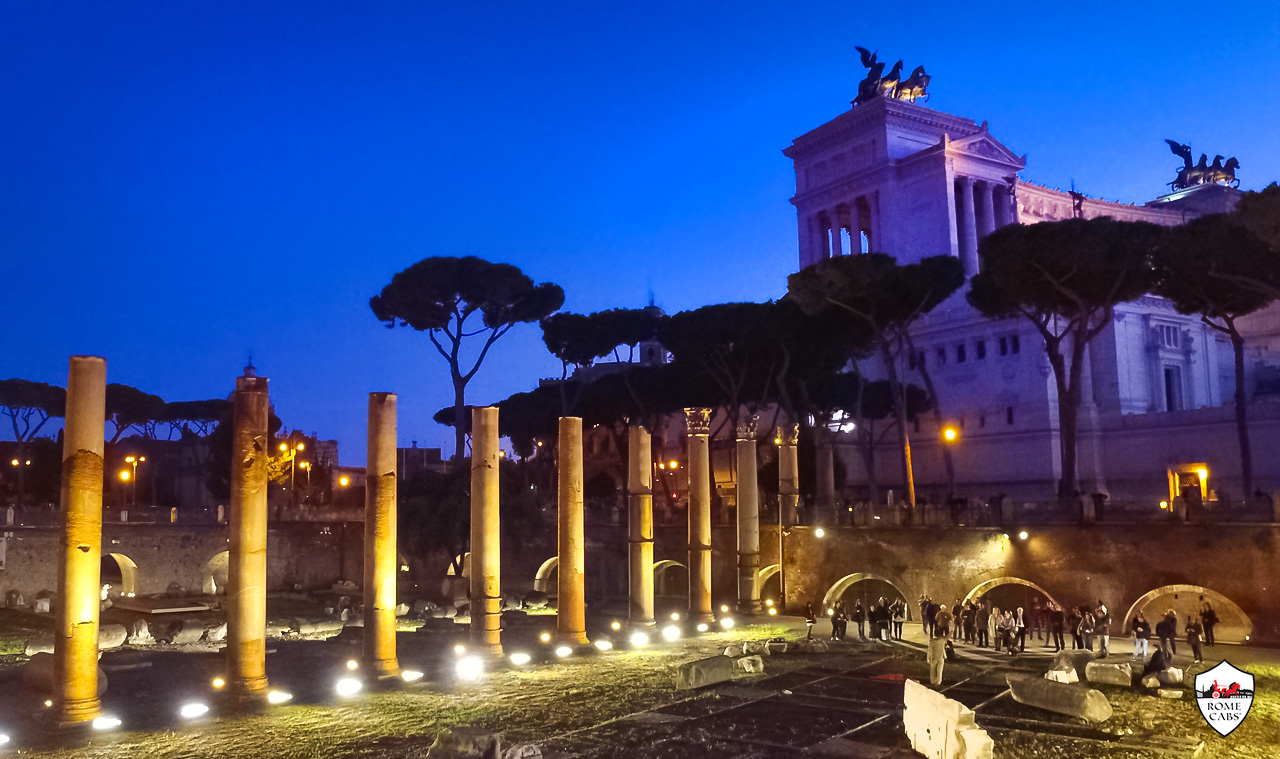
The Forum’s open spaces were meticulously designed to accommodate a range of public events. From legal proceedings and political assemblies to religious ceremonies and imperial festivals, the Forum was a versatile venue for civic life. The design ensured that the space could be used effectively for both routine administrative functions and grand ceremonial occasions, reflecting the dynamic nature of Roman public life.
.
.
Innovations in the Construction of Trajan’s Forum
.
Trajan’s Forum stands as a pinnacle of Roman architectural innovation, showcasing advanced techniques and grand design that set new standards for public buildings in the empire. Constructed using revolutionary methods such as extensive use of concrete and innovative structural techniques, the Forum was a marvel of both engineering and artistry.
The use of concrete allowed for the creation of expansive, open spaces and monumental structures that combined both functionality and visual impact. This approach not only facilitated the construction of large-scale public buildings but also elevated the aesthetic and symbolic qualities of Roman architecture.
The design of Trajan’s Forum exemplifies Rome’s exceptional ability to merge practicality with grandeur. The Forum was meticulously crafted to serve as a functional center for civic activities while simultaneously embodying the splendor of imperial power. The integration of advanced construction methods with elaborate decorative elements reflected a Roman proficiency in balancing utility with beauty. This created a space that was both a practical hub for administration and a symbolic representation of the empire’s strength and stability.
.

.
Constantius II’s Praise for Trajan’s Forum
The architectural innovations of Trajan’s Forum left a profound impression on those who came after. In 357 AD, Emperor Constantius II expressed his awe at the Forum’s grandeur, describing it as a construction “unique under the heavens” and beyond imitation. His reaction underscores the Forum’s extraordinary impact and enduring legacy. Constantius II’s comment, particularly his humorous remark about the difficulty of replicating Trajan’s equestrian statue, highlights the Forum’s monumental status and the exceptional quality of its design.
The extensive use of Roman concrete, along with the advanced structural and decorative techniques employed, was groundbreaking and set a benchmark that remained unmatched for centuries.
.
Legacy and Preservation of Trajan’s Forum
.
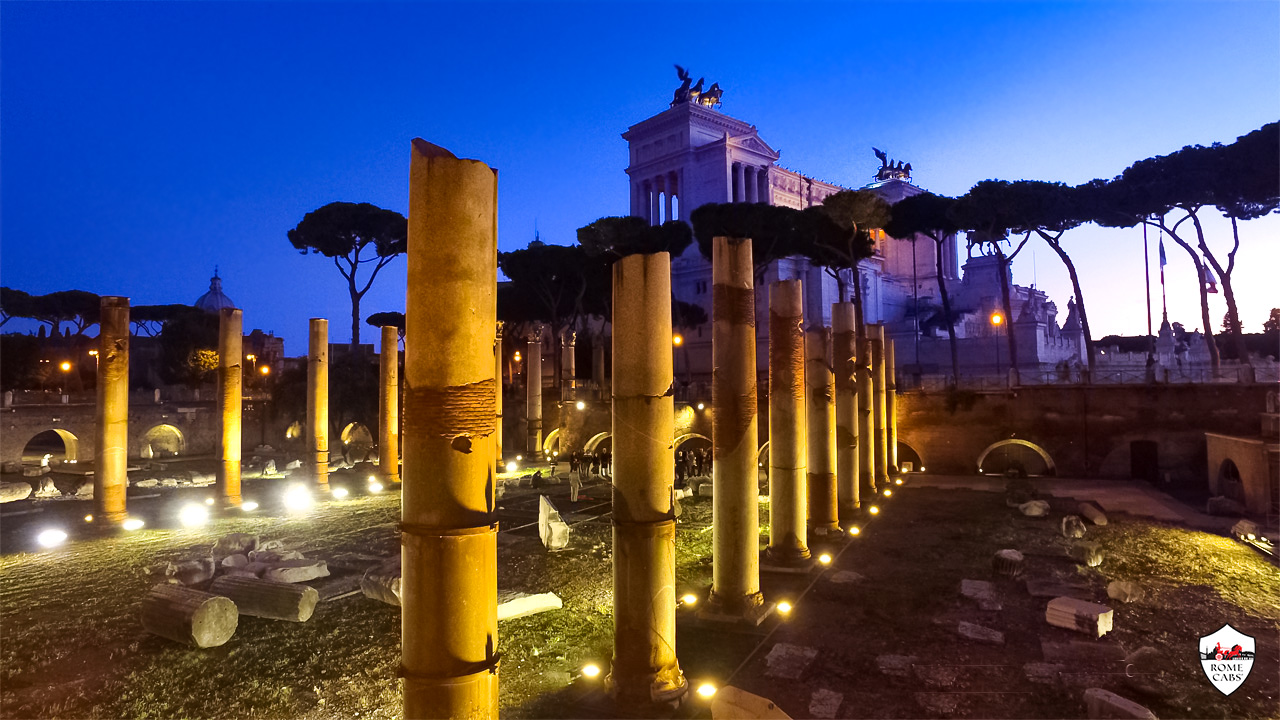
Today, Trajan’s Forum stands as a significant historical site, offering invaluable insights into the urban planning, architectural achievements, and civic culture of ancient Rome. Although much of the Forum is in ruins, the surviving remnants, including the foundations of the Basilica Ulpia and the traces of its libraries, continue to captivate visitors and scholars alike.
The Forum’s ruins serve as a poignant reminder of Rome’s architectural ingenuity and civic ambition. They highlight the enduring legacy of one of Rome’s most ambitious and influential architectural projects, providing a window into the grandeur of an empire that shaped much of Western civilization.
.
.
Discover Ancient Roman Marvels Near Trajan’s Forum
.
For those captivated by the grandeur of Trajan’s Forum, several other ancient Roman sites in the vicinity offer equally fascinating glimpses into Rome’s storied past. A short stroll from the Forum unveils a wealth of historical treasures that complement the awe-inspiring architecture of Trajan’s Forum.
.
The Roman Forum:
Nearby across Via dei Fori Imperiali, the Roman Forum (Forum Romanum) served as the heart of ancient Rome. This sprawling complex of ruins includes the remains of important temples, basilicas, and public spaces that were central to Roman political, social, and religious life.
Key highlights include the Temple of Saturn, the Arch of Titus, and the imposing remains of the Basilica of Maxentius and Constantine. As you wander through these ancient streets, you can almost feel the echoes of the bustling marketplace and the deliberations of Senate meetings.
.
.
The Colosseum:
A short walk from the Forum brings you to the Colosseum, Rome’s iconic amphitheater and a marvel of ancient engineering. Built in the 1st century AD, this colossal structure once hosted gladiatorial contests, public spectacles, and theatrical performances. Its grandeur and scale are a testament to Rome’s architectural prowess and provide a stark, dramatic contrast to the more administrative focus of the nearby forums.
Adjacent to the Colosseum, in Colosseum Square, stands the Arch of Constantine. Erected in 315 AD to commemorate Emperor Constantine’s victory over Emperor Maxentius at the Battle of Milvian Bridge, this triumphal arch is adorned with elaborate reliefs and inscriptions that celebrate his achievements and offer further insight into Rome’s imperial history.
.

.
Circus Maximus:
To the southeast, the Circus Maximus, once the largest chariot racing stadium in ancient Rome, provides a vast open space where thrilling races and public events took place. Although now largely in ruins, the site still evokes the excitement of ancient Rome’s most popular entertainment venue, with its impressive dimensions hinting at the grandeur it once commanded.
.
The Baths of Caracalla:
A bit farther south, the Baths of Caracalla offer a glimpse into the Ancient Roman tradition of public bathing: Thermae. Completed in the early 3rd century AD, these extensive baths were a hub of social activity, featuring hot and cold pools, exercise areas, and elaborate mosaics. The ruins of these baths still convey the scale and opulence that characterized Roman public life.
.
.
.
The Pantheon:
Further to the northwest, the Pantheon stands as one of Rome’s best-preserved ancient structures. Originally built as a temple to all the gods of ancient Rome, the Pantheon is renowned for its magnificent dome and oculus, which remains the world’s largest unreinforced concrete dome. Its serene and awe-inspiring interior is a testament to the engineering skills of ancient Rome.
.

.
.
Largo di Torre Argentina:
Not far from Trajan’s Forum lies Largo di Torre Argentina, an archaeological site revealing the remains of four Republican-era temples and the Pompey Theater. It is here that Julius Caesar was famously assassinated in 44 BC (remember the famous quote by Caesar: “Et Tu, Brute?“. The ruins of these ancient structures offer a poignant glimpse into Rome’s political and religious history.
.
The Theater of Marcellus:
Further southwest, the Theater of Marcellus stands as a testament to Rome’s theatrical heritage. Constructed between 22 and 13 BC, this ancient theater was designed to hold up to 20,000 spectators and hosted dramatic performances. Its partially preserved structure, with its impressive arches and columns, provides insight into Rome’s architectural evolution and its cultural emphasis on public entertainment.
.

.
The Temple of Octavia:
Adjacent to the Theater of Marcellus, the ruins of the Temple of Octavia offer insight into the grandeur of Augustan Rome. Dedicated to Augustus’s sister, Octavia, this temple was part of a larger complex that included a portico and a library. The remains reflect the opulence of imperial religious architecture.
.
Piazza della Bocca della Verità:
Not far from the Circus Maximus, Piazza della Bocca della Verità features the remains of several ancient temples, including the impressive portico of the Temple of Hercules.
The famous Mouth of Truth (Bocca della Verità), an ancient marble mask reputed to reveal the truth about its questioners, is set in the portico of the church of Santa Maria in Cosmedin, which overlooks the square. This historic piazza, with its scattered temple ruins and vibrant historical ambiance, offers a fascinating glimpse into Rome’s religious and civic life.
.

.
Each of these sites offers a unique perspective on Rome’s architectural and cultural evolution, making them essential additions to any exploration of the ancient city. As you journey through these historical landmarks, you will gain a deeper understanding of the splendor and complexity of Roman civilization, enriching your experience of Trajan’s Forum and its surroundings.
Trajan’s Forum is not merely a collection of ancient ruins but a monumental testament to the architectural, cultural, and administrative sophistication of ancient Rome. Its remains offer a glimpse into a time when architecture was both a reflection of power and a functional element of public life, embodying the legacy of a civilization at the height of its influence.
.
Find RomeCabs online also on:
- Facebook: https://www.facebook.com/RomeCabsToursAndTransfers
- RomeCabs Pinterest: https://www.pinterest.it/romecabs
- RomeCabs Twitter: https://twitter.com/RomeCabs
- RomeCabs Instagram: https://www.instagram.com/romecabs/
- RomeCabs Flickr Photos: https://www.flickr.com/photos/romecabs/
- More Travel Blogs https://romecabs.wordpress.com/
.
.
.
.

.
.
.
 RomeCabs Blog Italy - Italy Private Excursions, Rome Tours, Civitavecchia Transfers
Leave a Reply