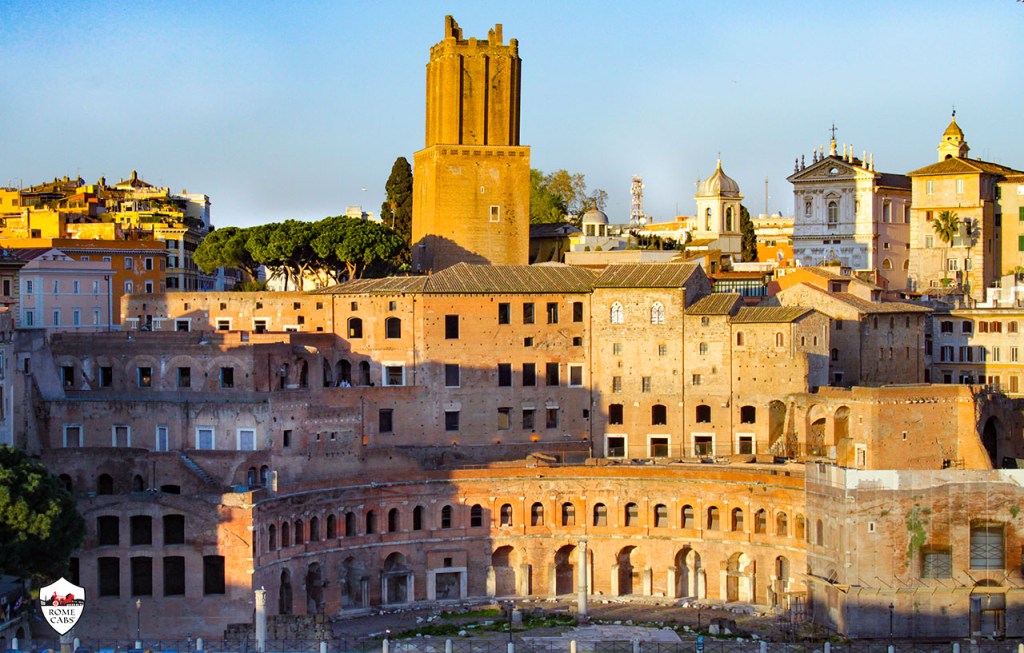
Buongiorno and welcome to RomeCabs Rome travel blog! Situated in the heart of the Eternal City, Trajan’s Market is a remarkable testament to the ingenuity and grandeur of the Roman Empire. Often described as Rome’s ancient shopping center, this extraordinary complex offers a fascinating glimpse into the vibrant life and thriving commerce of the Roman Empire.
Completed around 113 AD under the visionary guidance of the celebrated architect Apollodorus of Damascus, Trajan’s Market is more than just an architectural wonder; it’s a monumental achievement in urban planning and engineering that has captivated historians and travelers alike.
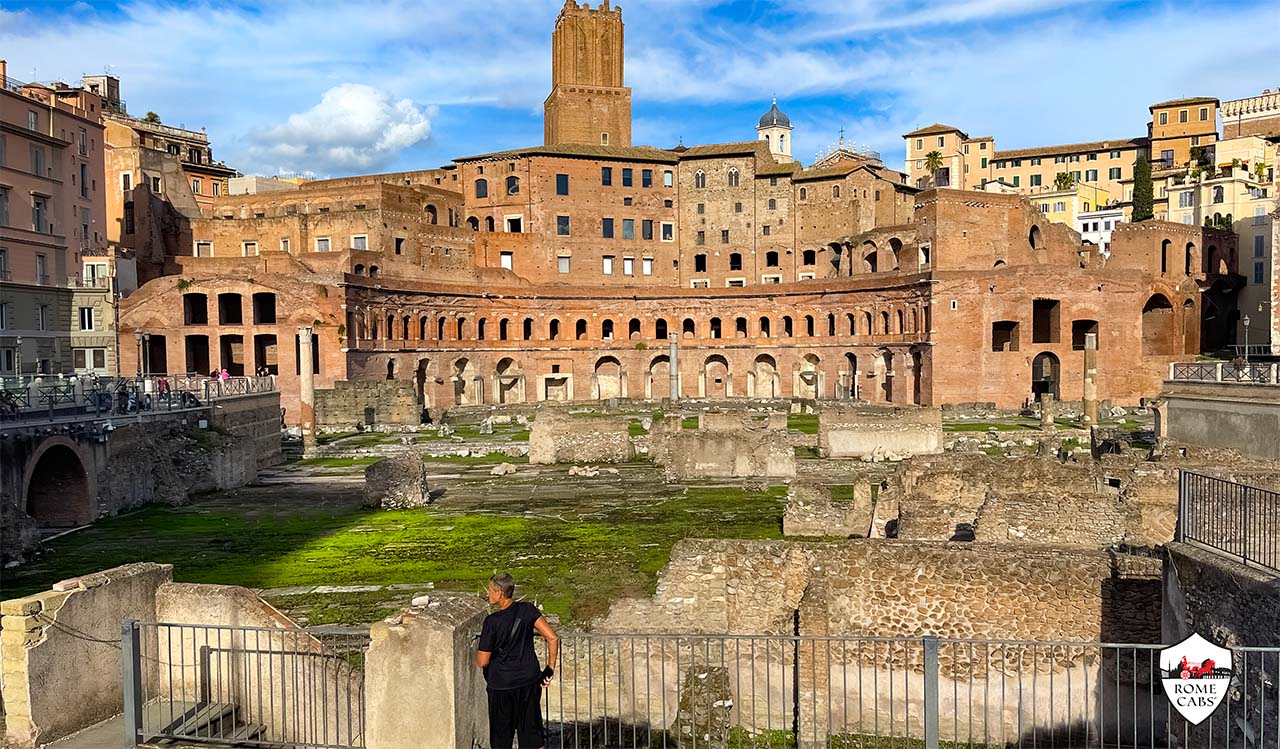
A visit to Trajan’s Market in ancient Rome would have been an exhilarating experience. Citizens from all walks of life, from wealthy patricians to everyday plebeians, would converge to purchase goods, ranging from fresh produce to exotic spices. The scent of olive oil and freshly baked bread would fill the air, as vendors called out to potential buyers. While the lower levels were dedicated to essential commodities like wine, oil, and grain, higher levels housed luxurious items such as textiles and perfumes. Business transactions weren’t limited to buying and selling goods; many shop owners doubled as informal bankers, facilitating loans and financial agreements.
In this blog, we will shed some light on the world’s first shopping mall, exploring how this iconic site once served as the bustling hub of Ancient Rome’s daily life.
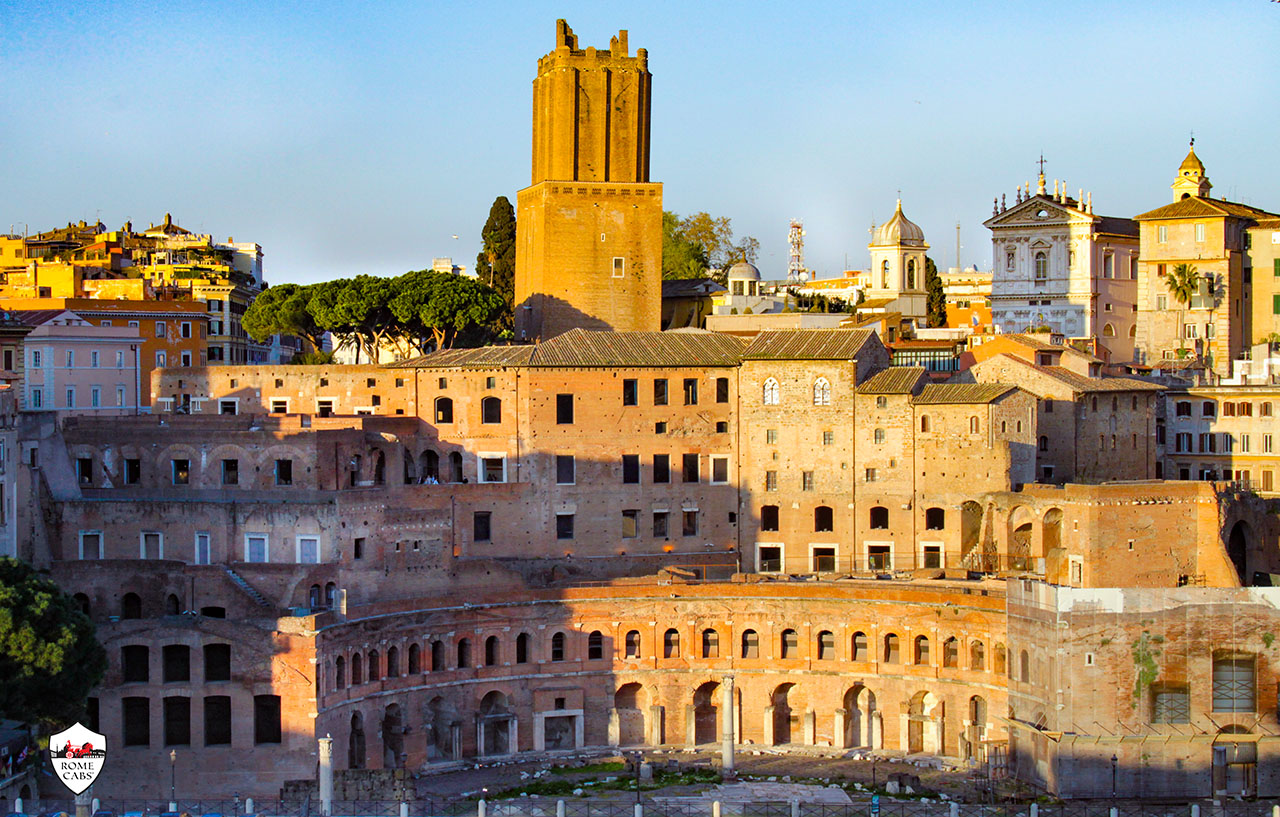
Trajan’s Market: A Blend of Innovation and Function
Emperor Trajan, under whose reign the market was constructed, is often regarded as one of Rome’s greatest emperors. His reign marked the empire’s territorial peak following his successful Dacian Wars. The construction of Trajan’s Market coincided with this golden age of expansion, symbolizing Rome’s economic and political dominance.
Apollodorus of Damascus, the trusted architect and engineer of the emperor, was not only responsible for the design of this market but also contributed to other major projects like the construction of Trajan’s Forum and the famous bridge over the Danube. Trajan’s Market, therefore, was not just a marvel of its time but also a reflection of the greatness of its creators.
Trajan’s Market stands as a remarkable testament to Roman architectural innovation, epitomizing the sophisticated integration of commercial and administrative functions within a single complex. Built on the slopes of Quirinal Hill, this expansive structure showcases a masterful approach to urban planning, blending seamlessly with the city’s topography.
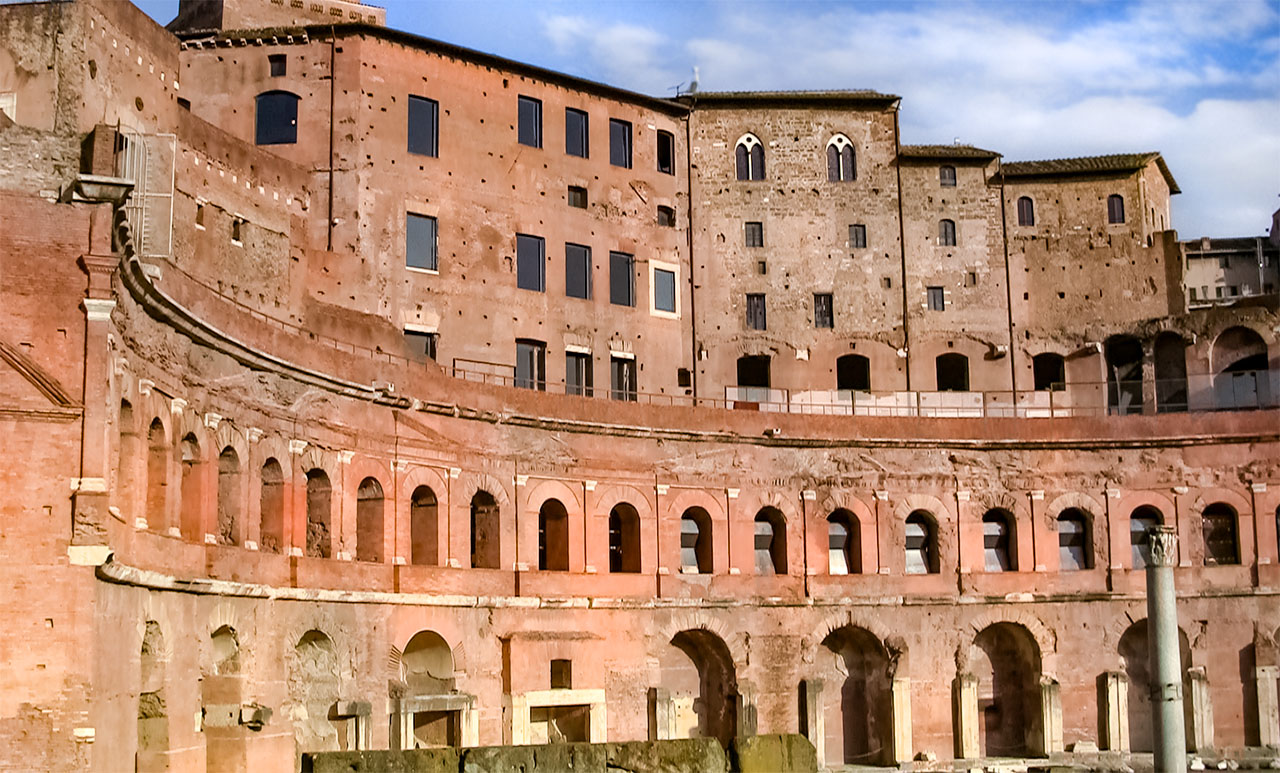
Architectural Ingenuity: A Multi-Level Marvel
The architectural brilliance of Trajan’s Market lies not only in its aesthetic grandeur but in the groundbreaking techniques employed in its construction. At the time of its completion the market was an unparalleled feat of engineering, representing Rome’s mastery in utilizing topography and materials to create functional and monumental spaces.
The Romans employed opus latericium, a construction method that combined Roman concrete with brick facing, enhancing both the strength and durability of the structure. This technique was revolutionary, allowing Trajan’s Market to withstand the test of time, including the seismic activity that occasionally struck the region.
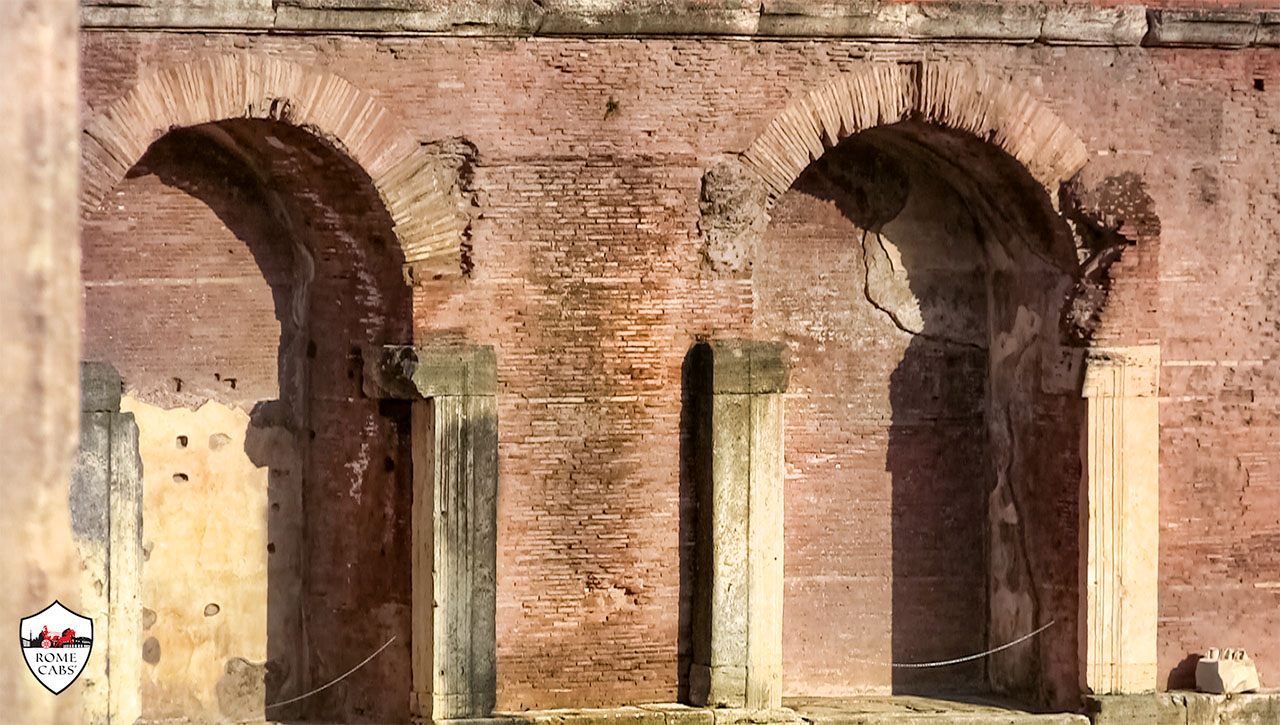
Built into the natural incline of Quirinal Hill, the market showcases the Romans’ ability to adapt urban architecture to complex landscapes. Rather than imposing a flat foundation, the architects skillfully leveraged the slope to create a multi-level structure that maximized space without compromising the natural contours of the hill. This seamless integration of architecture and geography allowed the Romans to achieve both functional and aesthetic objectives, making Trajan’s Market a pioneering example of urban design.
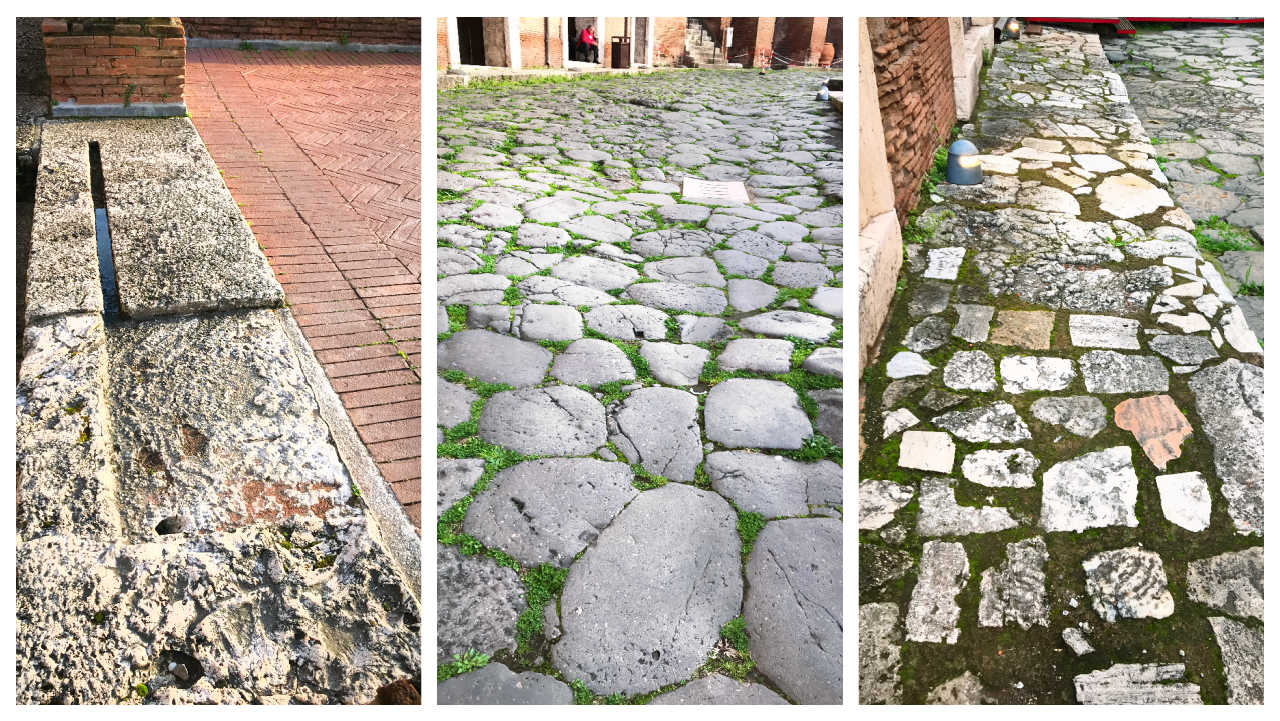
The market itself is divided into distinct sections, each serving specific purposes and displaying unique architectural features. These sections are connected by a network of external paths and stairways, facilitating movement between levels and creating an intricate flow of traffic within the complex.
The Great and Small Hemicycles: Curved Elegance
The lower portion of the market is dominated by the Great Hemicycle and the Small Hemicycle, two semi-circular structures that reflect the Romans’ advanced understanding of space and design. The Great Hemicycle, which spans three floors, is a striking example of the market’s grand scale.
Its two prominent Head Halls, located at either end of the structure, provided open spaces that could accommodate a variety of activities, from public gatherings to storage. These halls are architectural marvels in themselves, with vaulted ceilings and large openings that allowed natural light to flood in, reducing the need for artificial lighting.

Adjacent to the Great Hemicycle is the Small Hemicycle, a smaller but equally intricate structure featuring rooms on three levels. These rooms likely served as offices, storage areas, and commercial spaces, accommodating the administrative and economic activities of the market. The semi-circular design of both hemicycles not only added to the aesthetic beauty of the market but also optimized the use of space, allowing for an efficient layout that facilitated both public and private activities.
The use of arched openings and vaulted ceilings throughout the hemicycles showcases the Romans’ expertise in constructing large, open spaces without the need for numerous supporting columns. This was a significant advancement in Roman engineering, as it allowed for more versatile and multifunctional spaces.

The Central Body: Architectural and Engineering Mastery
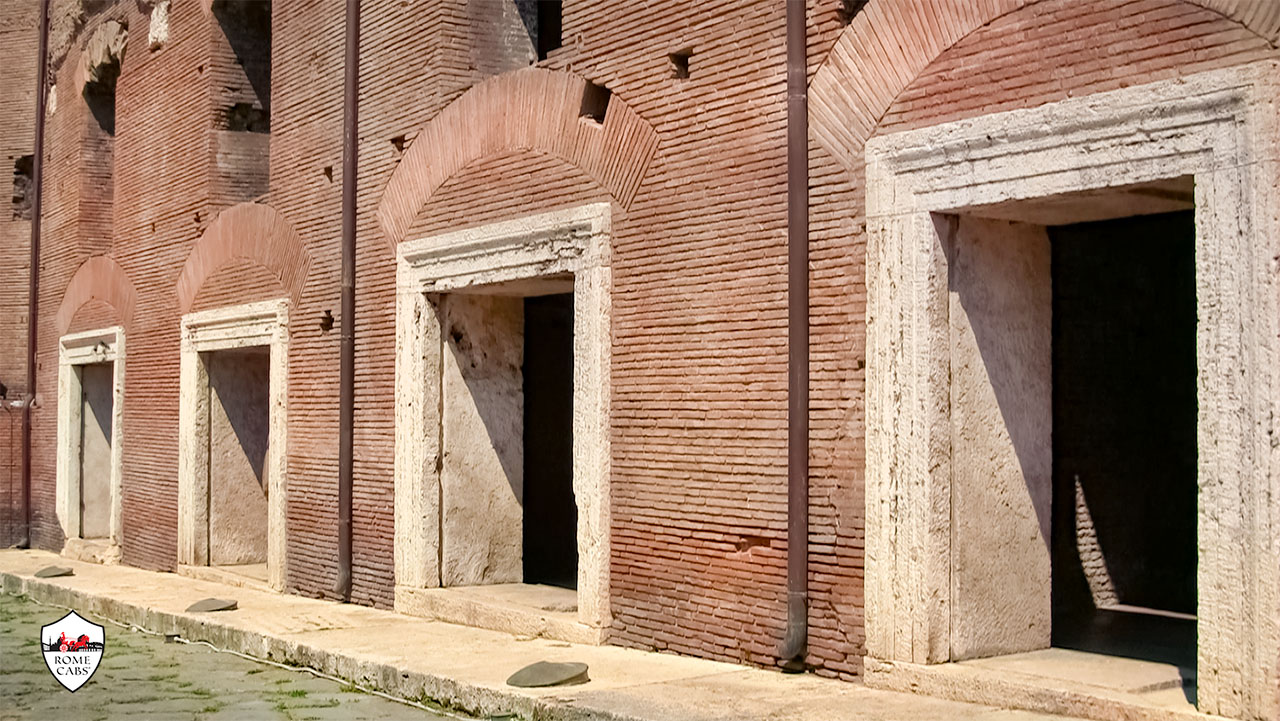
At the heart of Trajan’s Market lies the Central Body, a crucial feature of the upper levels. This section of the market included a series of tabernae (shops) at street level, where merchants sold goods ranging from daily necessities to luxury items.
These shops were accessed via a wide pedestrian street, which was intentionally designed to facilitate easy movement of both shoppers and goods. Above the tabernae, three additional floors housed internal rooms that served various functions, including administrative offices and storage areas for merchants.
The centerpiece of the Central Body is the Great Hall, a vast space that exemplifies Roman architectural ingenuity. The hall is notable for its cross vaults, an advanced roofing system that distributes the weight of the structure more evenly, reducing the need for supporting columns and creating a spacious, airy environment.
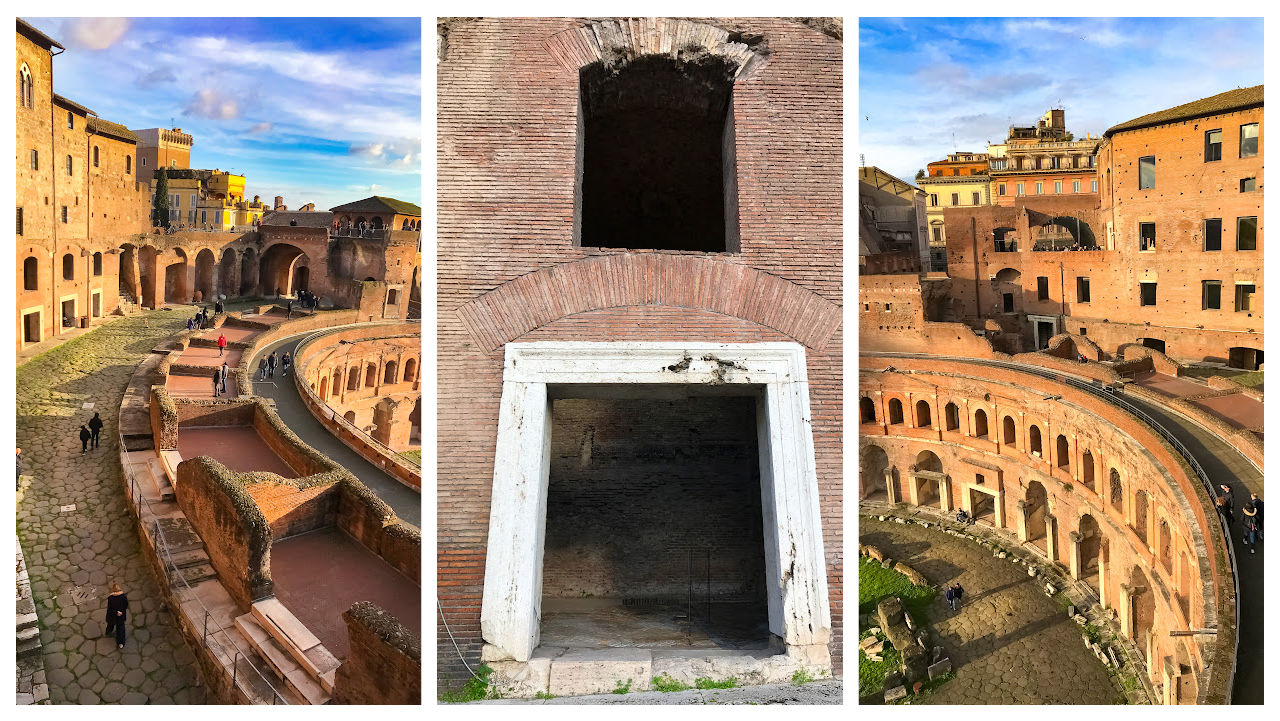
These vaults, supported by travertine brackets, are a testament to the sophisticated engineering techniques employed by Roman architects. Travertine, a durable and relatively lightweight stone, was commonly used in Roman construction for its strength and versatility.
The design of the Great Hall allowed for multifunctionality, with the space likely used for administrative meetings, public gatherings, and possibly even judicial proceedings. The hall’s layout, with its grand vaulted ceilings and open spaces, would have projected an image of imperial authority and order, reinforcing the market’s role as both a commercial and administrative hub.
Vertical Integration: Connecting Commerce and Administration
One of the most impressive features of Trajan’s Market is its vertical integration, which allowed for the seamless operation of both commercial and administrative activities within the same complex.
The lower levels were primarily dedicated to commercial enterprises, with merchants selling essential goods such as foodstuffs, textiles, and pottery. These levels were easily accessible to the general public and featured wide, open corridors that allowed for the smooth flow of people and goods.
As one ascended through the market, the nature of the activities shifted from commerce to administration. The upper levels housed a variety of administrative offices and bureaucratic functions, likely connected to the management of the city’s commercial and economic activities.
This vertical segregation of space was a masterstroke in urban planning, ensuring that the bustling commercial activities on the lower levels did not interfere with the more formal administrative functions taking place above.
The interconnected stairways and ramps within the market were also a key architectural feature, allowing for easy movement between the various levels. These pathways were designed to be accessible primarily to pedestrians, with carts and animals likely restricted to specific areas to avoid congestion.
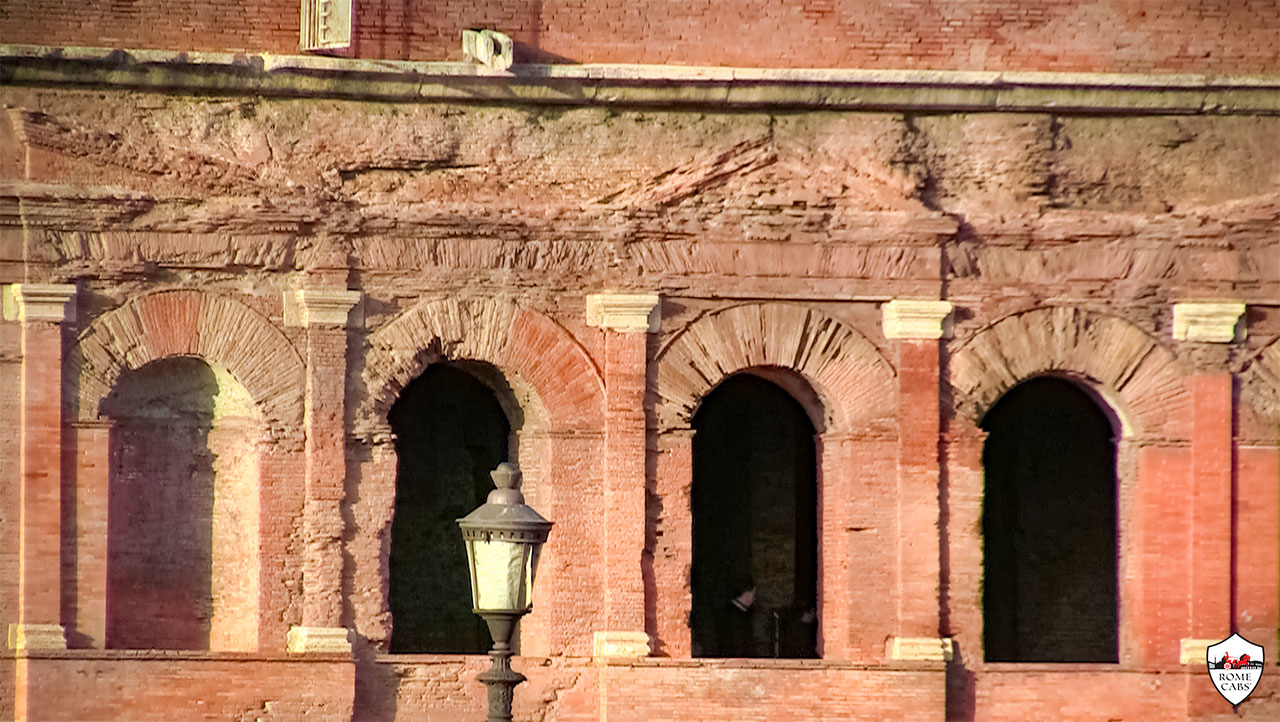
Trajan’s Market’s Dual Role: Commerce and Administration
Trajan’s Market was not just a commercial hub but a sophisticated, multifunctional center that embodied both economic and administrative functions of ancient Rome. Its design and purpose reflect a nuanced understanding of urban management, blending commerce with governance in a manner that was innovative for its time.
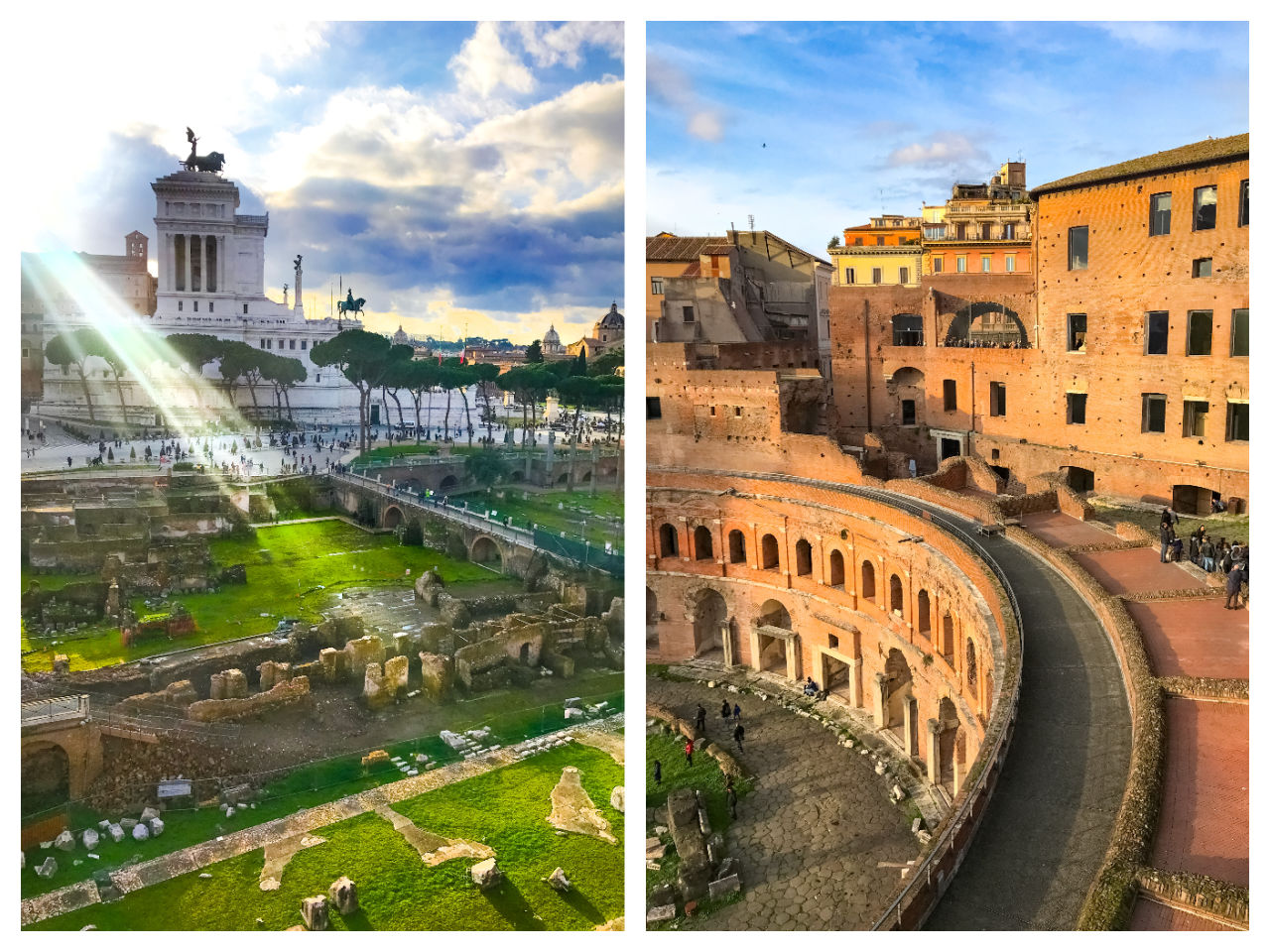
An Ancient Roman Commercial Powerhouse
Historically, Trajan’s Market was perceived primarily as a commercial complex. The lower levels were dedicated to essential goods such as wine, oil, and grain, serving the daily needs of Roman citizens. This role was critical given Trajan’s focus on ensuring the city’s food security.
The market was believed to be the culmination of a comprehensive supply system that included the construction of Trajan’s Port at Fiumicino, designed to manage Rome’s food supplies and address concerns about the city’s precarious food situation.
However, the market’s commercial functions extended beyond its lower levels. Numerous tabernae, or small retail shops, were situated along the external paths. These paths were designed to be accessible via stairs rather than carts, which suggests that while there was a commercial element along these routes, the primary commercial activities were concentrated in the more accessible internal areas.

Ancient Rome’s Administrative Epicenter
Trajan Market’s upper levels and overall layout reveal its significant administrative functions. The distribution and design of its rooms were meticulously planned to accommodate various administrative tasks, including offices and archives. This organization was closely linked to the adjacent Forum, illustrating the market’s role within the broader administrative framework of the city.
The “Central Body” likely housed the offices of the procurator Fori Divi Traiani, an official responsible for managing the monumental complex, as indicated by later inscriptions. This placement underscores the market’s role in imperial governance. The intricate design, featuring interconnected rooms and strategic layout, facilitated effective administration and integrated public and bureaucratic activities within the same structure.
While the lower levels served as a bustling commercial center, the upper levels were reserved for administrative functions. This segregation of space allowed for the efficient operation of both commercial and bureaucratic activities within the complex.
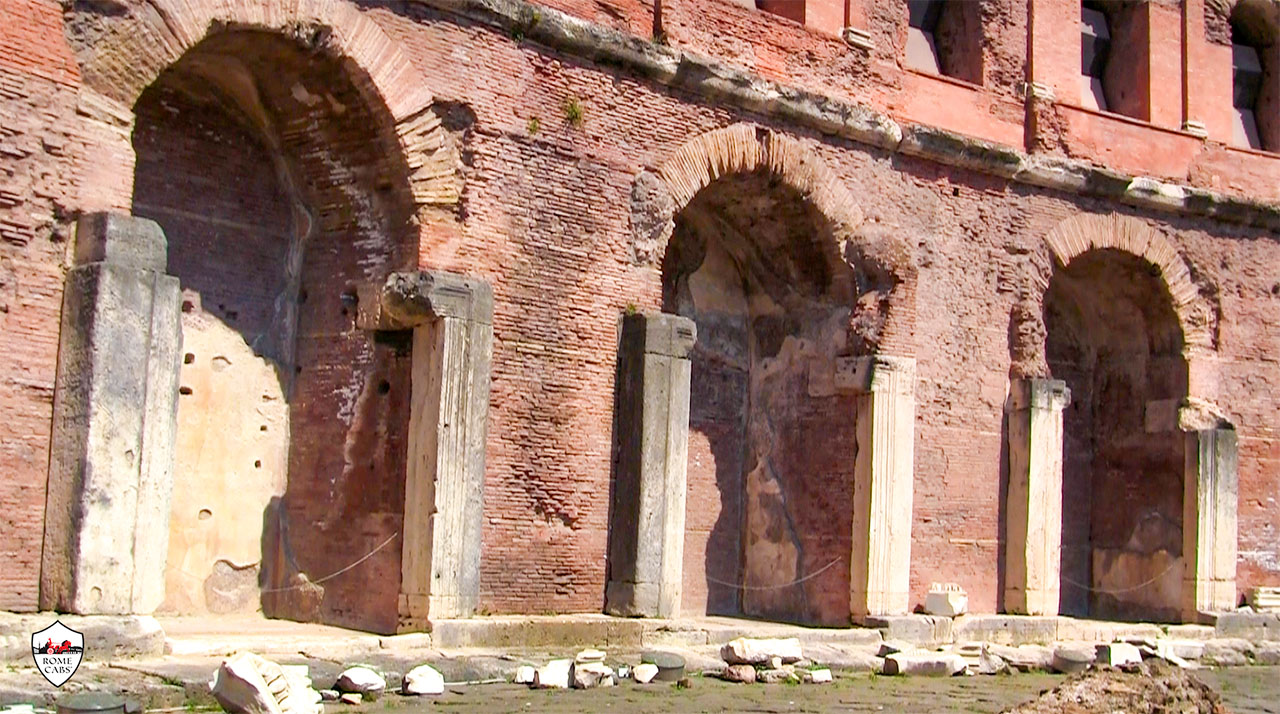
Trajan’s Market – a Symbol of Imperial Authority
The integration of commercial and administrative functions within Trajan’s Market also served as a symbol of imperial authority. By consolidating economic and bureaucratic activities into a single structure, the market not only facilitated the efficient management of Rome’s commercial and administrative affairs but also reinforced the emperor’s role as a central and unifying force in the empire.
This design reflected Trajan’s vision of a well-organized and controlled urban environment, showcasing his ability to oversee and influence various aspects of Roman life.
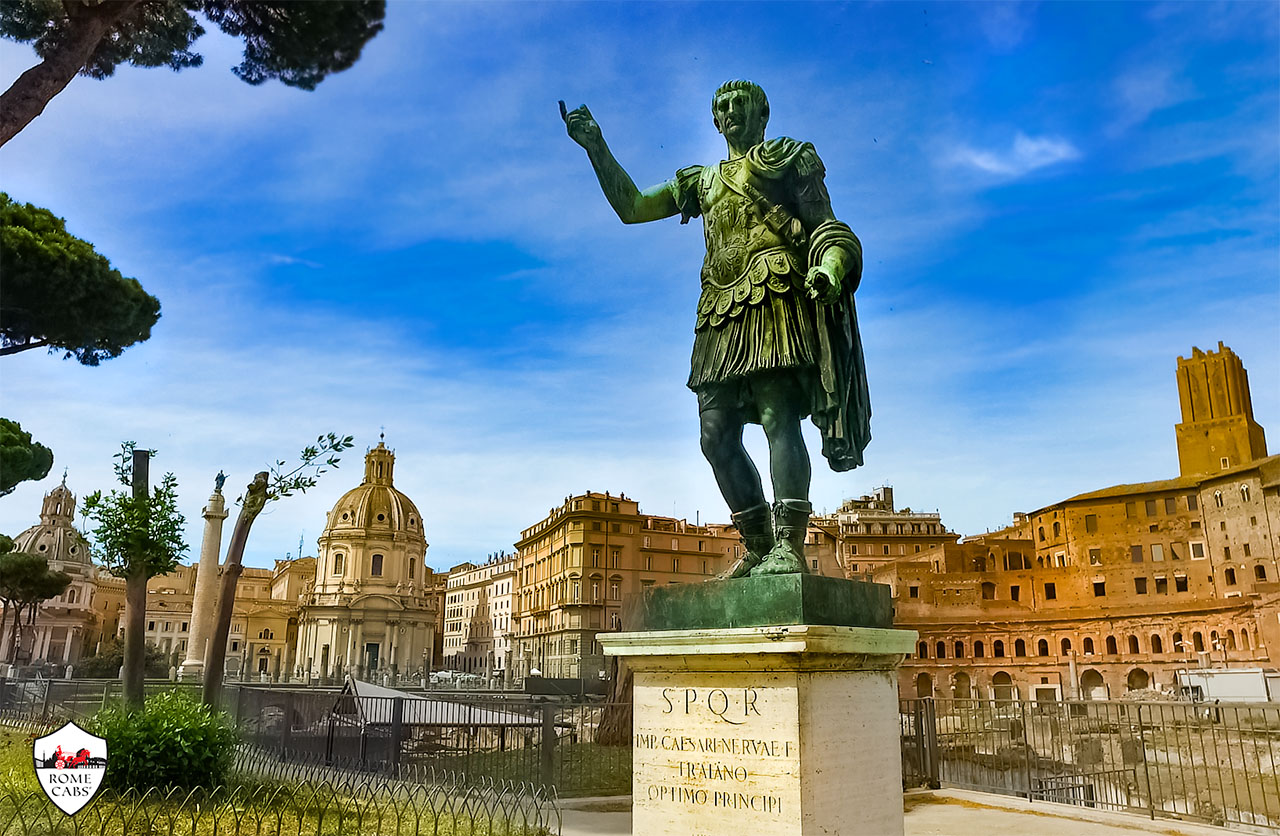
Trajan’s Market Historical Evolution and Modern Discoveries
Trajan’s Market, beyond its initial role as a bustling commercial and administrative hub, has experienced a dynamic history, reflecting the evolving needs of Rome through the ages. The site has undergone significant transformations, from medieval adaptations to modern restoration efforts, each layer adding depth to its historical narrative.
Modifications through Medieval and Renaissance Eras
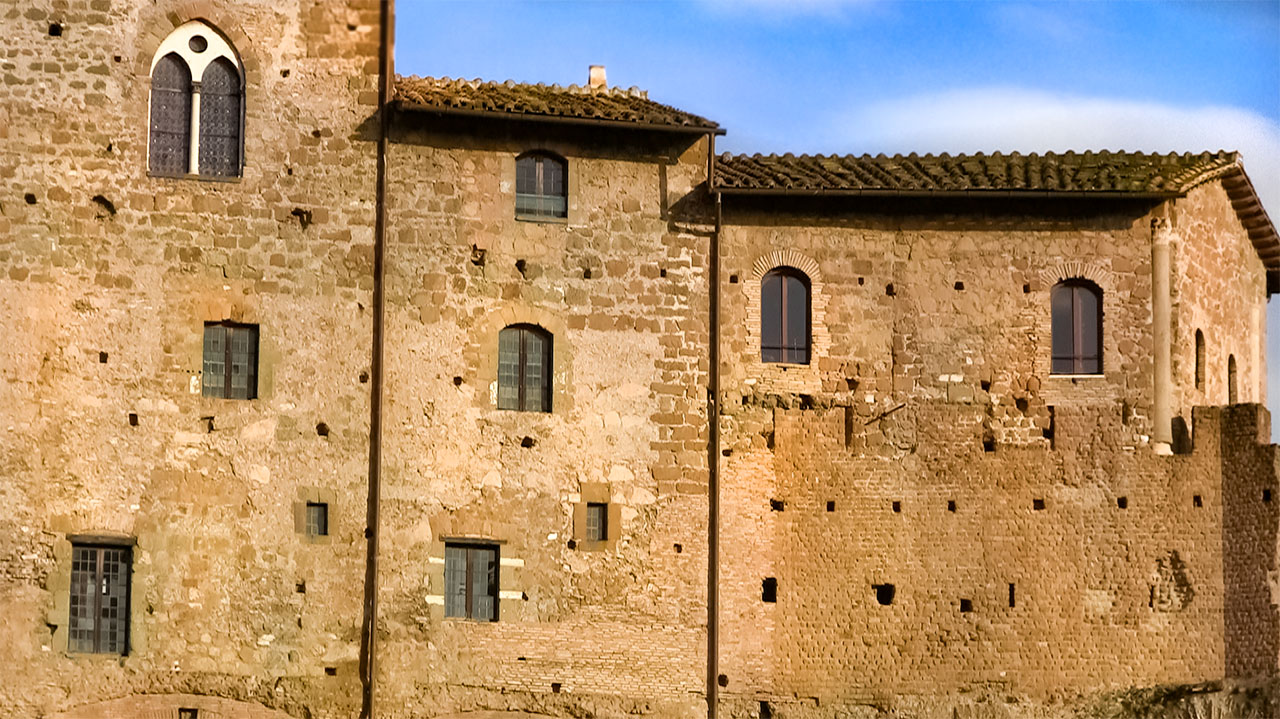
During the Middle Ages, Trajan’s Market was repurposed to fit the changing demands of the city. Additional floor levels were constructed, and defensive structures, such as the Torre delle Milizie, were added. This medieval fortification, built in the 13th century, was part of Rome’s broader defensive strategy and served as a testament to the ongoing use and adaptation of the market complex through the centuries.
In the 16th century, a convent was established on the site, further altering the original structure. This adaptation marked a new chapter in the building’s history, integrating it into the religious and social fabric of the time. By the late 19th century, the state acquired the site, initiating a series of restoration efforts aimed at uncovering and preserving the ancient architecture.
Restoration of Trajan’s Market and Modern Museum
The 20th-century restoration work was pivotal in revealing Trajan’s Market’s ancient grandeur. These efforts focused on exposing the underlying Roman structures and providing insights into the architectural and urban planning sophistication of ancient Rome. This restoration has enabled historians and visitors alike to appreciate the complexity and scale of the market as it was originally conceived.

Today, Trajan’s Market houses the Museo dei Fori Imperiali, or the Museum of the Imperial Forums, an integral part of Rome’s civic museums system. Inaugurated in 2007, the museum serves as a gateway to understanding the architectural and historical significance of Rome’s imperial forums.
Must- See Rome’s Ancient Wonders Near Trajan’s Market
If Trajan’s Market has sparked your interest in Rome’s rich history, there are several other nearby ancient sites that offer fascinating insights into the grandeur of Roman civilization.
Trajan’s Forum:
Trajan’s Forum, directly adjacent to Trajan’s Market, stands as a monumental testament to imperial Rome. Completed between 107 and 113 AD, this grand complex includes the Basilica Ulpia, two libraries, and the renowned Trajan’s Column. Designed by the architect Apollodorus of Damascus, the forum exemplifies Rome’s architectural prowess.
Trajan’s Column, adorned with intricate reliefs depicting the Dacian Wars, remains a standout piece of commemorative art. The Basilica Ulpia, with its vast scale, served as a hub for legal proceedings and social gatherings.
The Colosseum
About a ten-minute walk from Trajan’s Market, you will discover the Colosseum, perhaps Rome’s most iconic monument. Completed in 80 AD, this colossal amphitheater was the venue for gladiatorial contests, public spectacles, and theatrical performances. The Colosseum’s innovative engineering and sheer scale make it a must-see. Explore its underground chambers, known as the hypogeum, which reveal the complex network of tunnels used during events. From the upper levels, enjoy panoramic views of the city.
Nearby, the Arch of Constantine, erected in 315 AD, stands as a triumphal arch commemorating Emperor Constantine‘s victory over Emperor Maxentius at Milvian Bridge in Rome. This impressive structure features sculptural reliefs and inscriptions celebrating Constantine’s reign.

The Roman Forum
Located across the avenue from the Trajan’s Market you will see the Roman Forum. This sprawling complex of temples, basilicas, and public spaces was central to Rome’s political, social, and economic life. Key structures include the Temple of Saturn, the Arch of Titus, and the Rostra, where public speeches were delivered.
The Arch of Titus, built to commemorate the Roman victory in the Jewish War, and the Temple of Saturn, one of Rome’s oldest temples, are particularly noteworthy.
Palatine Hill
Adjacent to the Roman Forum is Palatine Hill (Palatino), one of Rome’s seven hills steeped in myth and history. Believed to be the site of Rome’s founding, it also housed the imperial palaces. Today, the hill offers an intriguing archaeological landscape with the ruins of ancient villas and temples.
The Pantheon
The Pantheon, located about a fifteen-minute walk from Trajan’s Market, is one of Rome’s best-preserved ancient buildings. Originally constructed as a temple to all the gods and later converted into a Christian church, the Pantheon features an impressive dome with a central oculus.
The building’s inscription, “M. AGRIPPA L.F. COS TERTIUM FECIT”, is a notable feature, and the structure remains a marvel of ancient engineering. The Pantheon also serves as the final resting place of the Renaissance artist Raphael, among other notable figures.
Circus Maximus
Circus Maximus, located between the Aventine and Palatine hills, was the largest chariot racing stadium in ancient Rome. Although only ruins remain, the site provides a sense of the scale and grandeur of Roman public spectacles, once the epicenter of Rome’s entertainment and public games.
Largo di Torre Argentina
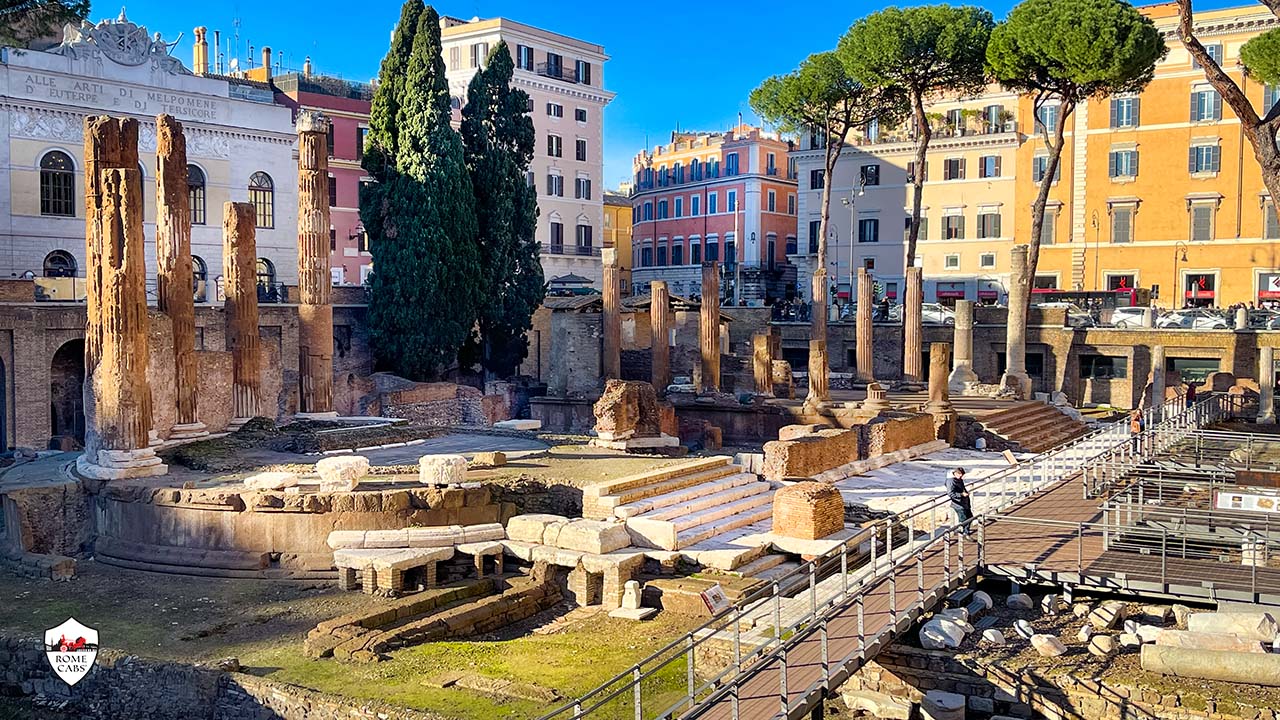
Largo di Torre Argentina is a significant historical site featuring the remains of the Theater of Pompey, where Julius Caesar was assassinated on the Ides of March in 44 BC. Today, this archaeological area includes the remnants of several ancient temples, and a small plaque marks the spot where Caesar fell, providing a poignant connection to this pivotal moment in Roman history.
Theater of Marcellus and Temple of Octavia
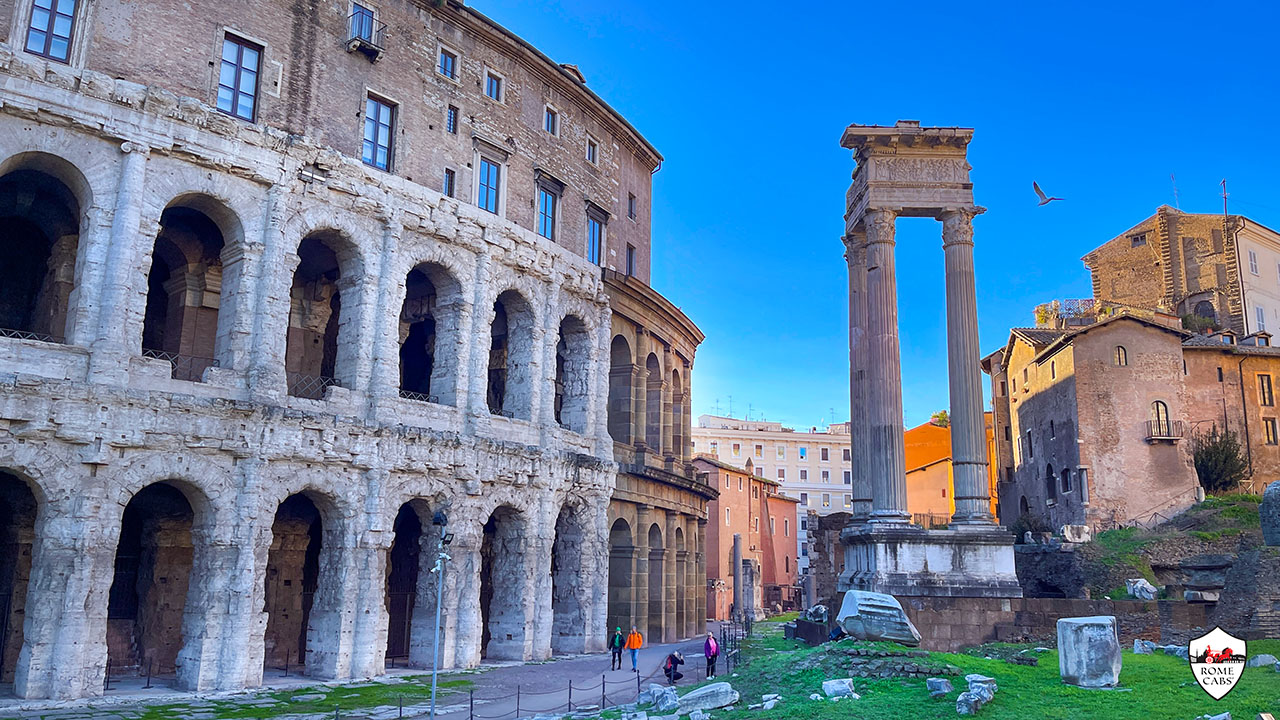
Nearby, the Theater of Marcellus, completed in 13 BC, stands as one of Rome’s grandest ancient structures. This theater was one of the largest in Rome and served as a significant precursor to the Colosseum. Its architectural design and scale are still impressive today, showcasing the grandeur of Roman entertainment venues.
The Temple of Octavia, located in the Roman Forum, is another notable site. Dedicated to the sister of Emperor Augustus, the temple was part of a complex that also included the Theater of Marcellus. Although mostly in ruins, the temple’s remains provide insight into the architectural styles and religious practices of ancient Rome.
Each of these sites, within walking distance or a short transit ride from Trajan’s Market, offers a deeper exploration into Rome’s ancient grandeur, providing a comprehensive understanding of one of history’s most influential civilizations.
Trajan’s Market remains a profound testament to the architectural and urban planning prowess of ancient Rome. Its innovative design, multifaceted functions, and historical significance continue to captivate scholars and visitors alike. As the world’s first shopping center and a hub of social and intellectual activity, Trajan’s Market embodies the complexity and vibrancy of Roman society. Its enduring presence offers a fascinating window into the commercial and cultural heart of ancient Rome, ensuring that its legacy continues to inspire and intrigue.
In exploring Trajan’s Market, one not only encounters a remarkable architectural achievement but also gains a deeper appreciation for the sophisticated urban life that flourished in ancient Rome.
.
Find Rome Cabs online also on:
- RomeCabs FACEBOOK
- RomeCabs PINTEREST
- RomeCabs TWITTER
- RomeCabs INSTAGRAM
- RomeCabs FLICKR Photo Gallery
- RomeCabs Recommended on Cruise Critic
.
.

 RomeCabs Blog Italy - Italy Private Excursions, Rome Tours, Civitavecchia Transfers
Leave a Reply