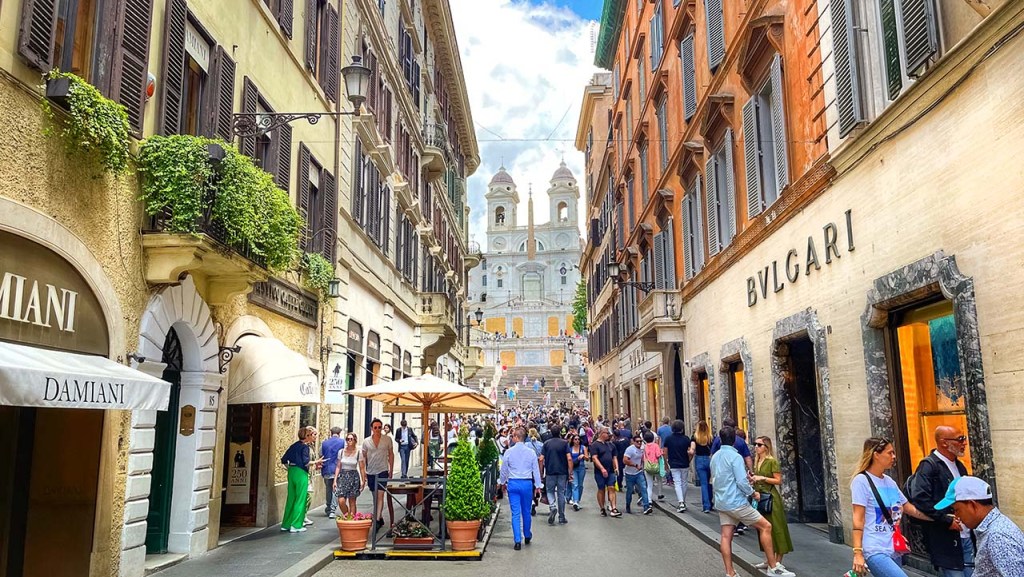
Buongiorno and welcome to RomeCabs Rome Travel Blog! When you envision Rome, it’s often the grandiosity of ancient ruins, historic landmarks, and world-class art that capture the imagination. Yet, tucked within the heart of this storied city lies a street that epitomizes luxury, elegance, and high fashion: Via dei Condotti. Revered worldwide as one of Rome’s most exclusive shopping avenues, Via dei Condotti is more than a mere retail destination; it is a vibrant avenue that intertwines history, culture, and modern sophistication.
This prestigious street, stretching from the elegant Piazza di Spagna, is not just a place for indulgent shopping—it’s a sensory journey through Rome’s rich heritage and contemporary style. With its opulent boutiques and storied past, Via dei Condotti stands as a symbol of Rome’s ability to merge timeless elegance with the pulse of modern luxury.
But what makes Via dei Condotti so special, and how did it come to occupy such a prominent place in Rome’s cultural landscape? Let’s check out the history, the iconic shops, and the surrounding attractions that make this avenue a must-visit in Rome for those seeking both opulence and cultural depth in the Eternal City.
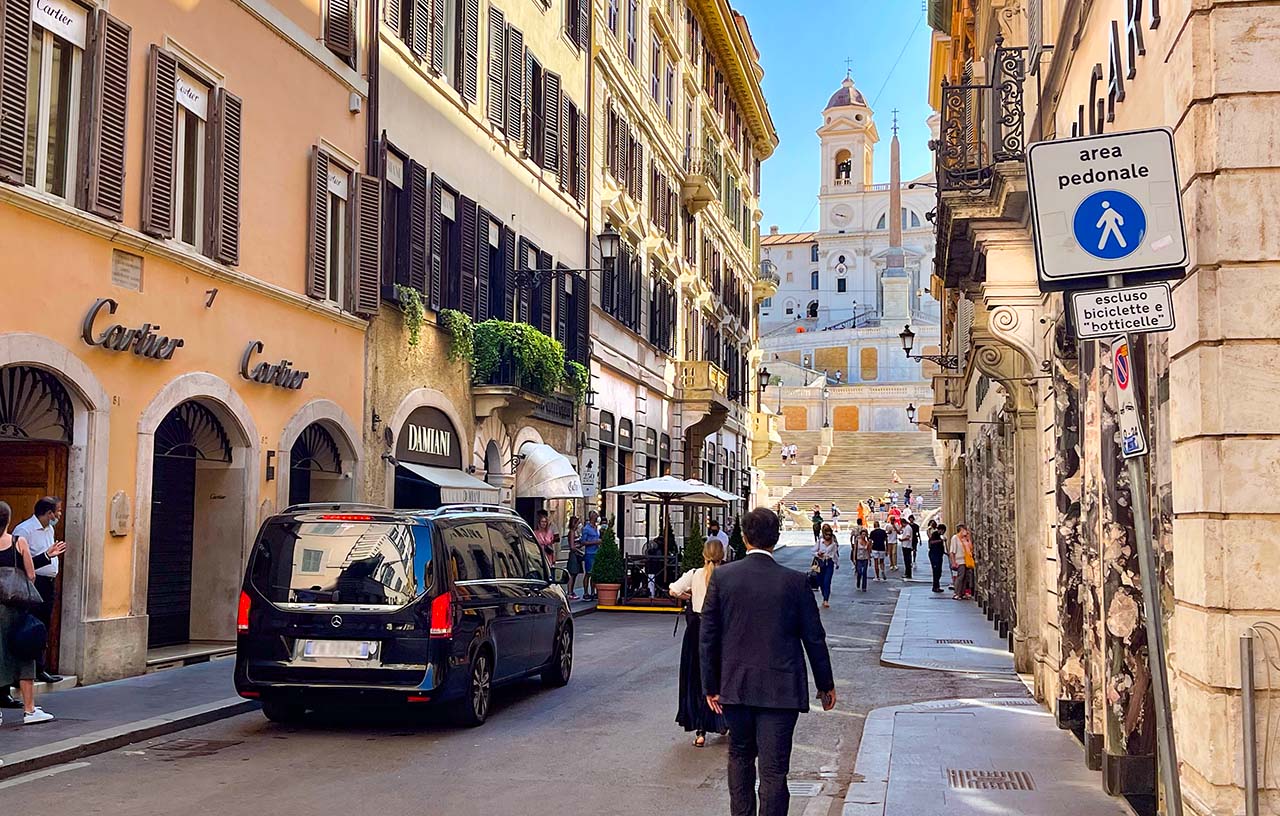
The Origins Behind the Name Via dei Condotti
The name Via dei Condotti is steeped in historical significance that traces back to the heart of Renaissance Rome. Understanding the origins of this luxurious street requires a journey into the ancient infrastructure that once shaped the city.
The story of Via dei Condotti begins with the Aqua Virgo aqueduct, one of the eleven aqueducts that supplied ancient Rome with fresh water. Constructed in 19 BCE by the Roman censor Agrippa, the Aqua Virgo was a marvel of engineering that brought water from the springs near Salone, around 13 kilometers (8 miles) from the city. This aqueduct was crucial in sustaining Rome’s public baths, fountains, and private homes.
To transport this vital resource across the city, the Aqua Virgo used a series of underground and elevated channels known as condotti. These conduits were designed to direct water flow efficiently and were essential in maintaining the grandeur of Rome’s public amenities.
The term “condotti” translates to “pipes” or “channels” in English, reflecting their primary function.
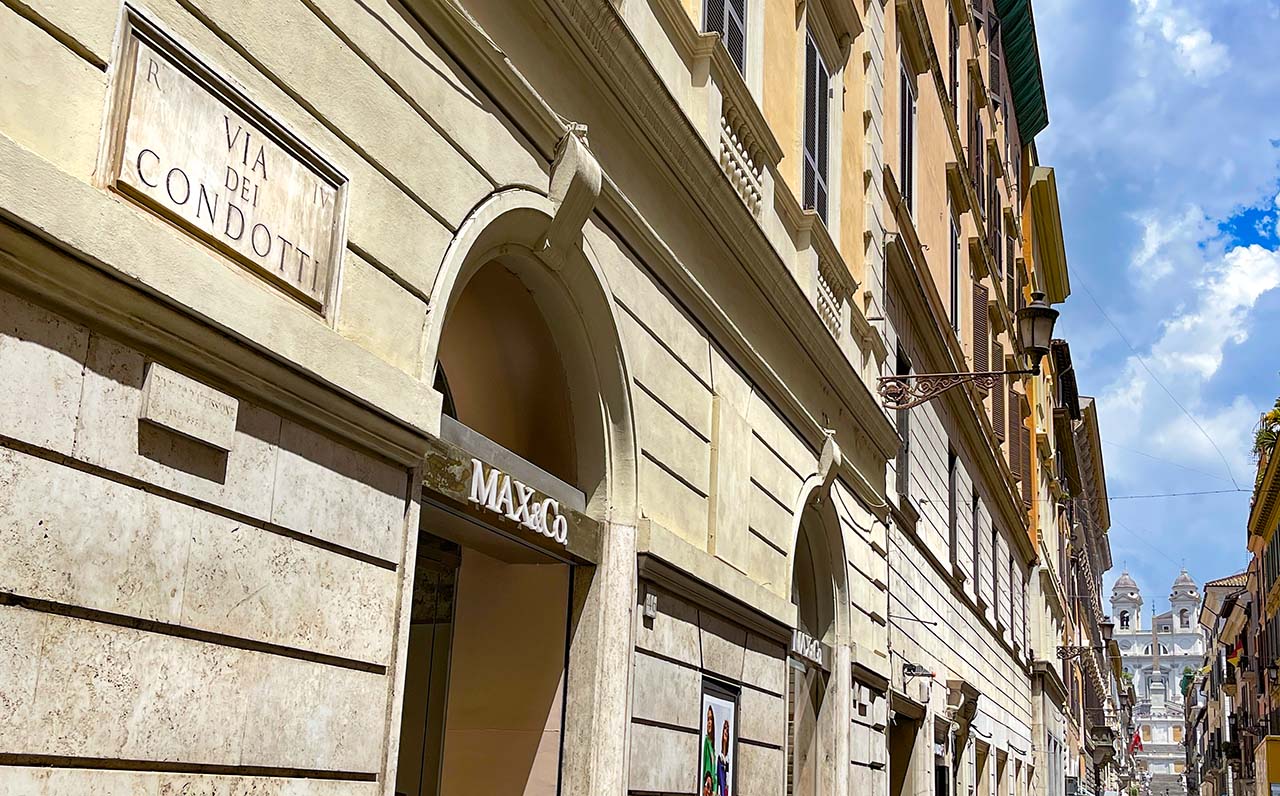
Renaissance Rome and the Street’s Evolution
By the 16th century, as Rome was undergoing a significant transformation under the Renaissance, the ancient conduits were still integral to the city’s water system. The area around what is now Via dei Condotti was a prominent part of this urban renewal. As Rome’s elite began to settle and build grand residences in the city center, the street that ran alongside these ancient conduits became known as Via dei Condotti.
During this period, the street evolved from a utilitarian passage into a prestigious address. The Renaissance was a time of great cultural and architectural advancement, and Via dei Condotti mirrored this transformation. The street’s name, derived from its historical function, became a testament to the city’s enduring connection with its past even as it embraced modernity.
Although the original conduits are no longer visible, their legacy lives on in the name Via dei Condotti. The street serves as a living reminder of Rome’s sophisticated ancient infrastructure and its influence on the city’s development. As the conduits once brought life-sustaining water to Rome, Via dei Condotti now channels a different kind of luxury—one of fashion, art, and culture.
Modern Luxury and Historical Roots
In the contemporary era, Via dei Condotti has transformed into a symbol of high-end retail and luxury. Walking down Via dei Condotti, one not only experiences a world of exclusive fashion and opulence but also strolls through a corridor that has witnessed the evolution of Rome from its ancient past to its present splendor.
Thus, Via dei Condotti stands as a bridge between ancient innovation and contemporary luxury, embodying the spirit of Rome’s enduring allure and its ability to blend historical richness with modern sophistication.
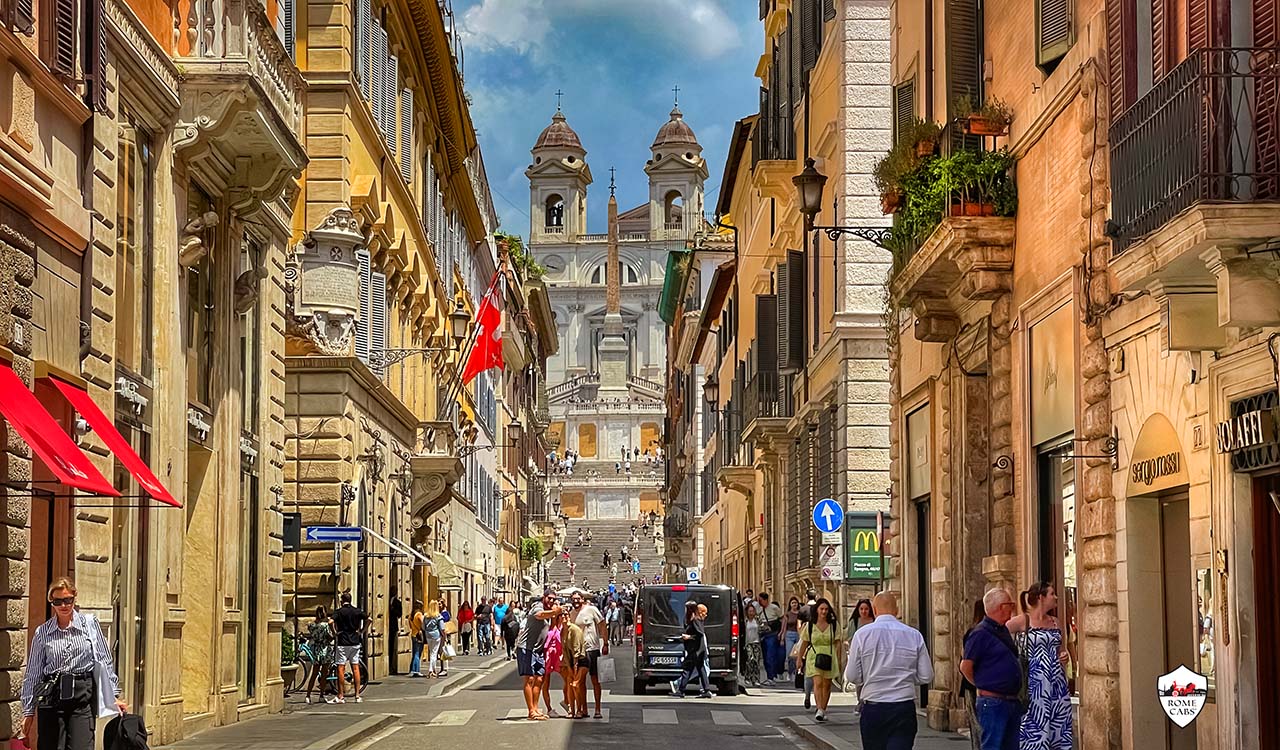
A Stroll Through Luxury: Main Shops and Boutiques
Via dei Condotti is synonymous with exclusive, high-end shopping. As you walk down the street, the cobblestone paths and beautifully preserved buildings create a seamless blend of history and opulence. Each boutique and flagship store offers an immersive experience into the world of luxury fashion, where craftsmanship, heritage, and modernity come together.
Fendi: A brand deeply connected to its Roman roots, Fendi’s boutique offers a perfect balance of tradition and innovation. Known for its iconic leather goods and fur pieces, Fendi showcases a selection that blends Roman heritage with contemporary designs, providing an unparalleled shopping experience.
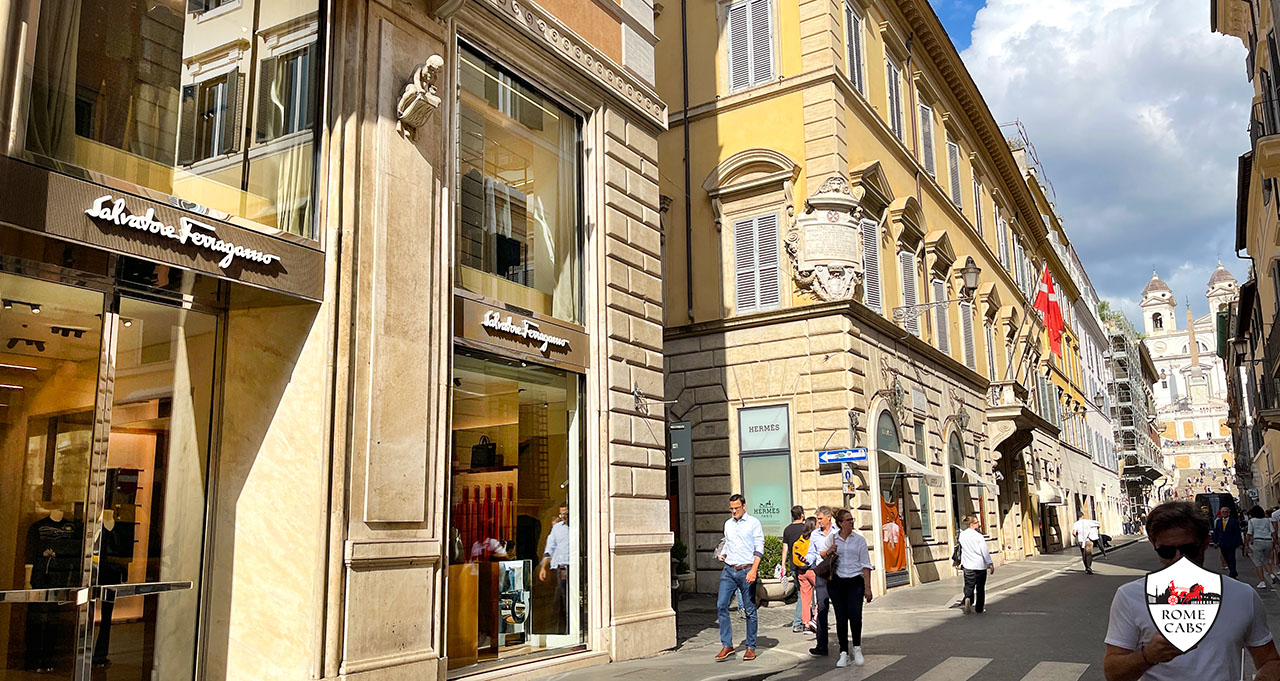
Salvatore Ferragamo: Celebrated for its fine craftsmanship and innovative designs, Salvatore Ferragamo’s boutique offers shoppers a selection of exquisitely crafted shoes, handbags, and accessories. Ferragamo has long been synonymous with Italian luxury, and the pieces found here highlight both timeless style and cutting-edge fashion.
Prada: Prada’s minimalist yet sophisticated aesthetic greets shoppers in its sleek store along Via dei Condotti. Known for blending modernism with timeless style, Prada’s selection of handbags, shoes, and ready-to-wear pieces reflects an uncompromising commitment to quality and design.
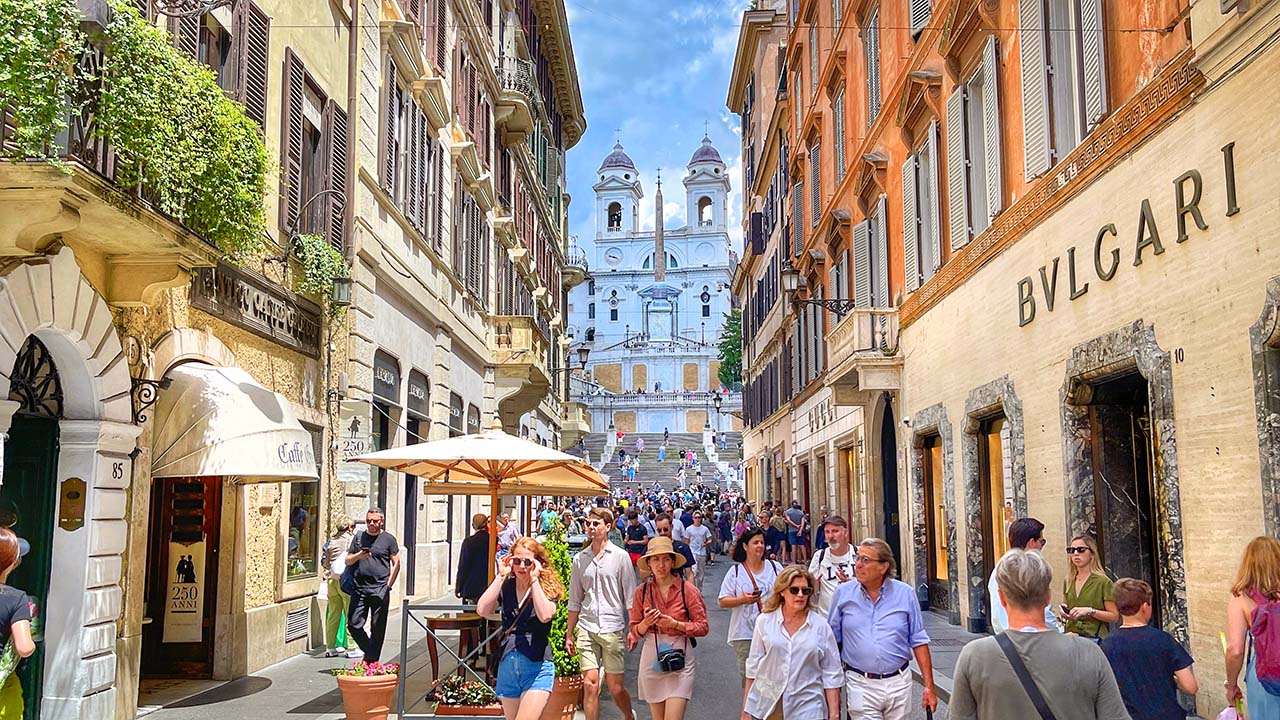
Bulgari: Via dei Condotti is home to Bulgari’s flagship store, one of the world’s most famous jewelers. Bulgari’s timeless collections, including the iconic Serpenti and B.zero1 lines, are displayed like works of art. Visiting the boutique feels more like stepping into a Roman gallery, where every piece tells a story of luxury, elegance, and impeccable craftsmanship
Valentino: One of Italy’s most illustrious fashion brands, Valentino epitomizes luxury and elegance. The Valentino store on Via dei Condotti is a treasure trove of impeccably tailored gowns, chic everyday wear, and bold accessories. Each piece embodies Italian craftsmanship and haute couture, making it a favorite among those with a taste for glamour.
Gucci: The renowned Italian fashion house, Gucci, holds a prominent position on Via dei Condotti. Famous for its bold designs and trend-setting collections, the Gucci flagship store offers everything from statement clothing and accessories to limited-edition pieces. For those seeking exclusivity and innovation, a visit to Gucci is a must.

Caffè Antico Greco: A Historic Retreat Amidst the Glamour
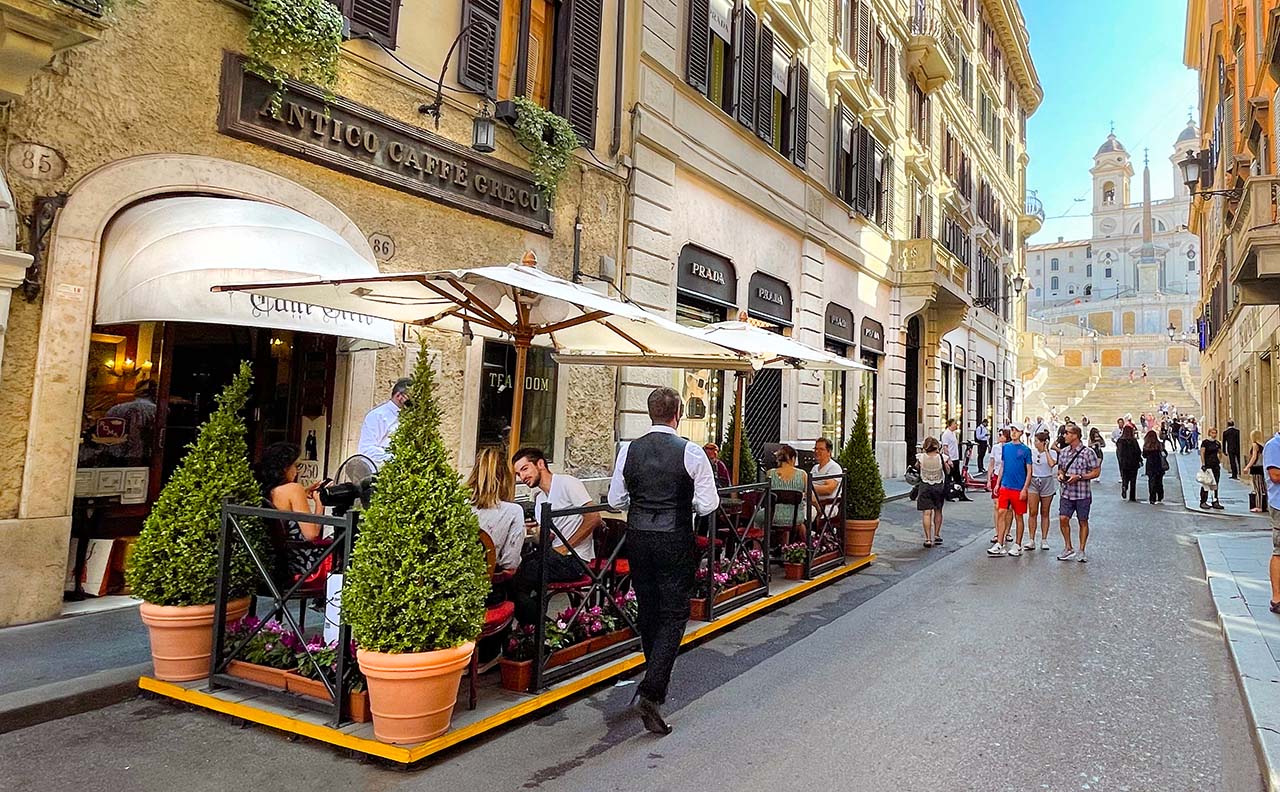
After a day of luxury shopping, few places offer the kind of refined break that Caffè Antico Greco provides. Established in 1760, Caffè Greco is the second-oldest café in Italy and has long been a favorite among intellectuals, artists, and writers.
The elegant interiors, adorned with vintage artwork and furniture, offer a glimpse into a bygone era while you enjoy an espresso or a light snack. A favorite haunt of literary giants such as Goethe and Keats, the café adds a touch of old-world charm to your modern-day Roman experience.
10 Places to See and Visit near Via dei Condotti
Via dei Condotti offers not only a gateway to luxury shopping but also an ideal vantage point for exploring some of the city’s most iconic cultural and historical landmarks. Its central location makes it a perfect starting point for discovering the treasures that lie just a short distance away.
Here’s a closer look at the nearby attractions that complement a visit to this illustrious avenue:
1. The Spanish Steps
At the western terminus of Via dei Condotti lies Piazza di Spagna, renowned for its grand staircase, the Spanish Steps. This striking Baroque stairway, completed in 1725, connects the piazza to the Trinità dei Monti church perched atop the hill just behind the Sallustiano Obelisk. The Spanish Steps, with their 135 steps, provide a picturesque and serene space amid the hustle and bustle of the city.
The steps have long been a popular gathering place for both locals and visitors, serving as a backdrop for countless photographs and leisurely moments. The view from the top of the Spanish Steps is breathtaking, offering a panoramic vista of Rome’s rooftops and the Piazza below. The piazza itself is lined with charming cafes and boutiques, adding to its appeal as a cultural and social hub.
In addition to their architectural beauty, the Spanish Steps are home to the Barcaccia Fountain at the base, designed by Pietro Bernini and his son Gian Lorenzo Bernini. This unique fountain, shaped like a sinking boat, adds to the charm of the piazza and is a testament to Baroque artistry.

2. Via del Corso
For those looking to explore more shopping avenues, Via del Corso is a bustling street that runs parallel to Via dei Condotti and offers a mix of high street stores and historic boutiques. Stretching from Piazza del Popolo to Piazza Venezia, Via del Corso is one of Rome’s main commercial arteries and is lined with an array of shops, cafes, and eateries.
Along Via del Corso, you’ll find landmarks such as the Galleria Alberto Sordi, an elegant shopping gallery housed in a historic building that adds a touch of architectural grandeur to the street. The lively atmosphere of Via del Corso provides a different shopping experience compared to the high-end luxury of Via dei Condotti, catering to a broader range of tastes and budgets.
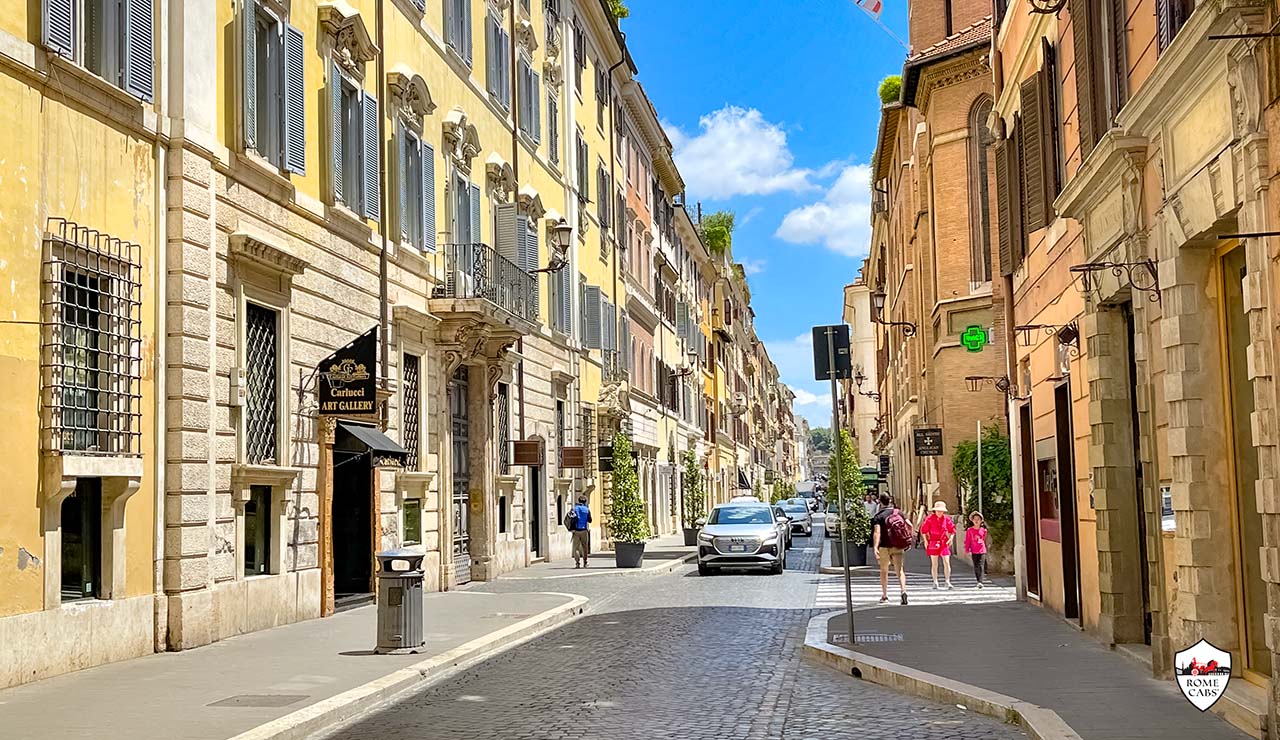
3. Via del Babuino
Parallel to Via dei Condotti, Via del Babuino is another noteworthy shopping street that merges historical charm with contemporary retail. Known for its upscale boutiques and art galleries, Via del Babuino connects Piazza del Popolo to the Spanish Steps, offering a picturesque route that complements a visit to Via dei Condotti.
The street gets its name from the “Babuino statue“, a sculptural group depicting a figure known as the “Baboon” due to its resemblance to a baboon’s face. This statue, located at the intersection with Via del Corso, adds a quirky historical touch to the street.
4. Via Veneto
Via Veneto is synonymous with Rome’s glamorous era of “La Dolce Vita” in the 1950s and 1960s. This elegant street, lined with luxury hotels, cafes, and fine dining establishments, epitomizes the opulence and style of Rome’s golden age. It was famously featured in Federico Fellini’s film “La Dolce Vita“, capturing the essence of the city’s social and cultural scene. Strolling along Via Veneto offers a glimpse into Rome’s historic luxury and provides a beautiful setting for a relaxed afternoon.
5. Piazza Barberini
Just off Via Veneto, Piazza Barberini is a lively square that features the magnificent Fountain of the Triton by Gian Lorenzo Bernini. The piazza is also home to the Palazzo Barberini, a grandiose palace that now houses the Galleria Nazionale d’Arte Antica, which boasts a fine collection of Renaissance and Baroque art. The square’s blend of artistic and architectural elements makes it a notable stop in the area.

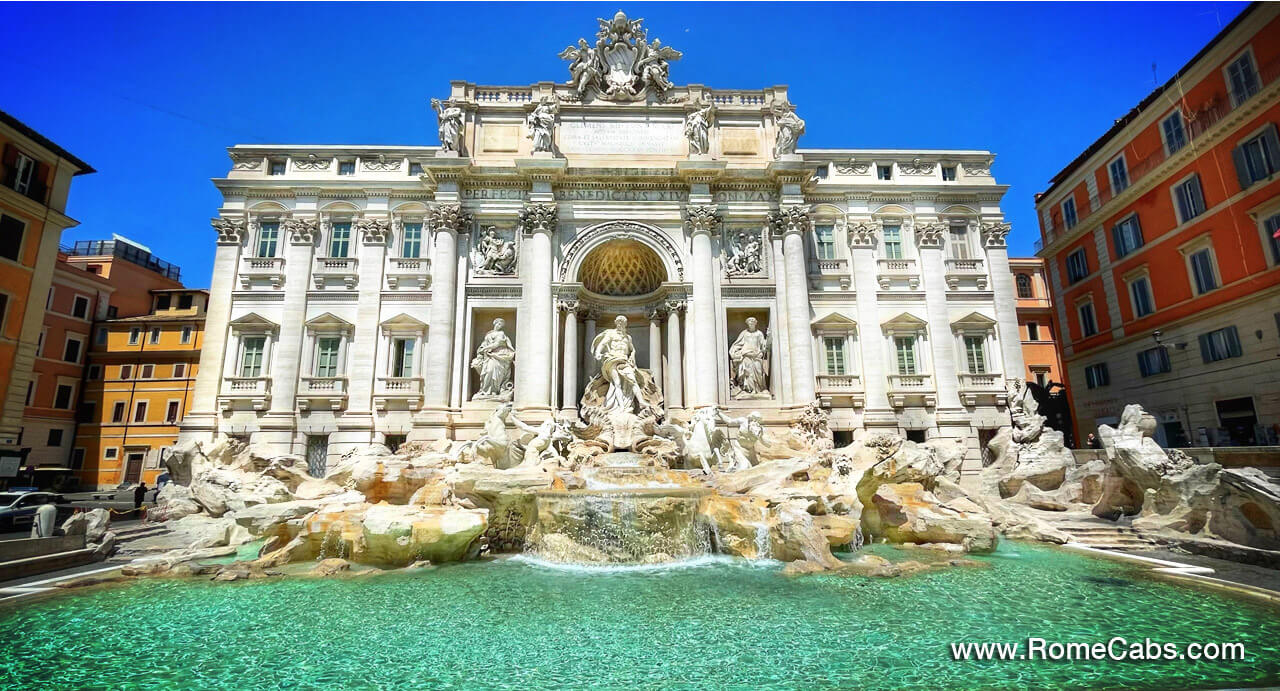
6. Trevi Fountain
A short stroll from Via dei Condotti brings you to the majestic Trevi Fountain, one of Rome’s most celebrated landmarks. Completed in 1762, this Baroque masterpiece is renowned for its grandeur and intricate design. The fountain, designed by Nicola Salvi, features an imposing central figure of Neptune, the god of the sea, flanked by tritons and sea horses, all set against a backdrop of a grand Roman palace facade.
The Trevi Fountain is perhaps best known for the tradition of tossing a coin into its crystal-clear waters, a ritual that is said to ensure a return visit to Rome. This tradition has been popularized in part by films such as Federico Fellini’s “La Dolce Vita.” The fountain’s elaborate sculptures and the soothing sound of cascading water create a magical atmosphere, making it a must-visit site for anyone exploring the city.
7. Piazza del Popolo
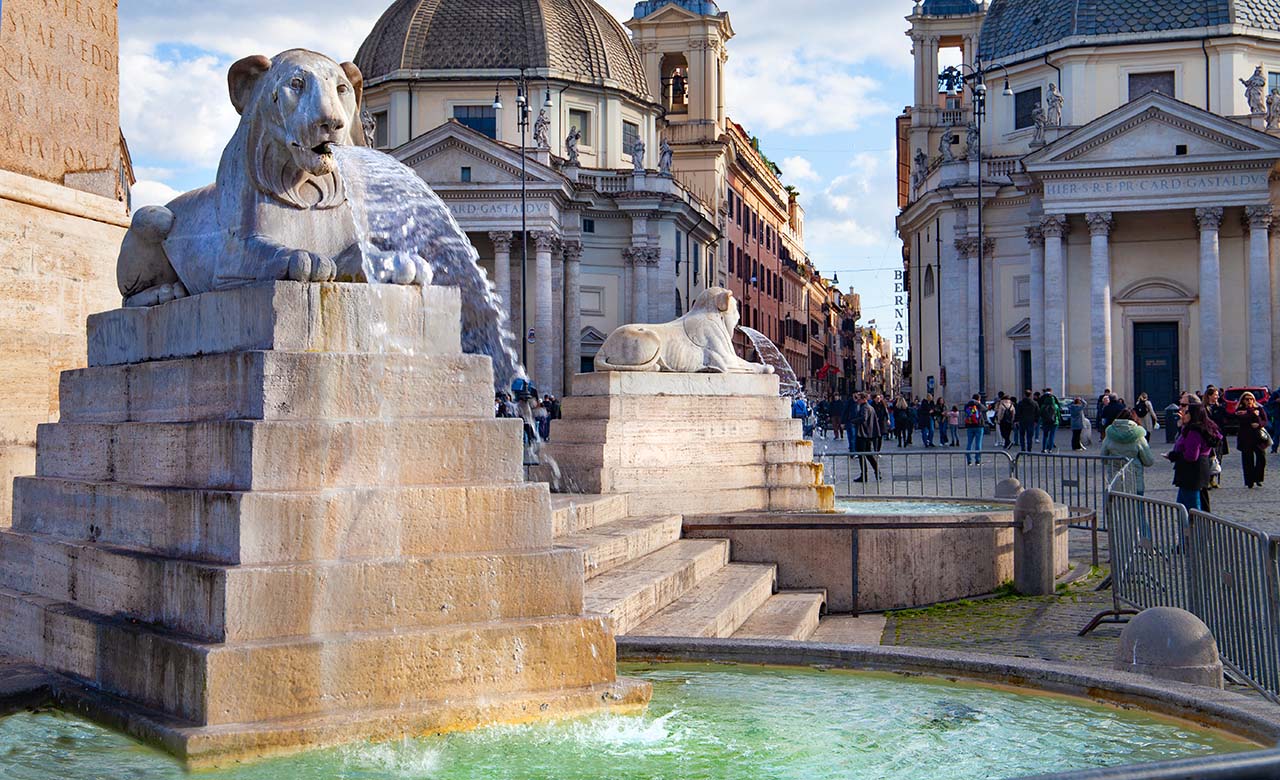
A short walk from Via dei Condotti, Piazza del Popolo is one of Rome’s grandest squares, known for its historic and architectural significance. The piazza, whose name means “People’s Square,” has been a major public space since ancient Rome and was redesigned during the Renaissance by architect Giuseppe Valadier.
At the center of the piazza stands the Obelisco Flaminio, an ancient Egyptian obelisk that was brought to Rome by Emperor Augustus. Flanking the square are two prominent churches: Santa Maria del Popolo, renowned for its stunning Renaissance chapels by Caravaggio and Raphael, and Santa Maria dei Miracoli, a baroque masterpiece.
Piazza del Popolo also serves as a gateway to Pincio Hill and Borghese Gardens.
8. Villa Borghese and Gardens
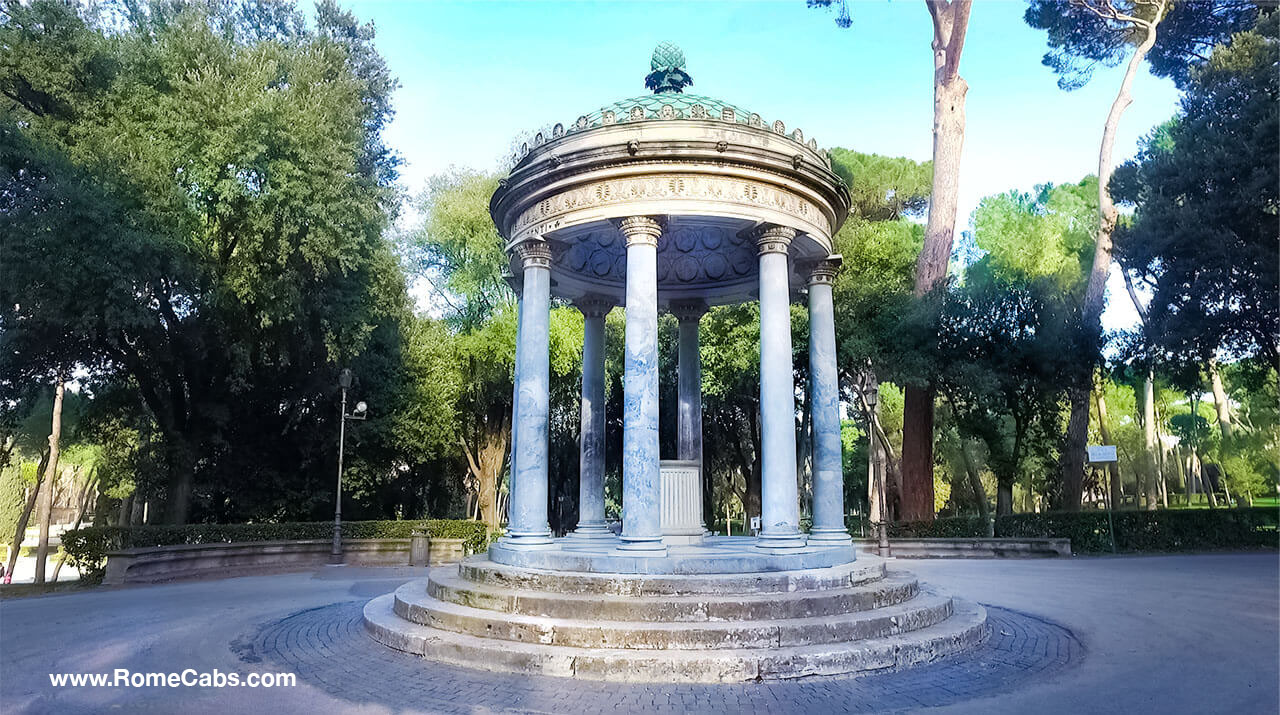
For those seeking a respite from the bustling city streets, the Villa Borghese Gardens offer a tranquil escape. Spanning 80 hectares, this sprawling park is one of Rome’s largest and most beautiful green spaces. Originally designed as a private estate for the Borghese family, the gardens are now a public park that provides a peaceful retreat from the urban landscape.
The gardens are home to several important cultural institutions, including the Galleria Borghese, a renowned art museum housed in a villa designed by architect Flaminio Ponzio. The Galleria Borghese boasts an exceptional collection of Renaissance and Baroque art, featuring works by masters such as Caravaggio, Raphael, and Bernini. The museum’s impressive collection and the villa’s stunning architecture make it a highlight for art enthusiasts.
9. Pantheon (Piazza della Rotonda)
A short distance from Piazza Venezia, the Pantheon is one of Rome’s best-preserved ancient buildings. Originally built as a temple to the Roman gods and later converted into a Christian church, the Pantheon is renowned for its massive dome and oculus, which illuminate the interior with natural light. The Pantheon also houses the tombs of notable figures, including the Renaissance artist Raphael.

10. Piazza Navona
A bit further but still within a pleasant walking distance, Piazza Navona is one of Rome’s most charming squares. Built on the site of an ancient Roman stadium, the piazza is renowned for its beautiful fountains: the Fountain of the Four Rivers by Gian Lorenzo Bernini, the Fountain of Neptune, and the Fountain of the Moor.
Piazza Navona’s lively atmosphere, with its array of street artists, cafes, and historic buildings, makes it a delightful place to explore. The square’s vibrant ambiance and architectural beauty make it a popular destination for both tourists and locals.

Via dei Condotti: Blending Fashion, History, and Culture in Rome
Via dei Condotti isn’t just a shopping destination; it’s a journey through Rome’s past and present. The street’s grand architecture, coupled with its high-end boutiques, creates an atmosphere that’s both luxurious and culturally enriching. Whether you’re a fashion aficionado, a history buff, or someone simply looking to experience the finer things in life, Via dei Condotti offers a quintessential Roman experience.
With its mix of contemporary luxury and historical significance, Via dei Condotti stands as a testament to Rome’s enduring allure. From the elegance of its fashion houses to the proximity of its nearby attractions, this iconic avenue invites you to indulge in the best of Rome — a city where the past seamlessly blends with the present, offering a taste of la dolce vita at its finest.
Find RomeCabs online also on:
- Facebook: https://www.facebook.com/RomeCabsToursAndTransfers
- RomeCabs Pinterest: https://www.pinterest.it/romecabs
- RomeCabs Twitter: https://twitter.com/RomeCabs
- RomeCabs Instagram: https://www.instagram.com/romecabs/
- RomeCabs Flickr Photos: https://www.flickr.com/photos/romecabs/
- More Travel Blogs https://romecabs.wordpress.com/
Discover MORE Shopping Streets in Rome on our RomeCabs Travel Blogs:

 RomeCabs Blog Italy - Italy Private Excursions, Rome Tours, Civitavecchia Transfers
Leave a Reply