
Buongiorno and welcome to RomeCabs Rome Travel Blog! Embarking on an in-depth exploration of Rome’s captivating neighborhoods and iconic landmarks during our Civitavecchia shore excursions is a delightful endeavor. Let’s delve deeper into the immersive experiences awaiting you. From the charming streets of Trastevere to the sweeping vistas from Janiculum Hill, each stop reveals a unique aspect of Rome’s rich history and culture. Join us as we journey through centuries of history, vibrant culture, and hidden gems in the Eternal City.
At RomeCabs, we go beyond conventional tours; we specialize in creating immersive experiences that linger with our guests well beyond their time on Rome’s cobblestone streets. Our shore excursions from Civitavecchia are meticulously designed to unveil the essence of Rome—its rich history, captivating beauty, and profound soul—while steering clear of the overcrowded tourist hotspots with lengthy queues and elusive ticketing challenges.
.
.
.
Trastevere: Where History and Modern Life Converge
.

.
Trastevere is a neighborhood that perfectly captures the timeless allure of Rome. Nestled on the west bank of the Tiber River, Trastevere’s name literally means “across the Tiber.” This historic district is a labyrinth of narrow alleys, medieval churches, and vibrant piazzas that instantly transport you back in time.
As you delve deeper into Trastevere, you’ll find yourself in Piazza di Santa Maria in Trastevere, a lively square where locals gather to socialize and enjoy the beauty of their surroundings. Sidewalk cafes and restaurants spill onto the square, offering a perfect vantage point for people-watching. The square is the beating heart of the neighborhood, where the rhythm of daily life pulses through the cobblestone streets.
.

.
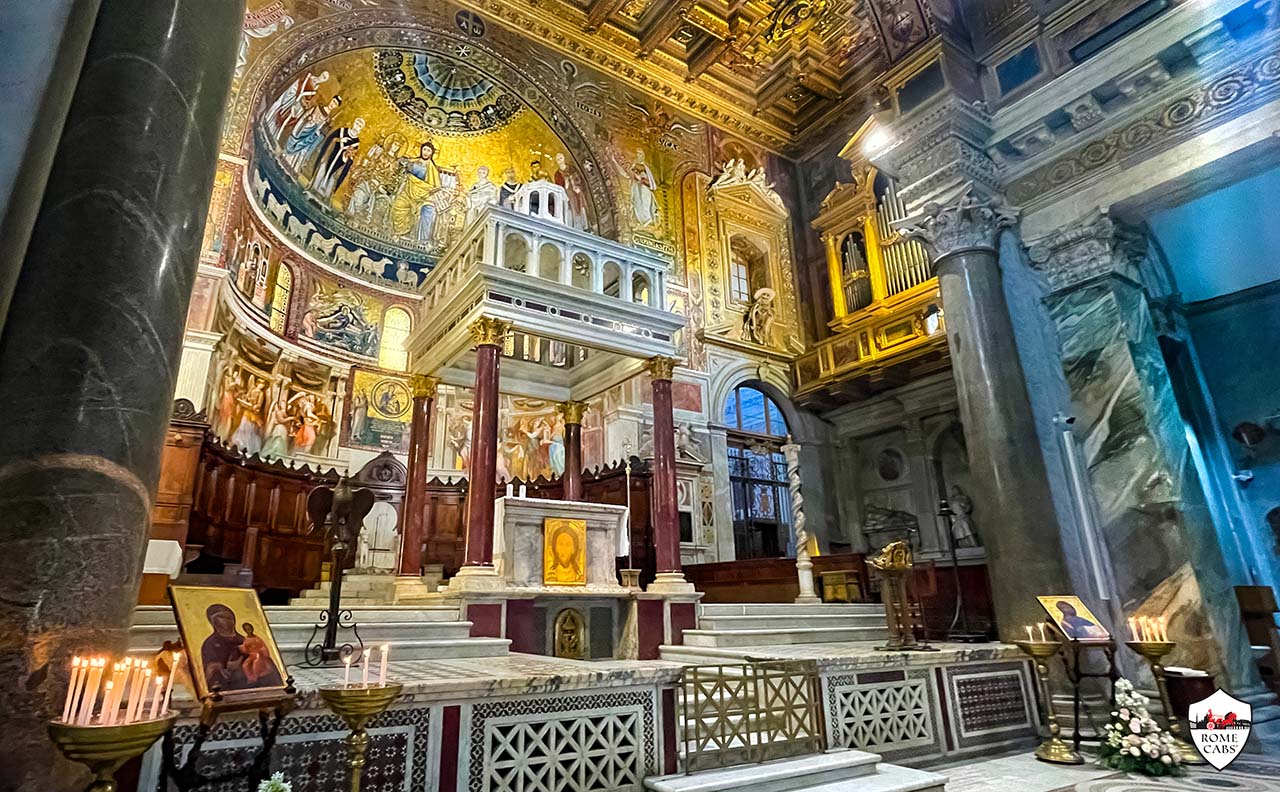
One of Trastevere’s most iconic landmarks is the Basilica di Santa Maria in Trastevere – one of Rome’s oldest churches. Adorned with stunning 12th-century mosaics, the basilica is a hidden gem waiting to be discovered behind its unassuming façade. Inside, the soft glow of candlelight dances across ancient stone, creating an atmosphere of reverence and wonder. The mosaics, depicting biblical scenes and saints, glisten with gold and color, telling stories of faith and artistry from centuries past. The basilica’s façade, with its intricate details, also narrates tales of Rome’s rich history and architectural evolution.
.
.
Trastevere is not just about history and architecture; it is also a haven for culinary delights. Traditional trattorias beckon with the enticing aromas of freshly baked pizza and simmering pasta dishes. Here, you can indulge in Roman cuisine prepared with love and tradition. From cacio e pepe to supplì, the local dishes are a celebration of simple, yet flavorful ingredients. Dining in Trastevere is an immersive experience, where every meal is a journey through Rome’s gastronomic heritage.
As you wander through Trastevere, you’ll discover a neighborhood that feels both ancient and vibrantly alive, a place where history and modernity blend seamlessly. It is a quarter that invites exploration, promising new discoveries around every corner, whether it’s a hidden courtyard, a charming boutique, or a bustling market. Trastevere is a microcosm of Rome itself, encapsulating the city’s spirit, culture, and enduring charm.
.

.
One cannot explore Trastevere without savoring its culinary delights. Traditional trattorias beckon with the aromas of freshly baked pizza and simmering pasta dishes. It’s the perfect opportunity to indulge in Roman cuisine prepared with love and tradition.
.
Aventine Hill: Rome’s Green Oasis
Leaving the lively streets of Trastevere behind, we ascend to Aventine Hill—a serene retreat above the bustling city. As you climb higher, the air becomes crisper, and the sound of Roman life fades into the distance. No wonder Aventine Hill is one of the most prestigious hills in Rome, with stunning villas and pristine buildings enjoying the tranquility away from the chaotic city below.
.
Giardino degli Aranci: A Hidden Gem
At the summit of Aventine Hill lies the Orange Garden (Giardino degli Aranci), a hidden gem offering panoramic views of Rome. This beautifully landscaped garden is a haven of tranquility, with fragrant orange trees and lush greenery. In the springtime, the scent of blooming oranges fills the air, creating a sensory experience that is both peaceful and invigorating. As you stroll along the garden’s pathways, you’ll encounter the terrace at the far end, which offers sweeping vistas of ancient rooftops, domes, and the distant horizon. This vantage point is a perfect spot for contemplation and reflection, providing a moment of serenity amidst the grandeur of Rome.
.

.
The Knights of Malta Keyhole: A Unique Perspective
Nearby, the famous Knights of Malta Keyhole offers a unique and captivating perspective on St. Peter’s Basilica. This historic keyhole, located in the door of the Priory of the Knights of Malta, frames a perfectly aligned view of the dome of St. Peter’s. Peering through the keyhole, you’ll witness a breathtaking sight that encapsulates Rome’s architectural prowess and artistic vision. The experience is a testament to the meticulous planning and design that characterize the city’s historic landmarks.
Although this keyhole was considered a well-kept secret some 10 to 15 years ago, it has since become a popular attraction. Today, a line of eager tourists often forms, each waiting for their turn to glimpse this unique view. The anticipation and excitement in the air add to the charm of the experience, making it a must-visit spot on Aventine Hill.
.

A Glimpse of History and Elegance
Aventine Hill is more than just a peaceful retreat; it is a place steeped in history and elegance. The hill has long been a prestigious residential area, home to stunning villas and well-preserved buildings that exude a sense of timeless grandeur. The hill’s serene ambiance and lush greenery have made it a favored location for the elite and those seeking a respite from the bustling city below.
Among the notable landmarks on Aventine Hill is the Basilica of Santa Sabina, a historic church that dates back to the 5th century. Its simple yet majestic architecture and beautifully preserved mosaics offer a glimpse into early Christian art and architecture. The nearby Roseto Comunale, or Municipal Rose Garden, is another delightful spot, featuring a stunning array of rose species that bloom in a riot of colors during the spring and early summer.
.
Janiculum Hill: Spectacular Views & Historical Significance
.

.
Janiculum Hill, known in Italian as Gianicolo, is one of Rome’s most scenic and historically rich locations. Located just outside the ancient city walls, this hill offers not only breathtaking vistas of Rome’s skyline but also a deep connection to the city’s storied past. A shore excursion from Civitavecchia to Janiculum Hill promises an experience filled with both visual splendor and historical intrigue.
The Majestic Fontana dell’Acqua Paola
As you make your way to Janiculum Hill you will pass by the Fontana dell’Acqua Paola, also known as “Il Fontanone” or “The Big Fountain.” This monumental fountain greets visitors with its grandiose presence and intricate baroque design. Constructed in 1612 under the orders of Pope Paul V, the fountain was built to celebrate the restoration of the ancient Aqua Traiana aqueduct.
The aqueduct, originally commissioned by Emperor Trajan in 109 AD, was crucial for supplying fresh water to the burgeoning population of Rome. The Fontana dell’Acqua Paola is a testament to Rome’s engineering prowess and its commitment to beautifying the city with functional art.
.

.
The Terrazza del Gianicolo: Rome’s Grand Panorama
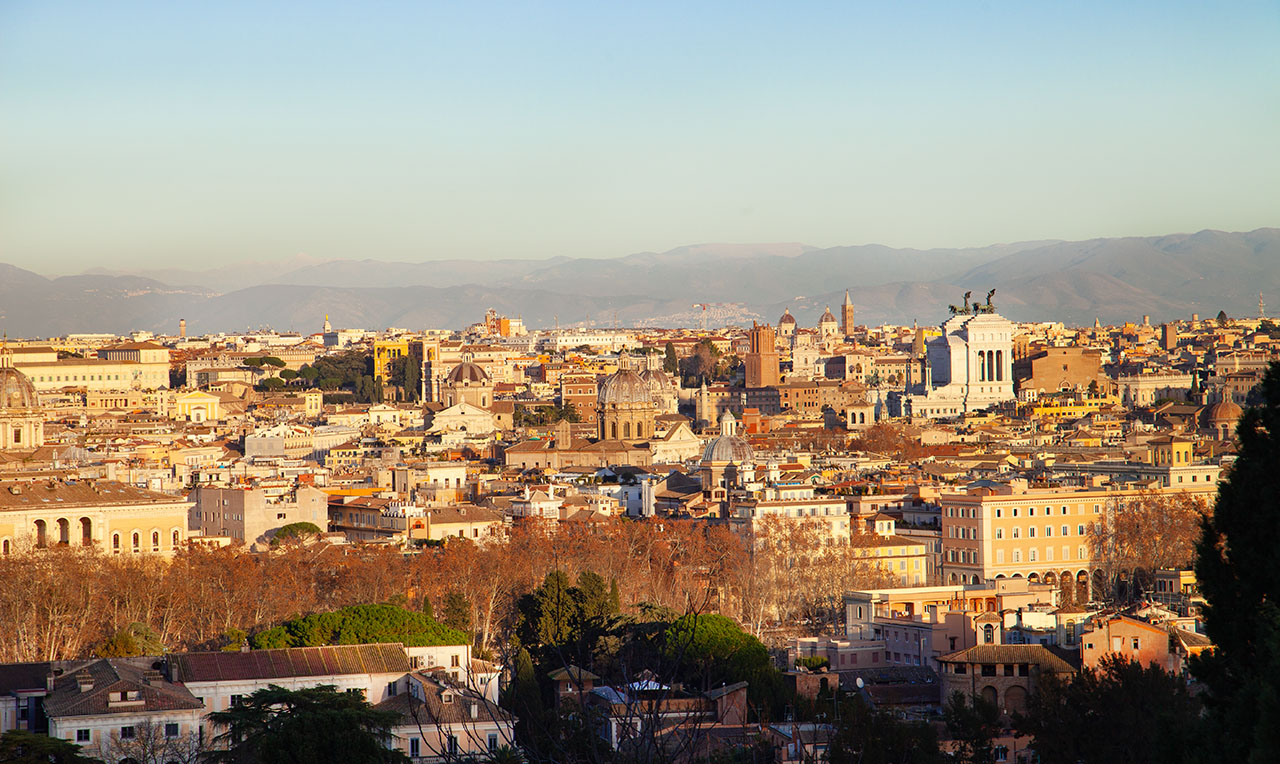
The Terrazza del Gianicolo is the highlight of Janiculum Hill, offering an expansive panorama that captures the essence of Rome’s timeless beauty. From this vantage point, visitors can see a mosaic of Rome’s most iconic landmarks. The dome of the Pantheon rises prominently, a testament to the ingenuity of ancient Roman architecture. To the east, the silhouette of the Colosseum hints at the grandeur of Rome’s gladiatorial past. This view is particularly captivating at sunset when the city is bathed in a warm, golden light, and the hills and mountains in the background add depth to the landscape.
.
.
A Stroll Through History and Nature
Janiculum Hill is not only about panoramic views; it also offers a peaceful retreat with its lush gardens and historical monuments. As you stroll around the main square, you are greeted by a captivating view of the dome of Saint Peter’s Basilica, one of the most iconic symbols of the Vatican and Christendom. The gardens surrounding the square are meticulously maintained, providing a serene environment ideal for a leisurely walk or quiet contemplation.
Historical Monuments and Memorials
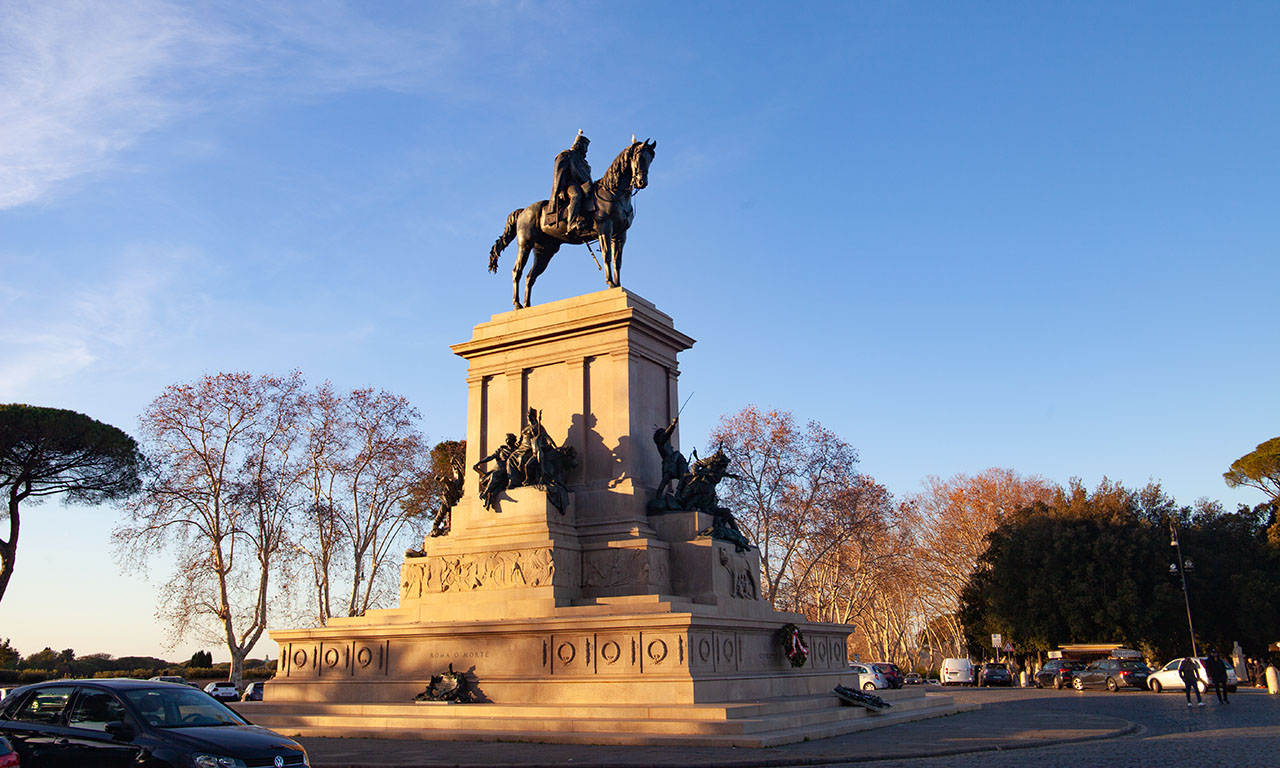
Janiculum Hill is steeped in historical significance. It played a crucial role during the Italian Risorgimento, the 19th-century movement for Italian unification. The hill was the site of fierce battles in 1849 when the French forces laid siege to Rome to restore the papal rule. In honor of the heroes who fought for the cause, several monuments and memorials are scattered across the hill. One notable statue is that of Giuseppe Garibaldi, the legendary general and national hero, mounted on horseback and looking out over the city. Nearby, the Mausoleum Ossario Garibaldino commemorates the fallen soldiers of the Risorgimento, their sacrifices forever etched into the fabric of the hill.
.
.
The Cannon of Gianicolo
If you happen to be on top of Janiculum hill at noon, you’ll be in for a surprise: the unique daily tradition on Janiculum Hill is the firing of the cannon at noon. This tradition dates back to 1847 when Pope Pius IX initiated the practice to synchronize the clocks of the city’s churches. Today, the cannon firing remains a beloved ritual, drawing both locals and tourists who gather to witness the loud boom echoing across Rome.
.
Piazza della Rotonda: The Majestic Pantheon
.

.
No visit to Rome, especially on a shore excursion from Civitavecchia, is complete without experiencing the grandeur of Piazza della Rotonda, home to the awe-inspiring Pantheon. This ancient temple-turned-church stands as a testament to Rome’s architectural ingenuity and rich history, offering visitors a captivating glimpse into the past.
.
The Pantheon: A Marvel of Engineering
The Pantheon, originally built by Marcus Agrippa in 27 BC and later rebuilt by Emperor Hadrian around 118-125 AD, is one of the best-preserved structures from ancient Rome. Its name, derived from the Greek words “pan” (all) and “theion” (gods), signifies its original purpose as a temple dedicated to all Roman gods. As you approach the Pantheon, the grand portico with its towering Corinthian columns welcomes you, hinting at the magnificence that lies within.
Stepping inside, you are immediately struck by the soaring dome, which remains the largest unreinforced concrete dome in the world. This architectural marvel, with a diameter of 43.3 meters (142 feet), is an engineering masterpiece. The oculus, a 9-meter (30-foot) wide circular opening at the dome’s apex, allows natural light to pour into the space, creating a dynamic interplay of light and shadow that enhances the Pantheon’s serene atmosphere.
.

.
Piazza della Rotonda: A Bustling Hub
Surrounding the Pantheon, Piazza della Rotonda is a lively and vibrant square that pulses with activity. This bustling hub is a favorite gathering spot for both locals and tourists, offering a unique blend of historical charm and contemporary energy. The square is lined with charming outdoor cafes and restaurants, providing the perfect vantage point to soak in the lively atmosphere. Here, you can enjoy a leisurely meal or a cup of coffee while watching the ebb and flow of daily life unfold against the backdrop of this ancient architectural wonder.
.
Santa Maria Sopra Minerva: A Hidden Gem
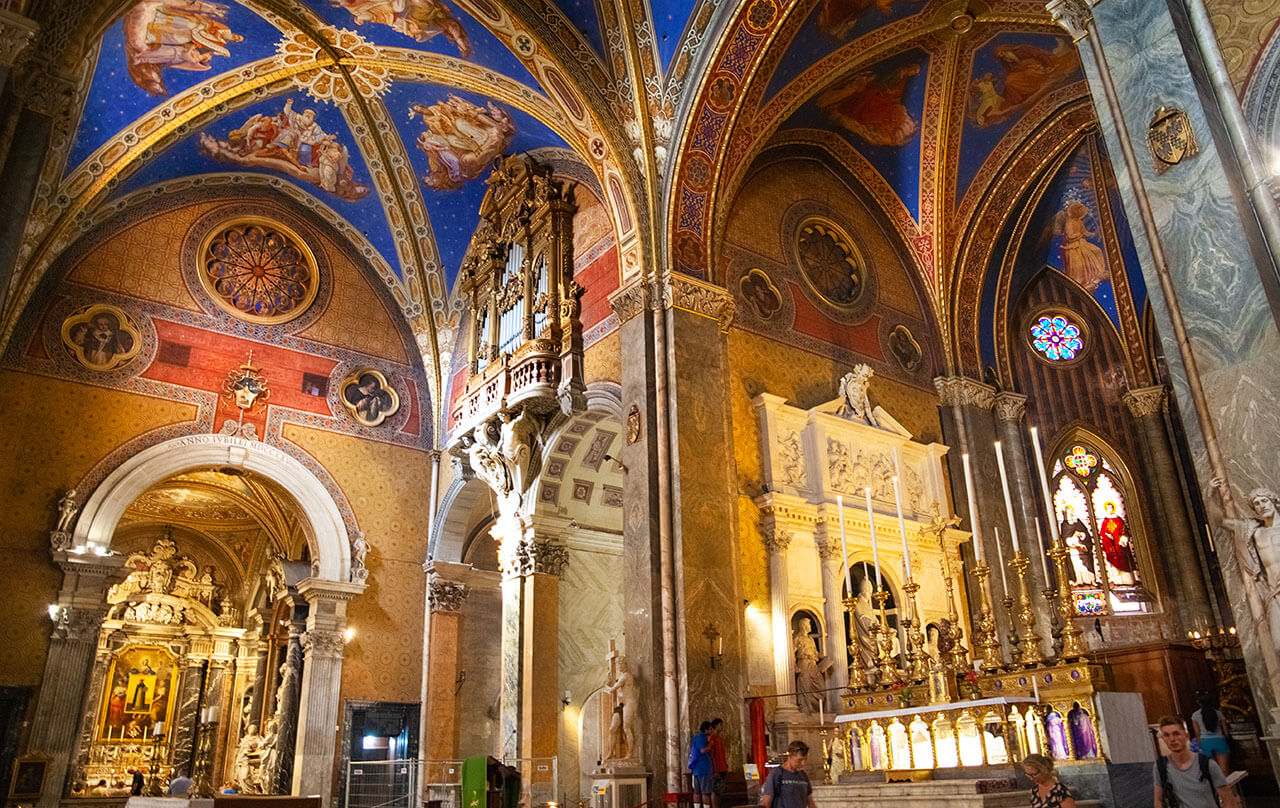
Just a short walk from the Pantheon, the Church of Santa Maria Sopra Minerva stands as a lesser-known but equally fascinating site. This Gothic church, built over the remains of an ancient temple dedicated to the Egyptian goddess Isis, boasts an array of artistic treasures. Inside, you can admire works by renowned artists such as Michelangelo and Bernini. Michelangelo’s statue of Christ the Redeemer and Bernini’s Elephant and Obelisk sculpture in the adjacent piazza are particularly noteworthy.
.
.
.
.
.
.
Capitoline Hill with a Picture-Perfect View of the Roman Forum
.
As part of our panoramic tour shore excursion from Civitavecchia, we will make a memorable stop atop Capitoline Hill—one of Rome’s famed seven hills, rich in ancient mythology and historical significance. This hill, also known as Campidoglio, has been a central part of Roman life for centuries, offering not just stunning views but a deep connection to the city’s storied past.
.
Historical Significance of Capitoline Hill
Capitoline Hill, known in Italian as “Campidoglio,” is the smallest yet most significant of Rome’s seven hills. It was the political and religious heart of ancient Rome, housing the Temple of Jupiter Optimus Maximus, the most important temple in the Roman Republic and later the Roman Empire. This temple, dedicated to Jupiter, Juno, and Minerva, was a symbol of Roman religious life and political power.
In medieval times, the hill continued to be a center of power and was the site of the city’s senate house. During the Renaissance, Michelangelo was commissioned to design the harmonious piazza that we see today. His masterful redesign included the creation of the Cordonata, a gently sloping staircase that leads up to the hill, flanked by majestic statues of Castor and Pollux.
.

.
The Terrace and the Roman Forum View
One of the highlights of Capitoline Hill is the secluded terrace behind the Palazzo Senatorio. This terrace offers a breathtaking, postcard-perfect view of the Roman Forum below. As you stand on this terrace, you are treated to a panoramic vista that spans the heart of ancient Rome—a sprawling landscape dotted with the remnants of majestic temples, triumphal arches, and once-grand basilicas.
From this vantage point, the Roman Forum appears as a living museum of antiquity. Key landmarks visible from the terrace include the Arch of Septimius Severus, the Temple of Saturn, the Temple of Vespasian and Titus, and the Curia Julia (the Senate House). Each structure tells a story of Rome’s glorious past, from the Republic to the Empire.
.

.
Imagining Ancient Rome
As you gaze out over the Roman Forum from Capitoline Hill, take a moment to imagine the bustling activity that once filled these historic streets. The Forum was the epicenter of Roman public life—where political debates, judicial proceedings, religious ceremonies, and commercial activities took place. Picture the Roman citizens in their togas, the senators discussing policies, the merchants selling their goods, and the grand processions marching through the arches.
.
Basilica of Saint Paul Outside the Walls
.
A must-see church on a shore excursion from Civitavecchia is the Basilica of Saint Paul Outside the Walls (Basilica di San Paolo fuori le Mura), one of Rome’s four major papal basilicas and a testament to Christian heritage. It is called “outside the walls” because it was built outside the ancient Aurelian walls of Rome.
This monumental church holds the tomb of Saint Paul the Apostle and boasts an impressive architectural presence. Marvel at the grandeur of its exterior, characterized by towering columns and intricate mosaics.
Step inside to explore the vast interior, adorned with magnificent frescoes and ornate decorations. The basilica’s nave is adorned with striking mosaics that depict biblical scenes, offering a visual narrative of religious history. Take a moment of reflection in this sacred space, appreciating the craftsmanship and spiritual significance embedded within its walls.
.

.
Our visit to the Basilica of Saint Paul Outside the Walls provides a profound glimpse into Rome’s Christian legacy and the enduring influence of Saint Paul. It’s a journey through faith and artistry that underscores the depth of Rome’s cultural heritage.
Another great thing about visiting this basilica on a shore excursion from Civitavecchia is not wasting precious time in long security lines and dealing with crushing crowds that flock to the Vatican. This means you will have more time to see more of Rome!
.
Book Your RomeCabs Shore Excursion from Civitavecchia
Ready to embark on a journey through Rome’s hidden treasures and iconic landmarks? Browse through our collection of Shore Excursions from Civitavecchia on our website for more information.
Enjoy a taste of Luxury on your Rome limousine tours from Civitavecchia. Let RomeCabs be your guide to unforgettable memories in the Eternal City.
.
RomeCabs Customer Reviews:
.
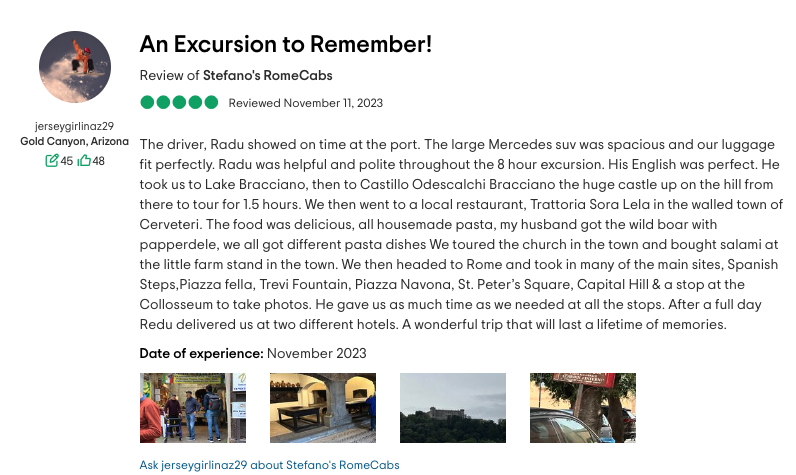
An Excursion to Remember!
Jerseygirlinaz29 wrote on November 11, 2023: The driver, Radu showed on time at the port. The large Mercedes suv was spacious and our luggage fit perfectly. Radu was helpful and polite throughout the 8 hour excursion. His English was perfect. He took us to Lake Bracciano, then to Castillo Odescalchi Bracciano the huge castle up on the hill from there to tour for 1.5 hours. We then went to a local restaurant, Trattoria Sora Lela in the walled town of Cerveteri. The food was delicious, all housemade pasta, my husband got the wild boar with papperdele, we all got different pasta dishes We toured the church in the town and bought salami at the little farm stand in the town. We then headed to Rome and took in many of the main sites, Spanish Steps,Piazza fella, Trevi Fountain, Piazza Navona, St. Peter’s Square, Capital Hill & a stop at the Collosseum to take photos. He gave us as much time as we needed at all the stops. After a full day Redu delivered us at two different hotels. A wonderful trip that will last a lifetime of memories.
.
Beyond the Cruise: Unleash Italy’s Charm with RomeCabs’ Post Cruise Tours from Civitavecchia
5 Great reasons to book private tours in Italy with RomeCabs
10 Reasons WHY You Should Book a Pre-Cruise Tour from Rome to Civitavecchia
.
Find RomeCabs online also on:
- RomeCabs FACEBOOK
- RomeCabs PINTEREST
- RomeCabs TWITTER
- RomeCabs INSTAGRAM
- RomeCabs FLICKR Photo Gallery
- RomeCabs Recommended on Cruise Critic
.
 RomeCabs Blog Italy - Italy Private Excursions, Rome Tours, Civitavecchia Transfers