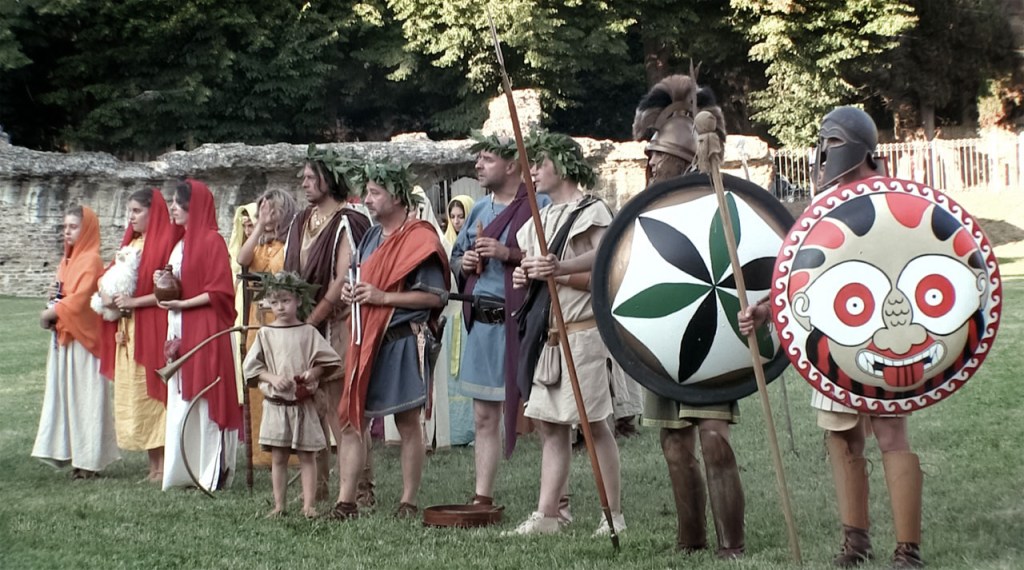
Buongiorno and welcome to RomeCabs Italy travel blog! RomeCabs offers many day tours from Rome and Shore Excursions to Civitavecchia to ancient Etruscan places such as Cerveteri and Tarquinia. While this ancient pre-Roman civilization that thrived in central Italy in what was once known as Etruria (land of the Etruscans) is pretty fascinating, where did the Etruscans come from?
The origins of the Etruscans have puzzled historians and archaeologists for centuries, sparking a debate that still continues today. The Etruscans were mysterious yet highly advanced people who lived in what is now Tuscany, long before the rise of the Roman Empire. But where did the Etruscans come from?
To answer these questions, let’s dive into two main theories about the origins of the Etruscans: the Indigenous Theory and the Eastern Mediterranean Theory.
But first, let’s get to know the Etruscans a bit better: Who were the Etruscans?
Who Were the Etruscans?
The Etruscans were a fascinating and influential ancient civilization that thrived in central Italy from around the 8th century BCE until their gradual assimilation into the Roman Republic by the late 4th century BCE. This enigmatic culture, which predated Rome’s dominance, played a crucial role in shaping the early development of Roman society and culture.
They lived primarily in the region we now know as Tuscany (which was also named after the Etruscans), as well as parts of what are today Lazio and Umbria. The Etruscans were known for their unique language, advanced craftsmanship, artistic achievements, and intricate religious practices.

The Mysterious Language of the Etruscans
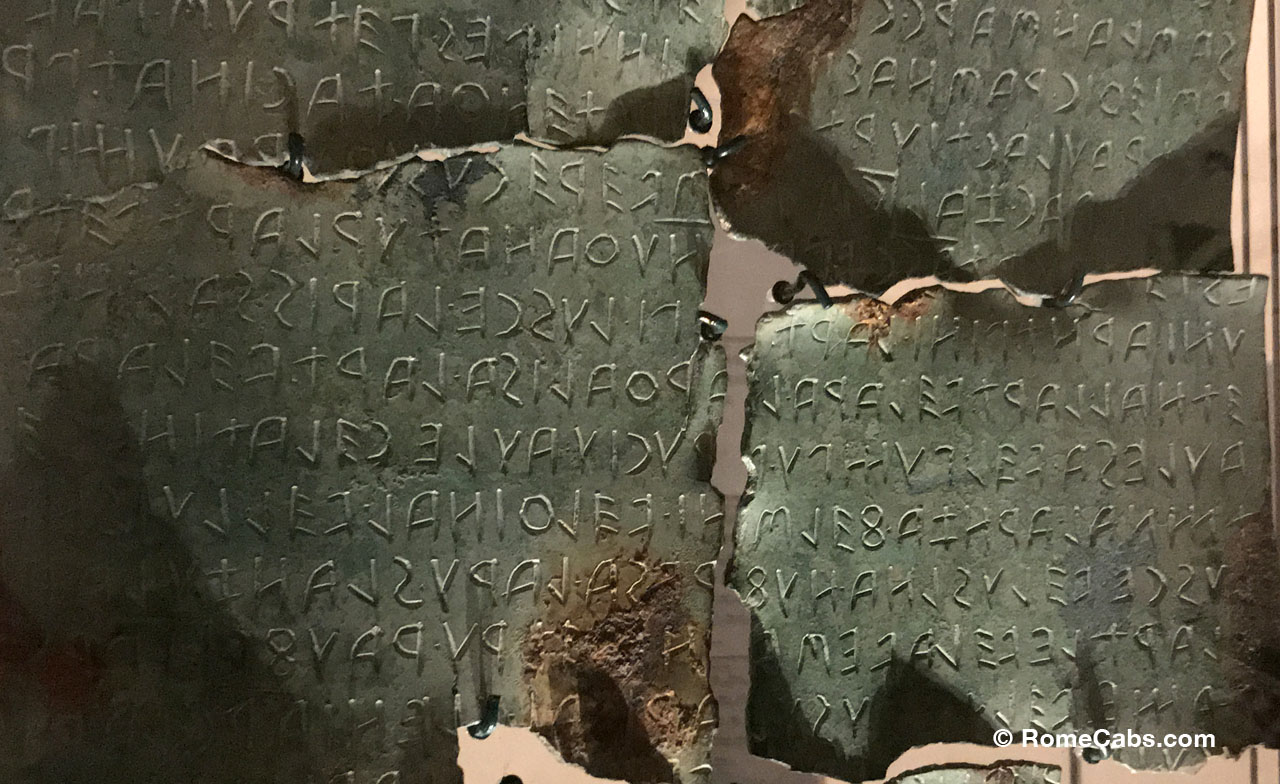
One of the most intriguing aspects of the Etruscan civilization is their language. Unlike Latin or Greek, Etruscan is not part of the Indo-European language family. This makes it distinct and challenging for scholars to decipher fully.
Although the Etruscan alphabet was adapted from the Greek alphabet and is somewhat understood, the meanings of many Etruscan words and the structure of their sentences remain a mystery.
Most of our knowledge of the Etruscan language comes from inscriptions on tombs, pottery, and artifacts, as well as a few longer texts, like the Liber Linteus, a linen book used as mummy wrappings, which is the longest surviving Etruscan text.
Etruscans: Masters of Art and Architecture
The Etruscans were highly skilled artisans and builders. They were especially renowned for their metalworking abilities, producing exquisite bronze mirrors, jewelry, and weapons that were highly prized throughout the Mediterranean.
Etruscan craftsmen also excelled in pottery, creating distinctive bucchero ware, a fine, black pottery with a shiny, almost metallic surface, which was often decorated with intricate reliefs and designs.

Beyond their craftsmanship, the Etruscans were also notable for their engineering prowess. They constructed sophisticated cities with advanced infrastructure that included paved roads, bridges, and effective drainage systems such as the Cloaca Maxima in the Roman Forum.
The Etruscans were among the first in Italy to build with stone, creating monumental structures such as city walls, temples, and even underground tombs carved directly into rock. Their cities were well-organized, featuring grids of streets, public buildings, and homes that reflected a high level of urban planning.

The Rich Cultural and Religious Life of the Etruscans
The Etruscan society was rich in culture and steeped in religious traditions. They practiced a polytheistic religion with a pantheon of gods and goddesses that bore some similarities to those of Greece and Rome but with distinct Etruscan characteristics and myths.
They believed that the will of the gods could be interpreted through natural phenomena, a practice known as divination. Etruscan priests, called haruspices, were particularly skilled in reading the entrails of sacrificed animals, especially the liver, to predict the future. This practice of divination, which later became integral to Roman religion, shows just one example of how Etruscan spiritual practices influenced their neighbors.
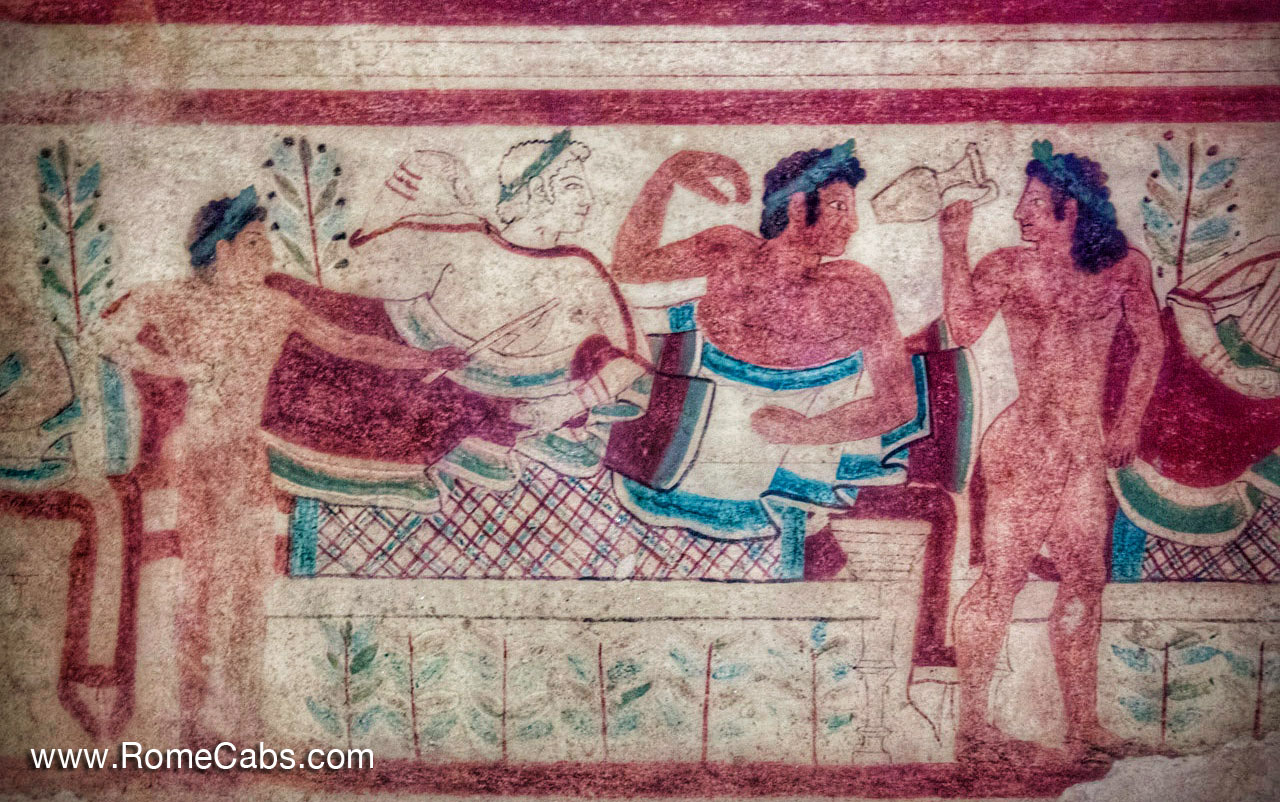
Art played a central role in Etruscan religious and social life. Their art is best known for its lively and colorful frescoes that adorned the walls of their tombs such as inside the Monterozzi Necropolis in Tarquinia, depicting scenes of daily life, religious rituals, banquets, and even sporting events.
These frescoes provide valuable insights into Etruscan society, showing us a people who valued music, dance, and feasting. Their tombs themselves were often elaborate, designed to resemble houses or even small temples, reflecting a belief in an afterlife where the deceased would continue to enjoy the pleasures of life.

The Etruscans also excelled in sculpting, producing lifelike statues and sarcophagi with detailed carvings that sometimes featured reclining figures of the deceased, as if enjoying a perpetual banquet. This artistry extends to the funerary urns they created, which often featured elaborate decorations and representations of the deceased.
Where Did the Etruscans Come From?
Now let’s delve into the theories about where the Etruscans come from.
The Indigenous Theory: Etruscans as Homegrown Italians
One of the leading theories about the Etruscans’ origins is the Indigenous Theory. According to this idea, the Etruscans developed locally in Italy, evolving directly from the earlier Villanovan culture, which existed in the same regions during the Iron Age (around 1100-700 BCE). This theory suggests that the Etruscans were not newcomers to Italy but rather evolved over time in place.
Evidence supporting this theory includes archaeological findings showing a continuous progression of settlements and burial practices from the Villanovan period to the rise of the Etruscan civilization. The Villanovans are often considered the earliest phase of Etruscan civilization.
They were known for their distinctive pottery, metalwork, and unique burial customs, such as cremation, which continued to develop and become more elaborate over time. This suggests a gradual cultural evolution rather than the arrival of a new group of people.

Recent genetic studies also support the Indigenous Theory. In a comprehensive 2021 study, scientists analyzed the genomes of 48 individuals from the Iron Age, focusing on those from Tuscany and Lazio (the heartland of Etruscan civilization). They found a strong genetic continuity between the Etruscans and the earlier populations in Italy, with no significant genetic influx from the eastern Mediterranean or Anatolia.
This indicates that the Etruscans were likely a local population with deep roots in the Italian peninsula. Their genetic makeup showed a blend of ancestries common in ancient European populations, such as Western Hunter-Gatherers, Early European Farmers, and Steppe-related ancestry.
Additionally, a 2018 study compared ancient DNA from Etruscan remains with modern populations in Tuscany. The results showed a remarkable continuity, suggesting that the Etruscans were indeed a local population that evolved over thousands of years.
These findings align with the Indigenous Theory, indicating that the Etruscan civilization developed locally in Italy, incorporating cultural influences through trade and contact with other Mediterranean cultures rather than through large-scale migration.
The Eastern Mediterranean Theory: A Journey from Afar?
Contrasting with the Indigenous Theory is the Eastern Mediterranean Theory, which proposes that the Etruscans migrated to Italy from the Near East or Asia Minor, specifically from the region that is now modern-day Turkey.
This theory is partly based on the writings of ancient historians like Herodotus, who claimed that the Etruscans were originally Lydians from Asia Minor. According to Herodotus, a severe famine in Lydia led a portion of the population to seek new lands, eventually settling in Italy and becoming the Etruscans.
Supporters of this theory point to certain linguistic, religious, and artistic similarities between the Etruscans and eastern Mediterranean cultures as evidence of a migratory origin. For instance, some Etruscan words and religious symbols appear to have parallels in ancient Anatolian cultures.
Moreover, architectural similarities, such as rock-cut chamber tombs, have been cited as possible evidence of a cultural connection or even direct migration from the East.

However, recent genetic research has cast doubt on the Eastern Mediterranean Theory. The same 2021 genetic study that supported the Indigenous Theory found no significant genetic ties between the Etruscans and populations from the eastern Mediterranean or Anatolia during the time they emerged as a distinct civilization.
This suggests that any cultural similarities might have resulted from trade, contact, or shared influences in the ancient Mediterranean world rather than a direct migration from Asia Minor.
Blending Theories: Could Both Be True?
While the debate over the origins of the Etruscans is far from settled, recent genetic studies provide strong evidence for the Indigenous Theory, suggesting that the Etruscans were likely a local population in central Italy who developed over time. However, this doesn’t entirely rule out the possibility of some influence from the eastern Mediterranean.
The Etruscans were known for their extensive trade networks and interactions with other cultures, including the Greeks, Phoenicians, and Egyptians. These contacts could explain some of the cultural affinities observed by scholars who support the Eastern Mediterranean Theory.
It’s possible that the Etruscans were indigenous people who assimilated foreign elements into their culture through contact and exchange rather than through large-scale migration. In other words, they may have been a homegrown civilization that was deeply influenced by their interactions with other peoples around the Mediterranean.
The Legacy of the Etruscans
While the Etruscans were eventually absorbed into the Roman Republic, their legacy lived on through many aspects of Roman culture. The Romans inherited several key elements from the Etruscans, particularly in religion, architecture, and governance.
In religion, many Roman gods were adapted from Etruscan deities, and the Romans continued the practice of augury and divination, which they had learned from the Etruscans. The famous Capitoline Triad of Jupiter, Juno, and Minerva, worshipped at Rome’s most important temple, has roots in Etruscan religion.

Architecturally, the Romans adopted the use of the arch from the Etruscans, which became a defining feature of Roman construction, visible in their bridges, aqueducts, and monumental buildings. The Etruscan influence is also evident in the use of the Tuscan column, a simple and sturdy style that became a staple in Roman architecture.
Politically, the Etruscan model of kingship and their use of symbols of authority, like the fasces (a bundle of rods with an axe, symbolizing power and authority), were adopted by the Romans.
The Roman Senate, which would become the cornerstone of Roman political life, may have been inspired by similar councils in Etruscan cities.
The Etruscans also introduced important social customs, such as the toga, which became the distinctive garment of Roman citizens, and the tradition of gladiatorial combat, which started as a funerary rite among the Etruscans and evolved into a popular form of public entertainment in Rome.
The Etruscans were a dynamic and influential civilization that left an indelible mark on the cultural, religious, and political landscape of ancient Italy.
Though much about them remains shrouded in mystery, their contributions to the development of Roman civilization and their enduring legacy in art, architecture, and religious practices underscore their importance in the tapestry of ancient history.
As scholars continue to study the Etruscans, we gain a deeper appreciation for their unique culture and their role in shaping the world we know today.

Explore Ancient Etruscan Places on Day Tours from Rome and Shore Excursions From Civitavecchia
Explore the fascinating world of the ancient Etruscans by booking one of our immersive Day Tours from Rome or Shore Excursions from Civitavecchia. Our tours offer a seamless and luxurious experience with convenient pick-up and drop-off directly at your hotel in Rome for day tours or next to your cruise ship in Civitavecchia for shore excursions.
Travel in style and comfort in a private deluxe Mercedes vehicle, and enjoy the personal service of your English-speaking driver who will ensure a smooth and enjoyable journey. Discover the secrets of the Etruscans with ease and elegance, as we handle all the details, allowing you to fully immerse yourself in your adventure.
These tours offer a unique opportunity to step back in time and experience the wonders of Etruria:
Mysterious Etruscans Countryside Tour
Travel 2,800 years into the past on this captivating countryside tour. Starting from Rome or Civitavecchia, you’ll journey deep into Etruria, the heartland of the mysterious Etruscan civilization. Begin your Mysterious Etruscans Countryside Tour at the Monterozzi Necropolis in Tarquinia, where you’ll discover vividly preserved painted tombs that provide a rare glimpse into the daily lives, beliefs, and customs of the Etruscans. Then, head to the National Etruscan Museum of Tarquinia, where a treasure trove of artifacts unearthed from the tombs awaits.
Continue to Tuscania, a medieval town with breathtaking views that was once a bustling Etruscan city. Its charm and rich history have inspired poets and artists alike. The treasures left behind by the Etruscans have filled museums worldwide and proven them to be one of the most advanced ancient civilizations, rivaling even the Greeks.
Mysterious Etruscans Countryside Tour Itinerary:
- Monterozzi Necropolis in Tarquinia
- National Etruscan Museum of Tarquinia
- Tuscania
RomeCabs Review for Etruscan Tours from Rome

denisrI648SJ wrote:
I booked a tailored tour to visit the Etrusan countyside (Tarquinia and Cerveteri) as this a topic I teach in my classes. The owner offered me to leave an hour earlier than normal for free to ensure that I would be at the museum when it would open at 9 am.
The driver, Michele, offered a superb service, helping me out in tiny details, such as helping me to get a panino in Cerveteri. To me, the whole day meant a lot and I could finally see for myself these unique ruins that shaped the future of the upcoming Roman world.
Date of experience: May 2024
Countryside Splendor Tour
Indulge in the beauty of the Roman countryside on this scenic tour. Begin your day with a drive past the sparkling Lake Bracciano, a tranquil volcanic crater lake, and stop to explore the charming town of Bracciano. There, you’ll tour the grand Castello Orsini-Odescalchi, a stunning medieval fortress that offers panoramic views of the lake and countryside.
Next on your Countryside Splendor Tour, you will venture to the quaint hamlet of Ceri, a clifftop village where time stands still. Here, you’ll savor a delicious Italian meal at a family-owned restaurant, surrounded by the timeless architecture of this medieval gem. Finally, uncover the secrets of the Etruscans at the Banditaccia Necropolis in Cerveteri, a UNESCO World Heritage site. This vast necropolis, with its thousands of tombs dating back to 900 BC, offers an extraordinary look at the Etruscans’ unique funerary practices.
Countryside Splendor Tour Itinerary:
- Bracciano Castle
- Medieval Hamlet of Ceri
- Lunch at a local restaurant in Ceri
- Banditaccia Etruscan Necropolis in Cerveteri
5-Star RomeCabs Reviews about Countryside Splendor Tour
Jeanne B from Pleasantville, New York wrote:
Outstanding historical commentary from our Driver/Guide!
We did the Countryside Splendor day trip from our Rome hotel. Our driver, Leo, picked us up right on time and drove us to the incredible Etruscan historical site where we met our guide. Our guide was a walking encyclopedia of all things Etruscan and was able to give us the historical and societal overview of the Etruscans and combined it with the tiny details and nuances we would have missed at this amazing site.
Leo drove us then on to the medieval walled city of Ceri where we had a delicious lunch at a restaurant perched on the top of this cliffside city of 26 residents. Leo walked us through the town square and into a church with recently uncovered medieval frescoes (and earlier frescoes that referenced Etruscan rituals – fascinating).
We then drove to the Castle on Lake Braccione – spectacular. We had over an hour to tour this beautiful castle on our own.
I would highly recommend this full day tour. Solid history, beautiful scenery and knowledgeable drivers and guides.

S9846URrobertt wrote:
Countryside Splendor with RomeCabs was great!
We were picked up at our Rome hotel exactly on time in a clean and comfortable van. Our driver was wonderful as he took us through the Roman countryside to see Lake Bracciano and Castello Orsini-Odescalchi. Then a wonderful lunch at a charming restaurant in Ceri and then off to the Necropolis in Cerveteri before being dropped off perfectly on time at our cruise port to board our cruise. We were able to turn an otherwise direct transfer from Rome to Civitavecchia into an adventure thanks to RomeCabs. It was truly “Countryside Splendor”!
Wrapping thighs up, the question of where the Etruscans came from may never be fully answered, but their impact on history is undeniable. As we continue to explore the clues left behind in their art, tombs, and DNA, we gain a deeper understanding of a civilization that was both enigmatic and influential. The Etruscans remind us that history is full of mysteries waiting to be uncovered, and each discovery brings us closer to understanding the rich tapestry of human civilization.
Thank you for reading our travel blog Where Did the Etruscans Come From? We look forward to sharing with you more fascinating places in Italy! Be sure to come back to our blog, and visit our main website at http://www.RomeCabs.com for our private tours from Rome and shore excursions from Civitavecchia.
Find RomeCabs online also on:
- Facebook: https://www.facebook.com/RomeCabsToursAndTransfers
- RomeCabs Pinterest: https://www.pinterest.it/romecabs
- RomeCabs Twitter: https://twitter.com/RomeCabs
- RomeCabs Instagram: https://www.instagram.com/romecabs/
- RomeCabs Flickr Photos: https://www.flickr.com/photos/romecabs/
- More Travel Blogs https://romecabs.wordpress.com/
.
.
.
.
.

 RomeCabs Blog Italy - Italy Private Excursions, Rome Tours, Civitavecchia Transfers
Leave a Reply