
Buongiorno and welcome to RomeCabs Rome Travel Blog! Tucked away near the bustling Piazza Venezia, the Fontana della Pigna, or Fountain of the Pine Cone, is a hidden gem in the heart of Rome, often walked past without a second glance. This charming travertine fountain beckons visitors to pause, inviting them to immerse themselves in the rich tapestry of history, culture, and artistry that defines the Eternal City.
Though it may not have the fame of Rome’s grander fountains, the Fontana della Pigna, designed by the talented architect Pietro Lombardi in 1926, offers a unique insight into the historic identity of Rione Pigna. This neighborhood, renowned for its architectural significance, resonates with stories of the past, making the fountain a captivating stop for those eager to uncover the lesser-known treasures of Rome.
The Symbolism Behind the Name: Fountain of the Pine Cone
The name “Pigna” translates to “pine cone” in Italian, a nod to the colossal bronze pine cone that once graced the area during the Middle Ages. This impressive artifact, known as the “Pigna di San Pietro,” was a prominent feature of the ancient Roman landscape and has become emblematic of the rione itself. Today, the original bronze pine cone resides in the Belvedere Courtyard of the Vatican Museums, serving as a testament to the artistic and cultural heritage that continues to resonate through Rome’s streets.
The Fontana della Pigna beautifully encapsulates this symbolism, marrying simplicity and elegance in its design. Despite its modest size, the fountain’s aesthetic appeal and historical significance make it a noteworthy stop for those exploring the heart of Rome.
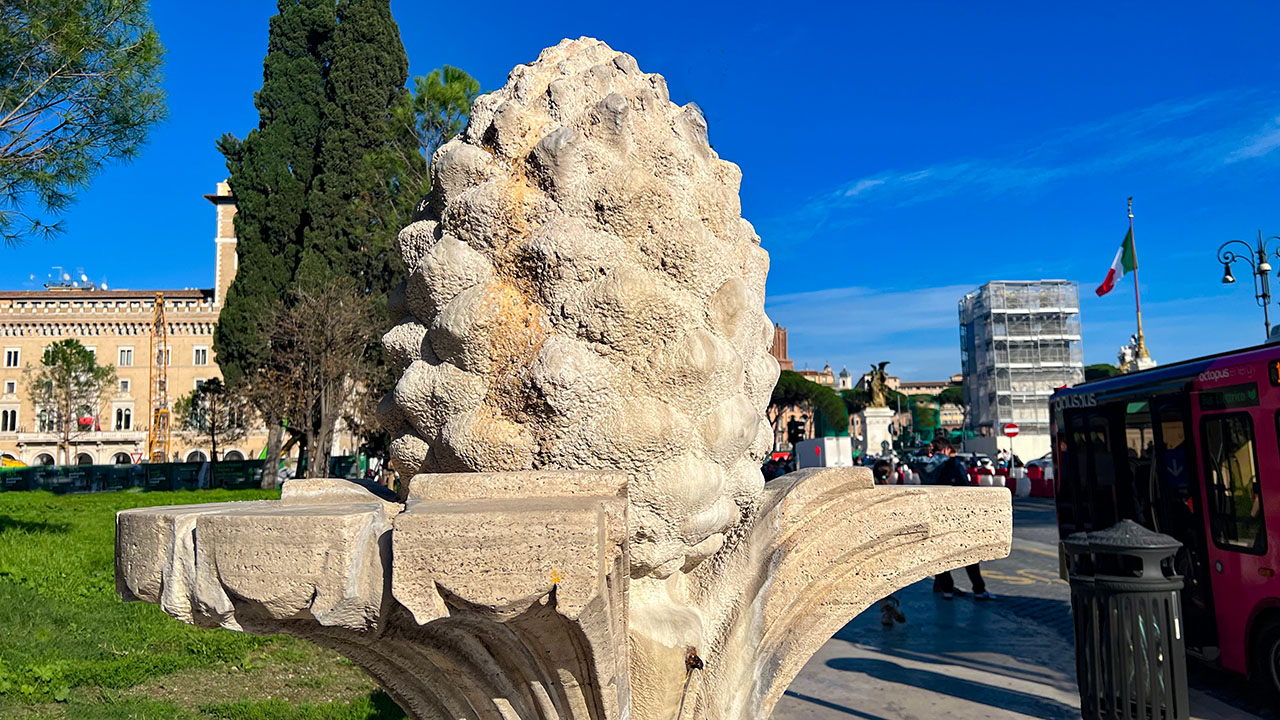
Architectural Elegance of the Fountain of the Pine Cone
At first glance, the design of the Fontana della Pigna may appear understated, but its intricate details tell a story that is both rich and profound. The fountain features a small basin supported by a slender stem, adorned with two tulip-shaped corollas that lend a delicate touch to the structure. At the top of the fountain sits the iconic pine cone, a visual representation of the district’s identity.
Water flows gracefully from the apex of the pine cone, cascading down through multiple levels and pooling into two small basins at ground level. This gentle flow of water creates a serene atmosphere, inviting passersby to stop and enjoy the refreshing sound of bubbling water. The fountain is surrounded by four charming wayside posts, enhancing its appeal as a tranquil spot amidst the bustling city.
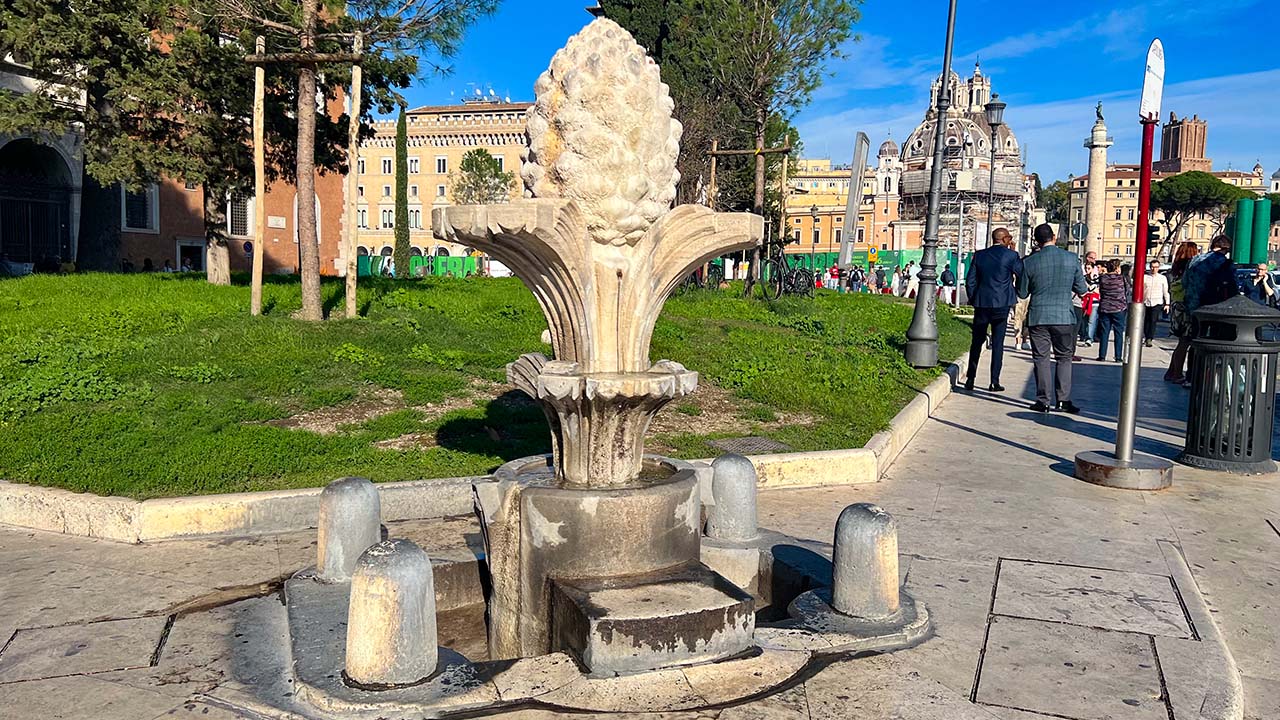
A Historical Water Source
One of the most remarkable features of the Fontana della Pigna is its historical connection to the ancient Acqua Marcia aqueduct, one of the most important aqueducts that supplied Rome with fresh water since 144 BC. This aqueduct not only played a crucial role in the development of the city but also contributes to the sustainability of the fountain today. Visitors can still enjoy the crisp, drinkable water it provides, making it a valuable resource for both locals and tourists alike.
As you make your way through the crowded streets and sidewalks near Piazza Venezia is easy to become overwhelmed by the crowds and the buzz of urban life. However, this hidden gem allows you to appreciate a lesser-known piece of Rome’s artistic legacy.
The Fontana della Pigna may not be as famous as Rome’s grandiose fountains, yet its charm and historical significance make it a must-see for those seeking a deeper understanding of the city’s cultural heritage. The fountain serves as a beautiful reminder of the layers of history that define Rome, from its ancient aqueducts to its modern urban landscape.
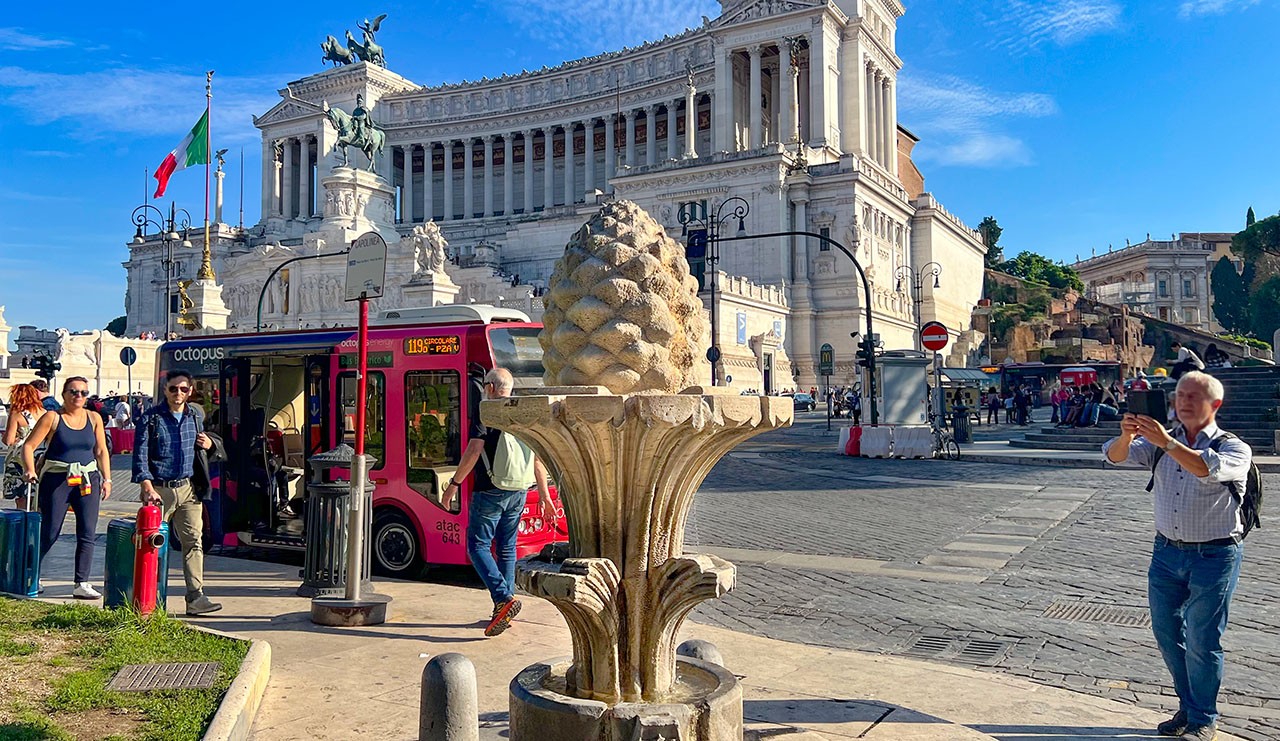
Must-See Places in Rome near Piazza Venezia & Fountain of the Pine Cone
Whether you’ve come specifically to admire the grandeur of Piazza Venezia and the charming Fontana della Pigna, or you find yourself wandering through the historic area of Ancient Rome, this part of the city is teeming with must-see attractions. Be sure to explore these other must-see sites in Rome that further illuminate Rome’s captivating past and artistic splendor.
Here are some of the must-see places in Rome near Piazza Venezia and Fontana della Pigna.
Basilica di Santa Maria in Aracoeli: This ancient church, built on the site of a former temple, is known for its stunning frescoes by renowned artists like Pinturicchio and the beautiful wooden statue of the Child Jesus. Climb the iconic staircase of 124 steps for breathtaking views of the Roman Forum and the city. Inside, you’ll find a serene atmosphere enriched by centuries of history, making it a peaceful escape from the bustling streets outside.
Roman Forum: Once the heart of public life in ancient Rome, the Roman Forum is a sprawling complex of ruins that includes temples, basilicas, and government buildings such as the Temple of Saturn, the Arch of Titus, and the Curia, where the Senate met. The Forum tells the story of Rome’s evolution from a monarchy to a republic and eventually an empire, inviting visitors to immerse themselves in its rich history.
Via dei Fori Imperiali: This grand avenue connects Piazza Venezia to the Colosseum and is lined with the ancient imperial forums. As you stroll down this impressive road, you’ll be immersed in a landscape of magnificent ruins that showcase the grandeur of Roman architecture and the ambitions of the emperors who ruled over this great civilization.
Forum of Julius Caesar: The Forum of Julius Caesar, the first of the imperial forums, lies nearby and was completed in 46 BC. Built to serve as a monument to Julius Caesar’s achievements, this forum includes the Temple of Venus Genetrix, dedicated to Caesar’s patron goddess.
It symbolizes the transition from the Roman Republic to the Imperial era, marking a pivotal point in Roman history. The area around the forum is rich in history, as it was the site of political gatherings and public events during its time.
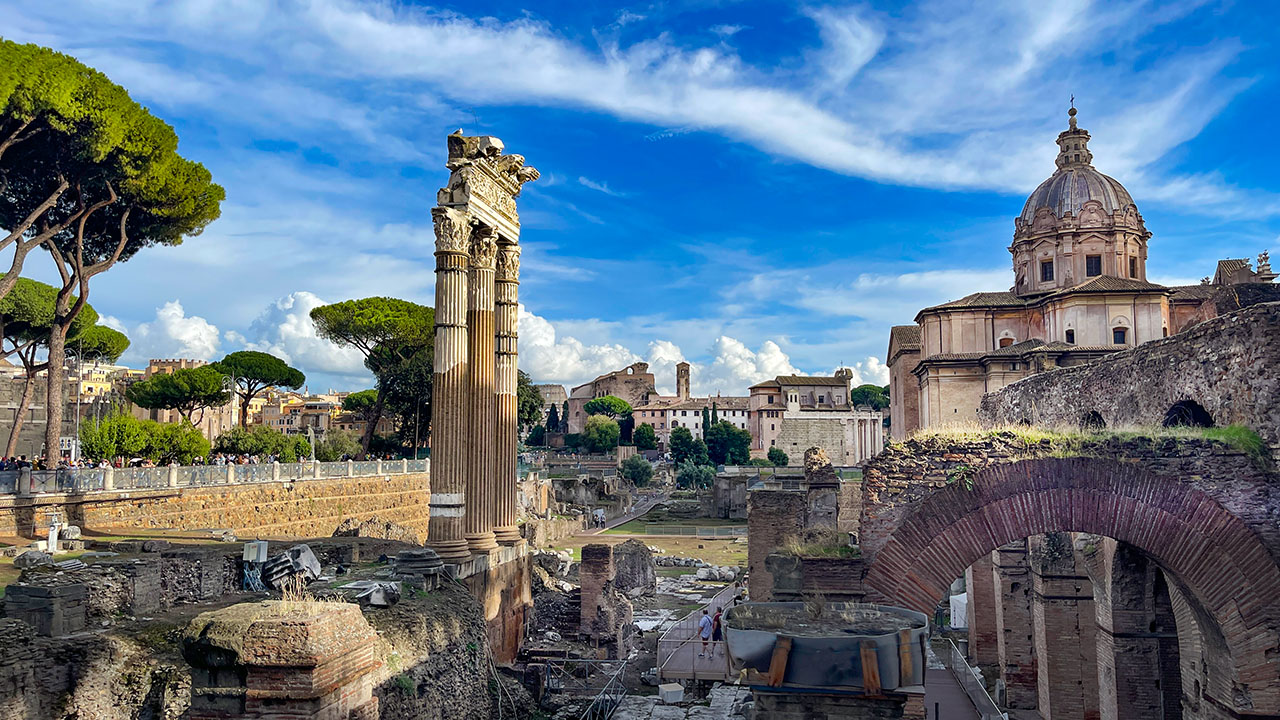
Trajan’s Forum: One of the highlights along Via dei Fori Imperiali is the Forum of Trajan, built in 112 AD and regarded as one of the most impressive of the imperial forums.
Commissioned by Emperor Trajan to commemorate his victories in the Dacian Wars, this forum includes the famous Trajan’s Column, which depicts intricate reliefs of the military campaigns. The forum complex also features a grand basilica and the Markets of Trajan, considered the world’s oldest shopping mall, where ancient Romans once gathered to trade goods and socialize.
Forum of Augustus: Just a short distance away lies the Forum of Augustus, constructed between 27 and 2 BC. This forum was designed to honor the first Roman emperor, Augustus, and is notable for its stunning architecture and the grand Temple of Mars Ultor, which served as a sanctuary for the god of war.
The forum was also a venue for public speeches and legal proceedings, reflecting the political importance of Augustus’ reign. Visitors can still see remnants of the temple’s majestic columns and the well-preserved layout of the forum, evoking the splendor of ancient Roman civic life.
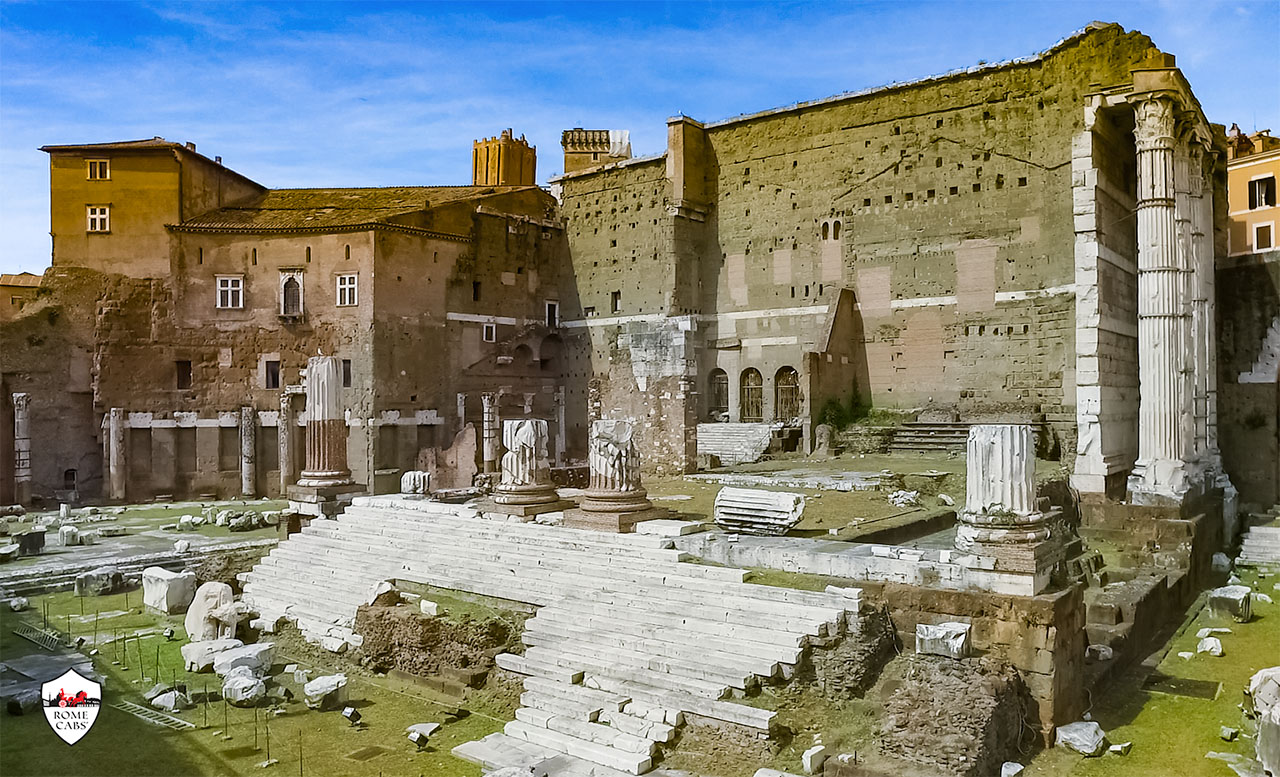
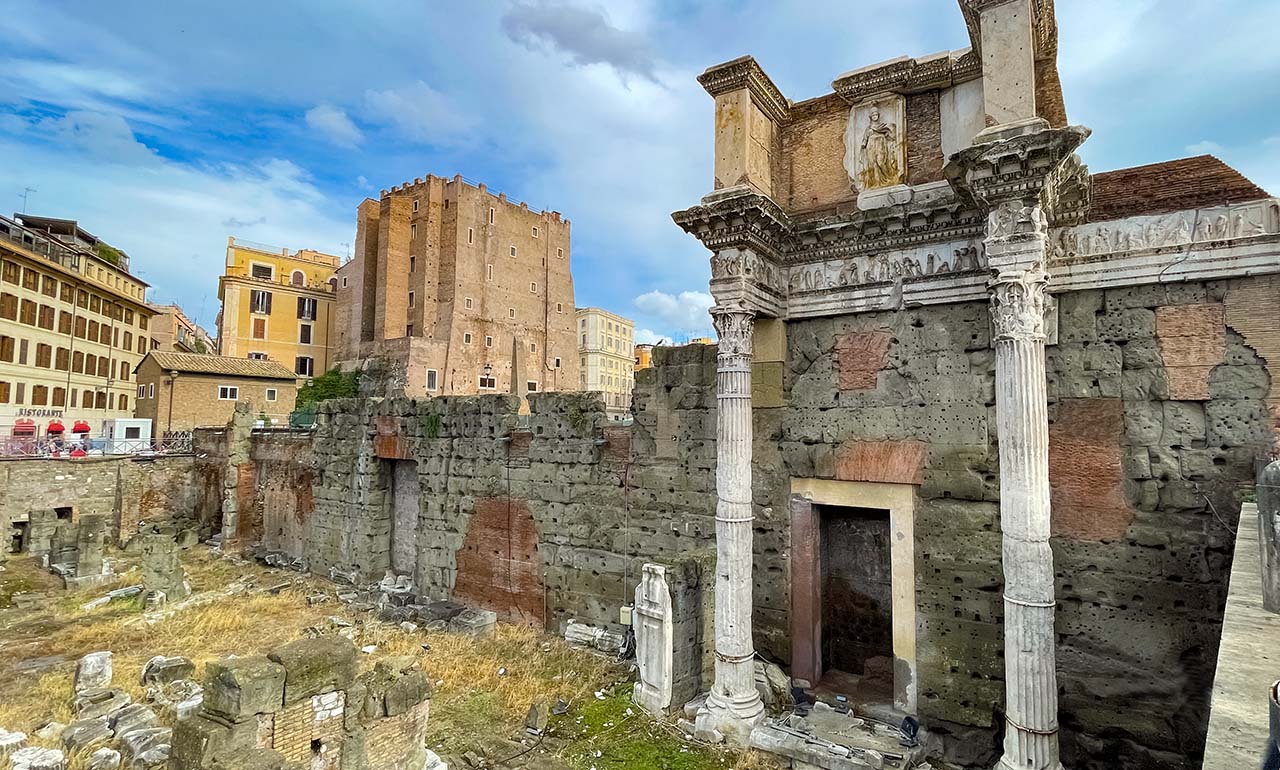
Forum of Nerva: Adjacent to the Forum of Augustus and often overshadowed by its more famous neighbors, the Forum of Nerva—also known as the Forum Transitorium—is a significant yet often overlooked part of Rome’s ancient landscape.
Commissioned by Emperor Domitian in 96 AD and completed by Emperor Nerva in 97 AD, this forum served as a crucial connector between the Forum of Augustus and the Forum of Trajan, symbolizing the continuity of imperial power in Rome.
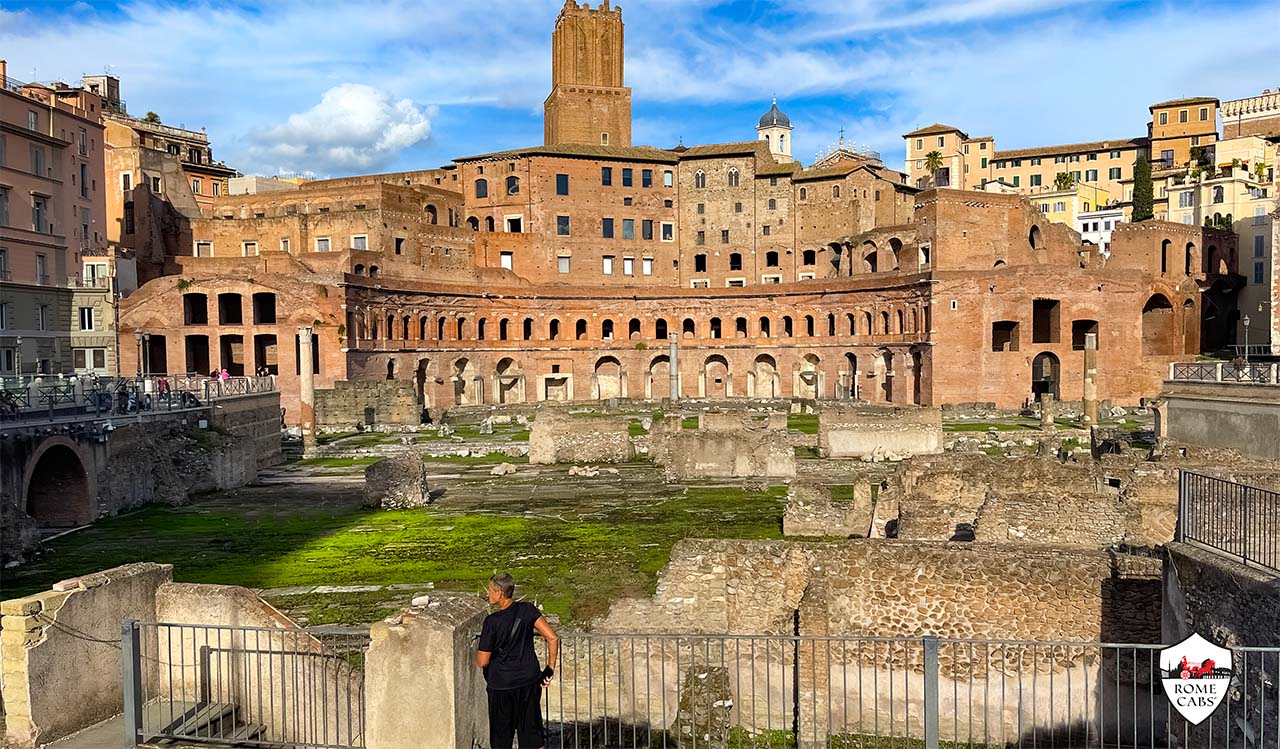
Trajan’s Column and Market: Trajan’s Column, a monumental column commemorating Emperor Trajan’s victory in the Dacian Wars, features a spiraling relief that narrates the story of the conquest.
Adjacent to the column is the Trajan’s Market, often considered the world’s oldest shopping mall. This complex housed shops and offices in ancient Rome, and today, it serves as a museum showcasing Roman life and artifacts, offering a fascinating glimpse into daily life during the empire.
Palatine Hill: Known as the birthplace of Rome, Palatine Hill is one of the city’s seven hills and offers an enchanting blend of history and nature. Explore the lush gardens and the ruins of imperial palaces, including the House of Augustus and the Flavian Palace.
Capitoline Hill: This historic hill is home to some of Rome’s most important museums and landmarks, including the Capitoline Museums, which house an incredible collection of ancient sculptures and art. At the top of the hill, you’ll find the stunning Piazza del Campidoglio, designed by Michelangelo, featuring the majestic equestrian statue of Marcus Aurelius.
The hill offers panoramic views of the Roman Forum and the cityscape, making it a beautiful spot for exploration.

Theater of Marcello: Often overshadowed by the more famous Colosseum, the Theater of Marcello is an ancient theater that once hosted performances for thousands of spectators. Built in 13 BC, it is one of the best-preserved structures from ancient Rome.
Today, the theater is partially incorporated into a modern residential building, showcasing the fascinating blend of ancient and contemporary architecture. Exploring the site provides insight into Rome’s entertainment culture and architectural ingenuity.

Via del Corso: This bustling thoroughfare is Rome’s main shopping street, lined with an eclectic mix of high-end boutiques, popular retail chains, and charming artisan shops.
As you stroll along Via del Corso, you’ll also find delightful cafes and gelaterias, perfect for a break during your shopping adventure. The lively atmosphere here captures the essence of modern Roman life, making it a must-visit for anyone wanting to experience the city’s vibrant culture.

As you explore the iconic landmarks in Rome, don’t forget to carve out a moment to appreciate the simplicity and elegance of the Fontana della Pigna. This hidden gem perfectly encapsulates the enduring spirit of Rione Pigna, making it a delightful addition to your Roman adventure.
Whether you’re refilling your water bottle with some fresh water or simply admiring its design, the Fountain of the Pine Cone is sure to leave a lasting impression, adding depth to your exploration of the Eternal City.
Find Rome Cabs online also on:
- RomeCabs FACEBOOK
- RomeCabs PINTEREST
- RomeCabs TWITTER
- RomeCabs INSTAGRAM
- RomeCabs FLICKR Photo Gallery
- RomeCabs Recommended on Cruise Critic
DISCOVER MORE FOUNTAINS IN ROME with RomeCabs:
.
.
.
.


Leave a Reply