
Buongiorno and welcome to RomeCabs’ Rome Travel blog! Located in Piazza di Spagna, at the foot of the famous Spanish Steps, the Fountain of the Old Boat (Fontana della Barcaccia) is not just a refreshing sight for weary travelers but also a deeply symbolic sculpture that embodies a rich tapestry of history and art. Designed by Pietro Bernini, the father of the famed Gian Lorenzo Bernini, this fountain offers a glimpse into the dramatic and mundane aspects of Rome’s history.
In this travel blog, we will share with you the story of the Fountain of the Old Boat ( Fontana della Barcaccia).
Anchored in Time: Fontana della Barcaccia (Fountain of the Old Boat)
Historical Context: The Great Flood of 1598
A brief historical context helps us understand the story and the inspiration behind the unique fountain shaped like a leaking boat.
The inspiration for the Fountain of the Old Boat is as dramatic as it is historical. In late December of 1598, Rome was struck by one of the most severe floods in its history. After days of incessant rain, the Tiber River, swollen beyond its banks, inundated the city.
The floodwaters reached unprecedented levels, causing extensive damage to buildings, infrastructure, and the livelihoods of Rome’s inhabitants. Historical accounts describe streets turned into torrents, homes washed away, and a landscape so altered that boats became the primary means of navigating the city’s major thoroughfares.
Among the most vivid recollections of this disaster was the sight of a small boat that had been carried by the flood all the way from the Tiber into the heart of the city, coming to rest in the middle of Piazza di Spagna.
This event became emblematic of the flood’s impact and remained etched in the collective memory of Rome’s citizens. The stranded boat symbolized both the destructive force of nature and the unexpected spectacles it could create.

Pope Urban VIII’s Vision
Nearly three decades later, Pope Urban VIII ascended to the papacy, bringing with him a fervent desire to rebuild and beautify Rome as a reflection of its spiritual and worldly significance.
Among his many initiatives was the commissioning of new fountains that would not only serve aesthetic and functional purposes but also act as cultural symbols.
Pope Urban VIII, born Maffeo Barberini, was particularly moved by the story of the boat stranded in Piazza di Spagna. In 1627, he commissioned Pietro Bernini, a talented sculptor and the father of the more renowned Gian Lorenzo Bernini, to create a fountain that would both beautify the square and commemorate the great flood.

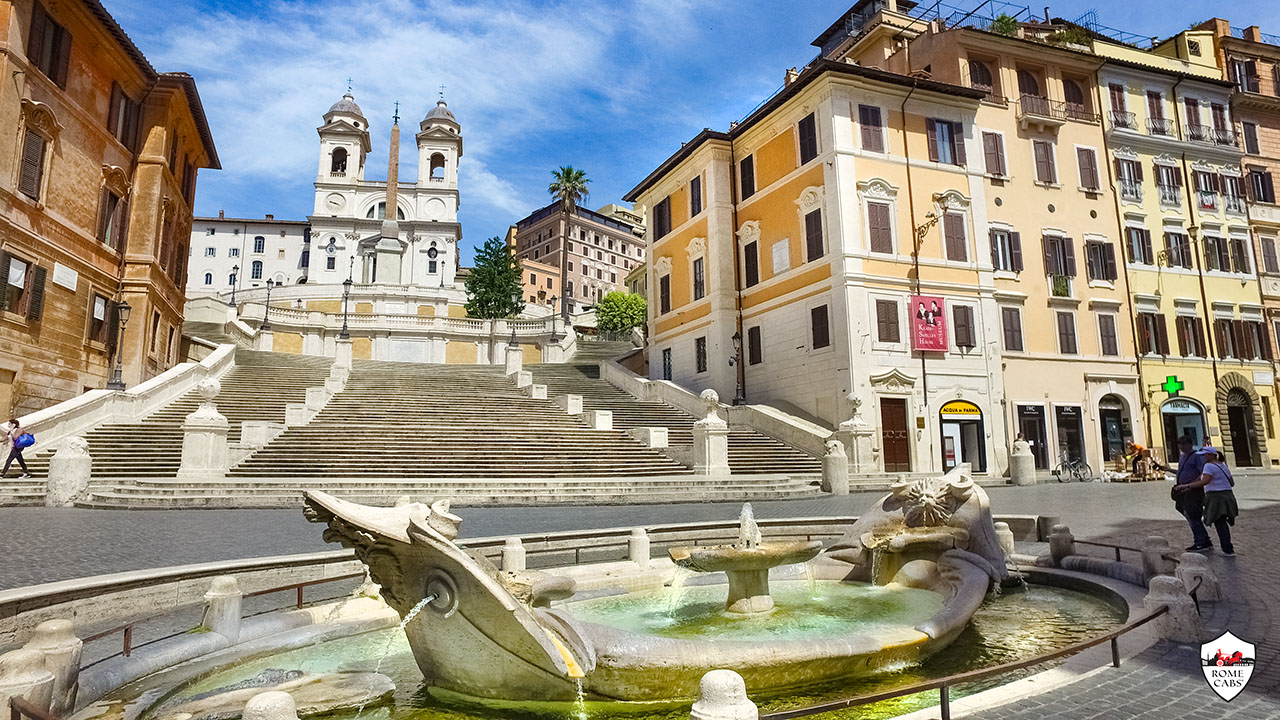
It’s important to note that the Fontana della Barcaccia was created before the iconic Spanish Steps were constructed. This historical context is crucial as it underscores the fountain’s role in the urban landscape of Rome before it became the backdrop to one of the city’s most famous landmarks.
The commission was not just about marking history but also about demonstrating the rebirth of Rome under his papacy, predating and setting the stage for the later addition of the Spanish Steps, which would not begin construction until 1723—nearly a century later.
This sequence of events highlights the strategic placement and significance of the fountain in the evolution of the Piazza di Spagna as a focal point of Roman cultural and social life.

Artistic Design and Features of the Fountain of the Old Boat
The Fountain of the Old Boat differs significantly from other Baroque fountains in Rome. Unlike the typically grand and ornate fountains that dot the Roman landscape, the Barcaccia offers a more subdued aesthetic, steeped in realism rather than grandeur.
This quality marks a significant departure from the exuberant style that characterizes the Baroque period.

The fountain’s location presented Pietro Bernini with a unique challenge. The area’s low water pressure was insufficient to support the dramatic jets or high streams of water that were popular features in many Roman fountains of the time. This limitation might have stymied a less innovative artist, but Bernini used it to his advantage.
He designed the fountain to sit below street level, incorporating the low water pressure into his artistic vision. The result is a fountain that resembles a half-sunken ship, with water gently bubbling up at the center and quietly spilling over the edges, simulating a vessel subtly filling with water.
This effect is achieved through the ingenious use of the fountain’s seven spouts: water flows not only from a central baluster but also from sun-shaped human faces within the boat and from additional points along its exterior.

The Symbolism of the Fountain of the Old Boat
Besides the fountain was shaped to mimic the aftermath of the great flood of 1598, which left a boat stranded in the center of the square, the fountain was adorned with the papal coat of arms of the Barberini family.
This coat of arms symbolizes the patronage of Pope Urban VIII, who commissioned this and other fountains as part of his efforts to beautify the city’s public spaces.
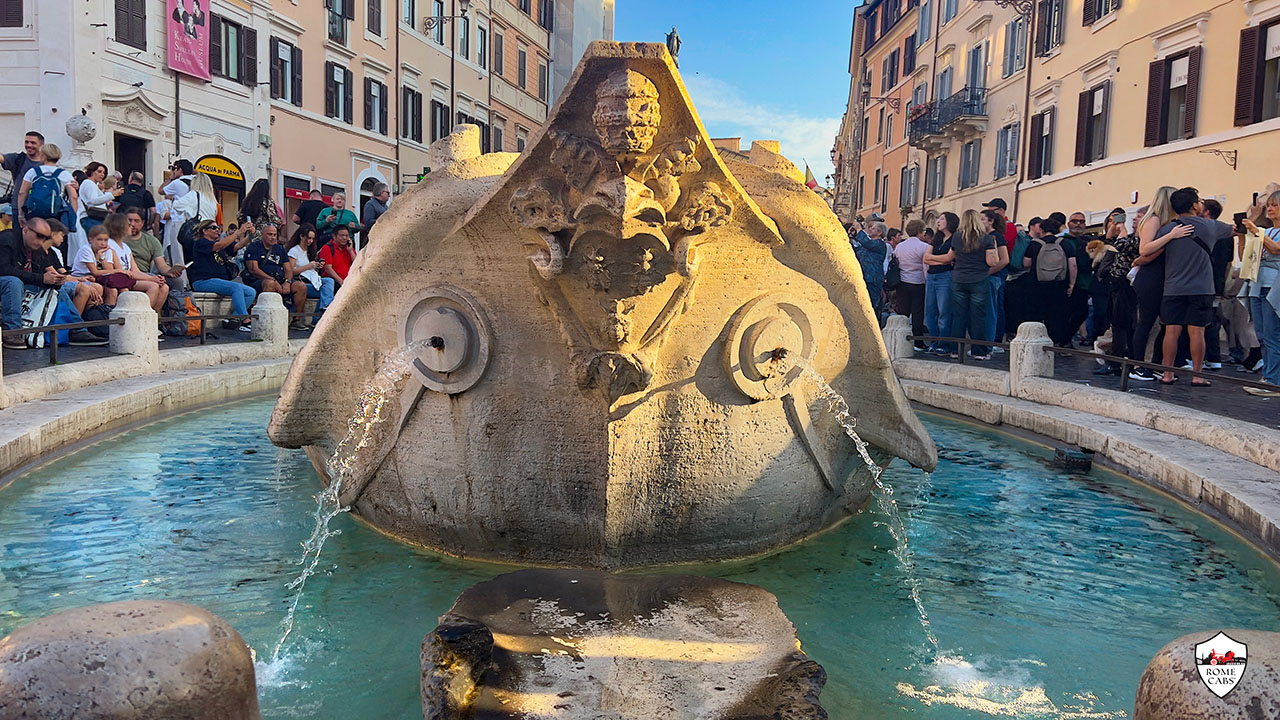
Water issues from seven different points: a central baluster, two sun-shaped human faces inside the boat, and four more streams outside the boat, all fed by the Acqua Vergine—an ancient aqueduct dating back to 19 BCE.
Each element of the fountain is thoughtfully designed, from the detailed depiction of wooden planks that seem to creak with storied age to the papal coat of arms of the Barberini family, prominently displayed to honor Pope Urban VIII’s lineage.
Overall, the Fountain of the Old Boat stands as a testament to Bernini’s ability to transform a practical challenge into a compelling artistic expression that remains an integral part of Rome’s historical and cultural heritage.

Unique Location of the Fountain of the Old Boat: Piazza di Spagna
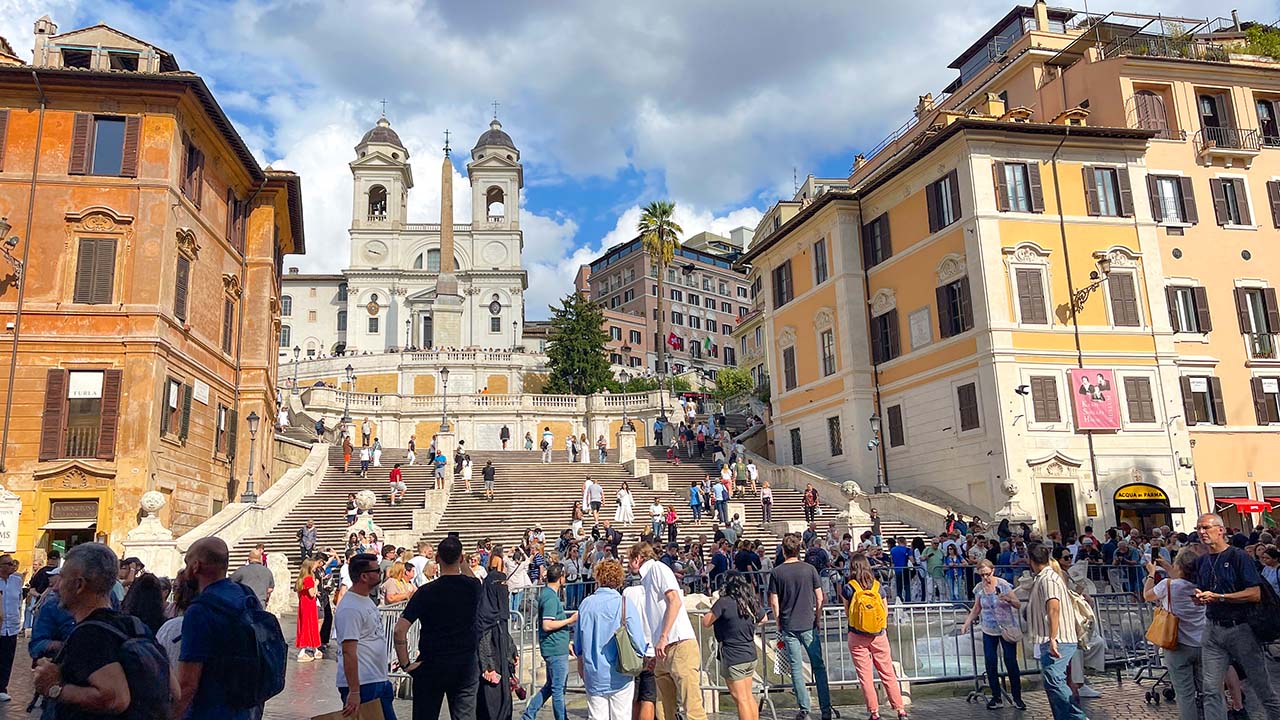
The Fountain of the Old Boat graces one of Rome’s most visited squares —Piazza di Spagna, resting at the foot of the Spanish Steps. Even though the fountain was created before the famous Spanish Steps were built, it is as though it foreshadowed its place in Rome’s legendary landscape.
This location is not only a crossroads of cultural and historical narratives but also a picturesque setting that captures the essence of Roman life, both past and present. Piazza di Spagna has long been a gathering place for artists, poets, and travelers who are drawn to its vibrant atmosphere and scenic beauty.
The square is named after the Spanish Embassy to the Holy See, which has been located there since the 17th century. Over the years, the piazza has maintained its reputation as a fashionable and international meeting point in the city, celebrated for its elegant charm and architectural beauty.

Designed by architects Francesco de Sanctis and Alessandro Specchi, the Spanish Steps steps rise to meet the Trinità dei Monti, a French church that sits commandingly at the top, offering panoramic views of the cityscape.
Together, the fountain and the Spanish Steps enrich Piazza di Spagna, making it a must-visit destination for anyone seeking to experience the historical beauty of Rome.
Conservation Challenges of Fountain of the Old Boat
The Fountain of the Old Boat has not been immune to the ravages of time and human interference. Its prominent location in Piazza di Spagna exposes it to constant interaction with the public, which, while adding to its charm, also presents numerous conservation challenges. Vandalism has been a recurring issue, significantly impacting the integrity of this historic monument.
One of the most egregious acts occurred in May 2007 when vandals used a large screwdriver to inflict deep scratches on the fountain, leading to the partial detachment of the papal coat of arms.
A more violent incident unfolded in February 2015 when football hooligans damaged the fountain. Their reckless behavior included stepping into and throwing bottles and rubbish into the basin, compounding the physical damage with a blatant disregard for the fountain’s historical and artistic value.
These incidents underscore a broader challenge facing Rome’s cultural assets: balancing public access with the preservation of historical sites.
Robust Restoration Efforts
In response to these challenges, restoration efforts have been periodically undertaken to restore and maintain the Fountain of the Old Boat. The most comprehensive of these took place in 2014, funded by a significant private donation of €209,960. This restoration aimed to repair the wear and tear accumulated over centuries, addressing both cosmetic and structural damages to ensure the fountain’s survival for future generations.
These restoration projects are complex and require the collaboration of historians, conservators, and artisans who specialize in Baroque art. They focus not only on repairing damage but also on preserving the original intent and aesthetic of Pietro Bernini’s design.
Advanced techniques in stone conservation, such as laser cleaning and micro-sanding, are employed to restore the fountain to its original splendor without compromising its integrity.
Moreover, the restoration work often includes updating or improving the fountain’s plumbing and water circulation systems to prevent deterioration caused by water damage. Such technical enhancements are essential to prevent the structural weakening of the fountain, ensuring that it continues to function as Pietro Bernini intended.
Must-See Fountains in Rome Near Fountain of the Old Boat
While the Fountain of the Old Boat is a captivating highlight at the base of the Spanish Steps, the area surrounding Piazza di Spagna and beyond offers visitors a chance to explore several other remarkable fountains, each with its own story and artistic allure.
Here are some must-see fountains near the Fountain of the Old Boat that enrich Rome’s landscape with their beauty and historical significance.
Fountain of the Artists (Fontana degli Artisti)
The Fountain of the Artists, located on the nearby Via Margutta, is a tribute to the artistic community that has historically thrived in this area of Rome. Via Margutta, once a quiet street populated by craftsmen, painters, and sculptors, has been immortalized in films and literature as the quintessence of Roman artistic life.
The fountain itself is adorned with reliefs depicting artistic tools such as easels, palettes, brushes, and sculptor’s chisels, celebrating the neighborhood’s longstanding association with the arts. Installed in the 20th century, this fountain serves as a modern homage to the creative spirits who have shaped the area’s cultural landscape.

Fountain of the Lions (Fontana dei Leoni) in Piazza del Popolo
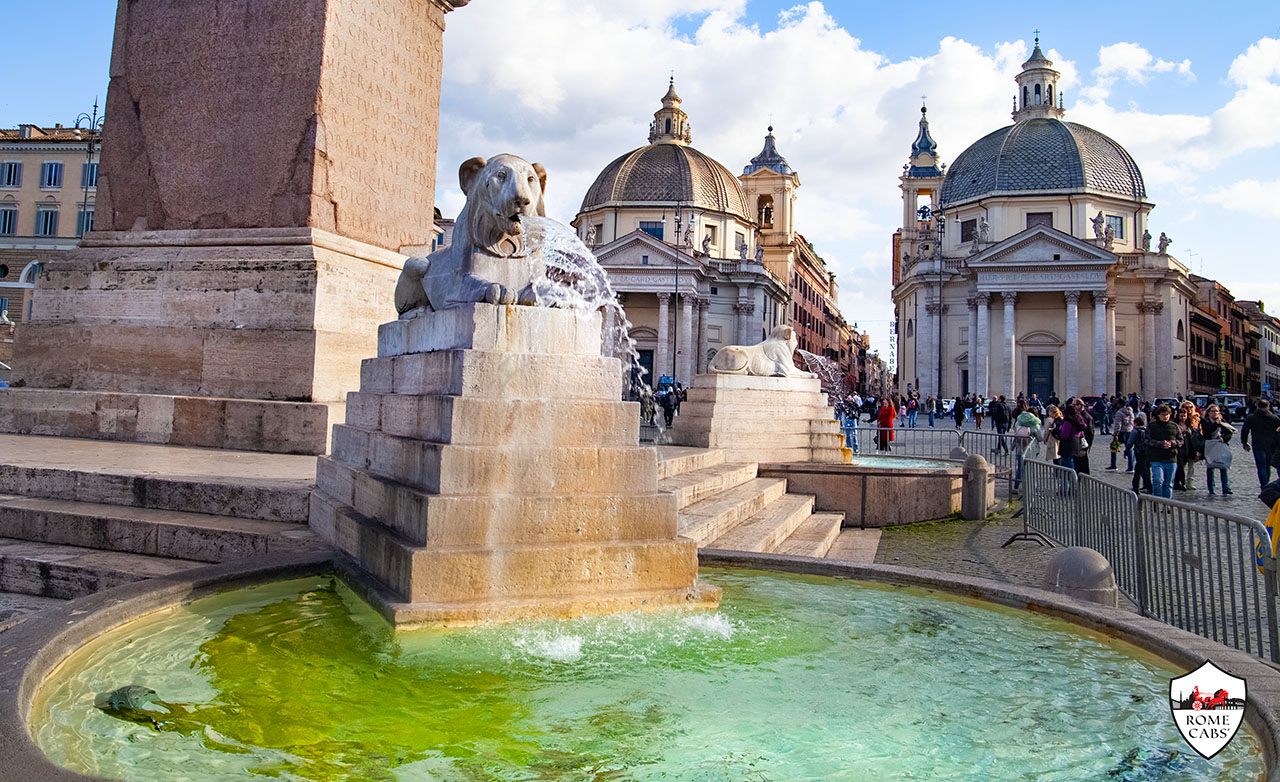
Originally designed in 1822-23 during the redesign of Piazza del Popolo by Giuseppe Valadier, the Fountain of the Lions features four lions, each sculpted from Egyptian granite. These lions not only serve as striking visual elements but also symbolize vigilance and strength, guarding the entrance to this grand urban space.
The redesign by Valadier transformed the square into a neoclassical entryway to the city, making it one of the primary gathering spots for both Romans and travelers. The lions’ water spouts contribute to a dynamic visual effect that enhances the fountain’s presence in this historically significant plaza.
Fountain of The Pantheon (Fontana del Pantheon) in Piazza della Rotonda
Situated directly in front of the Pantheon, this fountain is an integral part of the visual and social experience of the Piazza della Rotonda. The addition of the Egyptian obelisk atop a fountain designed by Giacomo Della Porta in the 16th century was an embellishment introduced by Pope Clement XI.

Fountain of the Bees (Fontana delle Api)
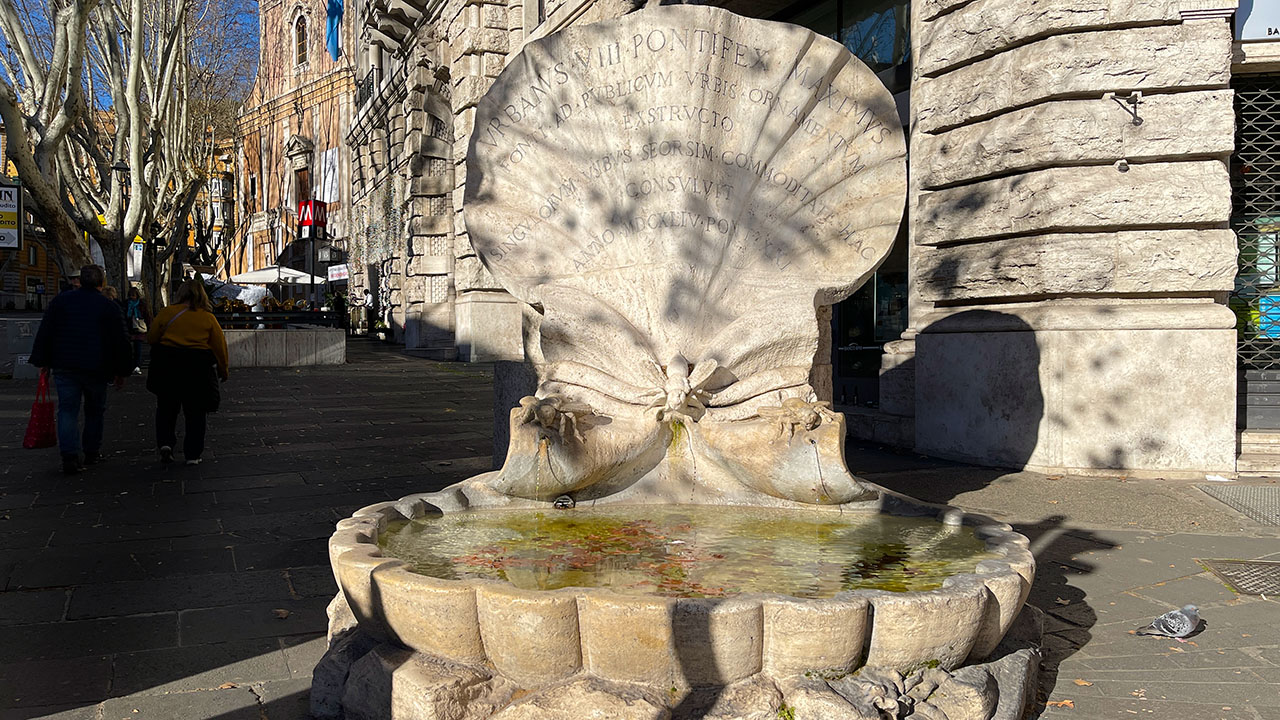
Bernini’s Fountain of the Bees is a smaller but equally significant work located at the junction of three roads, creating a natural stopping point where the water could serve both aesthetic and practical purposes. Its design as a large shell adorned with bees illustrates Bernini’s flair for integrating naturalistic forms with urban functionality.
This fountain was originally placed near Bernini’s family house under the commission of Pope Urban VIII as part of the broader refurbishment of the area but was later moved to its current location to better serve the public.
Triton Fountain (Fontana del Tritone) in Piazza Barberini
The Triton Fountain, another one of Bernini’s most famous works, showcases the dynamic and theatrical style characteristic of the Baroque period. Located in the center of Piazza Barberini, this fountain depicts the muscular Triton, a mythological Greek god, blowing a jet of water high into the air, demonstrating the power and grandeur of Rome’s renewed aqueducts.

Trevi Fountain (Fontana di Trevi)
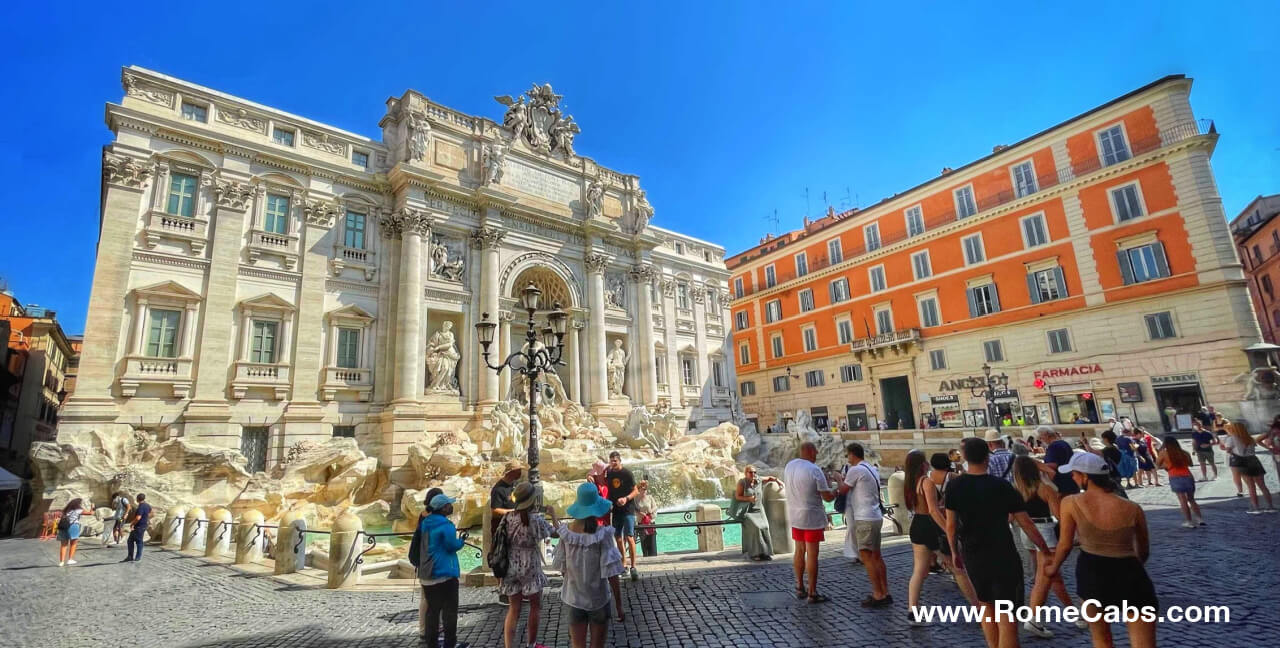
The Trevi Fountain, perhaps the most illustrious of Rome’s fountains, is a grand Baroque ensemble that draws visitors from around the world. Designed by Nicola Salvi and completed by Giuseppe Pannini in 1762, it is the largest Baroque fountain in the city and one of the most famous fountains in the world.
The central figure of Oceanus, god of all water, presides over the scene, flanked by Tritons and horses representing the moods of the sea. The tradition of throwing a coin into the Trevi Fountain to ensure a return to Rome adds a layer of personal interaction that has helped cement its place in global popular culture.
Rome, with its rich history and architectural marvels, is often rightly described as an open-air museum. Among its most famous exhibits are its fountains, each telling a unique story of Rome’s artistic ambition and engineering prowess.
The Fountain of the Old Boat, with its depiction of a sinking boat, brings to life the tales of historic floods and the city’s enduring spirit. The fountains of Rome serve as points of reflection not only on the past but also on the continuous flow of life in the Eternal City.
They remind us that Rome, in all its glory, remains a testament to human creativity and resilience, where even the simplest fountain can hold a sea of meanings, awaiting discovery by those who wander its ancient paths.
Find RomeCabs also online:
RomeCabs Facebook: https://www.facebook.com/RomeCabsToursAndTransfers
RomeCabs Pinterest: https://www.pinterest.it/romecabs
RomeCabs Twitter: https://twitter.com/RomeCabs
RomeCabs Instagram: https://www.instagram.com/romecabs/
RomeCabs Flickr Photo Gallery: https://www.flickr.com/photos/romecabs/
.
.
.
.
.

.
 RomeCabs Blog Italy - Italy Private Excursions, Rome Tours, Civitavecchia Transfers
Leave a Reply