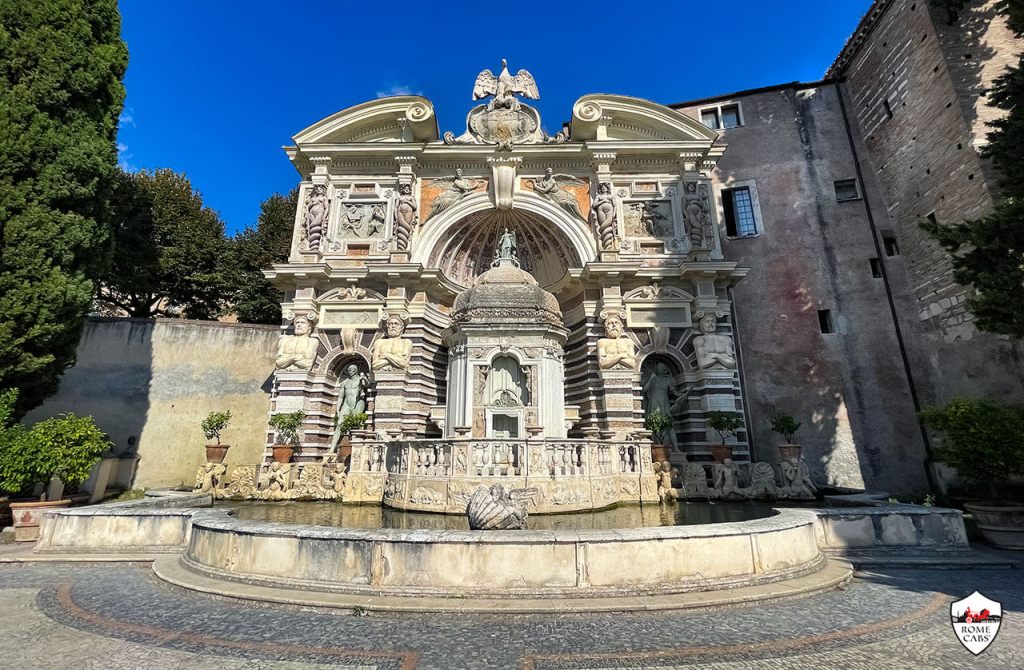
Buongiorno and welcome to RomeCabs Italy travel blog! In today’s blog we will share with you the unique Fountain of the Organ in Villa d’Este. Located in the charming town of Tivoli, just a 45-minute drive from Rome, Villa d’Este stands as a monument to the grandeur of the Renaissance.
This UNESCO World Heritage site, commissioned by Cardinal Ippolito II d’Este in the mid-16th century, showcases the architectural ingenuity and artistic beauty typical of the era. The villa is renowned for its elaborate gardens, an Italian-style sanctuary that features a symphony of fountains, nymphs, grottoes, and myriad water plays set to music, which have inspired countless other gardens across Europe.
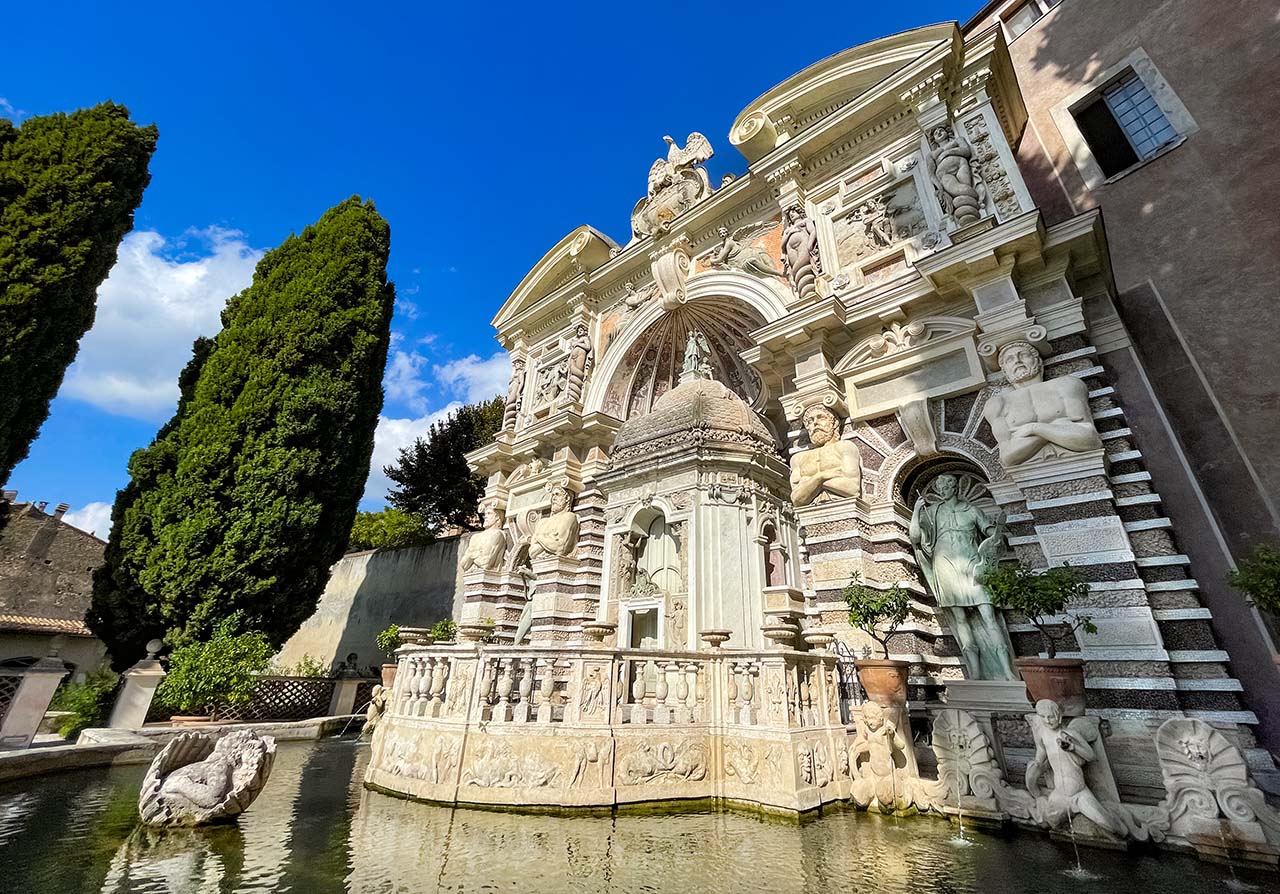
Among the villa’s myriad wonders, the Fountain of the Organ, or Fontana dell’Organo, is a unique masterpiece, seamlessly blending visual artistry with innovation. Before we explore the captivating intricacies of this exceptional fountain, let’s first delve into the rich history and broader context of Villa d’Este, to fully appreciate its cultural and artistic contributions.
Villa d’Este, Tivoli: Brief History of this Renaissance Jewel
Located in the heart of Tivoli, Villa d’Este is a monument to the grandeur of the Renaissance, a period marked by the rebirth of arts, culture, and intellect. The villa’s story began with Cardinal Ippolito II d’Este, the ambitious governor of Tivoli, who after a disappointing defeat in a papal election, embarked on creating an architectural marvel that would solidify his status among the elite.
In 1550, upon his appointment as governor, Ippolito II inherited the governance of Tivoli and the existing Benedictine convent. His vision was to transform this modest structure into an opulent residence that mirrored the glories of ancient Rome.

To realize this grand design, he commissioned Pirro Ligorio, a renowned architect and antiquarian, whose passion for classical antiquity was matched only by the Cardinal’s own. Together with court architect Alberto Galvani, they began crafting what would become one of the most admired estates of the Renaissance.
The gardens of Villa d’Este, arguably more famous than the villa itself, were designed as a new Eden, embodying the Renaissance ideals of beauty and harmony. The terraced gardens cascaded down the slope of the villa, creating a visual spectacle of water features that displayed the ingenuity of man in mastering nature.
Ingenious hydraulic systems powered an array of fountains, each telling its own story and contributing to the narrative that the Villa d’Este was not merely a home, but a haven of artistry and intellect.
The Fountain of the Organ: Wonders of Villa d’Este in Tivoli
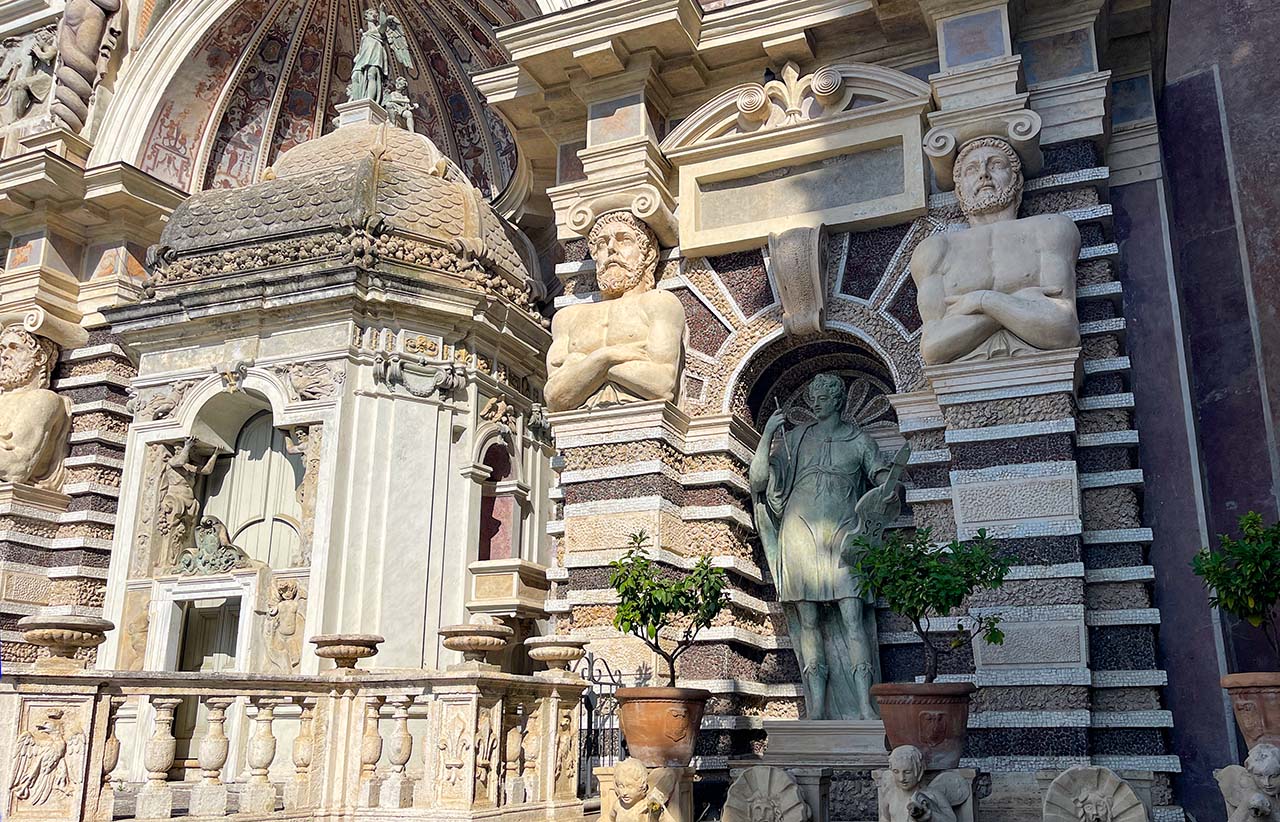
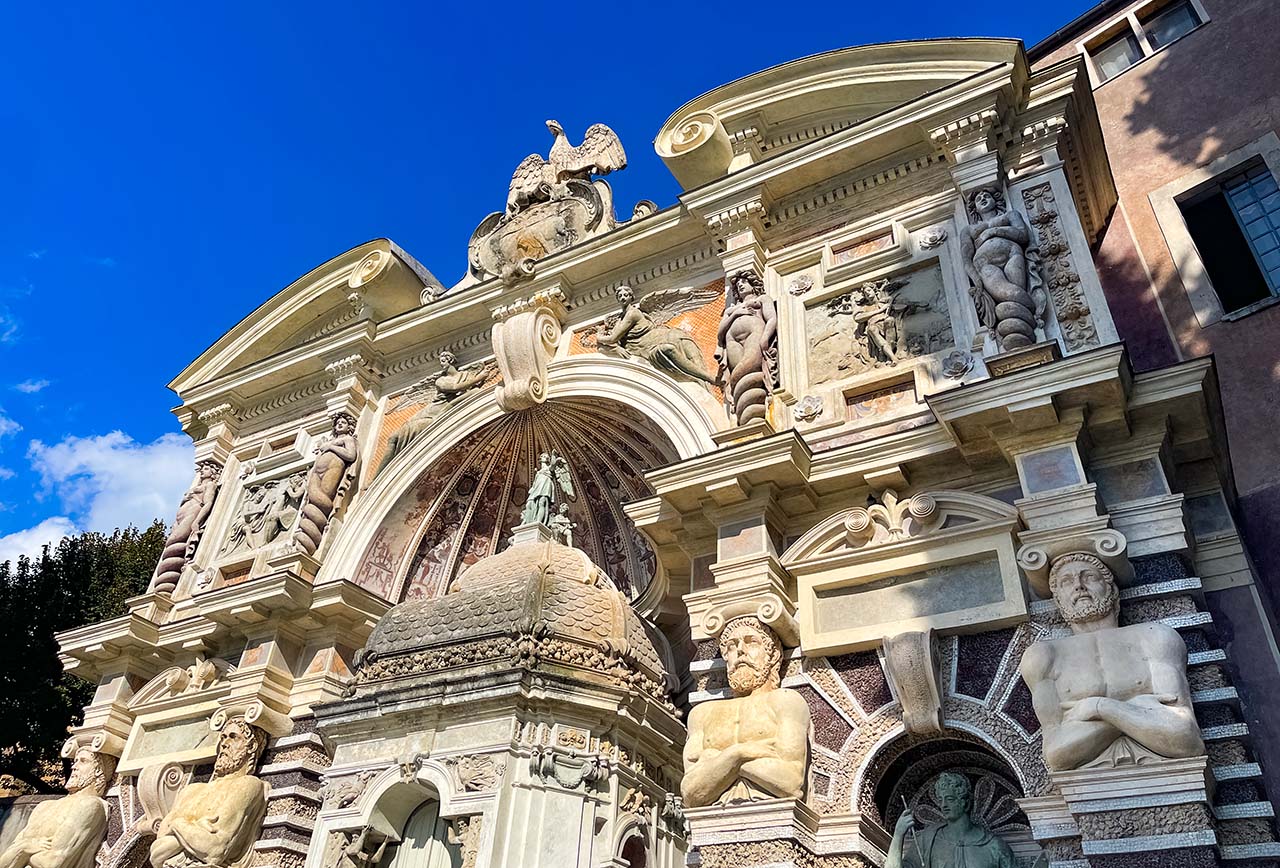
Among the resplendent attractions of Villa d’Este, the Fountain of the Organ is a significant achievement of Renaissance engineering and artistic imagination. Conceived and constructed from 1566 to 1571 under the guidance of French fountain engineer Luc Leclerc and his nephew Claude Venard, this fountain broke new ground in its design and functionality.
Unlike any typical fountain of its time, the Fountain of the Organ was engineered to be both a visual spectacle and an auditory wonder, intertwining the flow of water with the melodious sounds of an automated organ, setting a precedent for future innovations in fountain design.
The Engineering Behind the Music of the Fountain
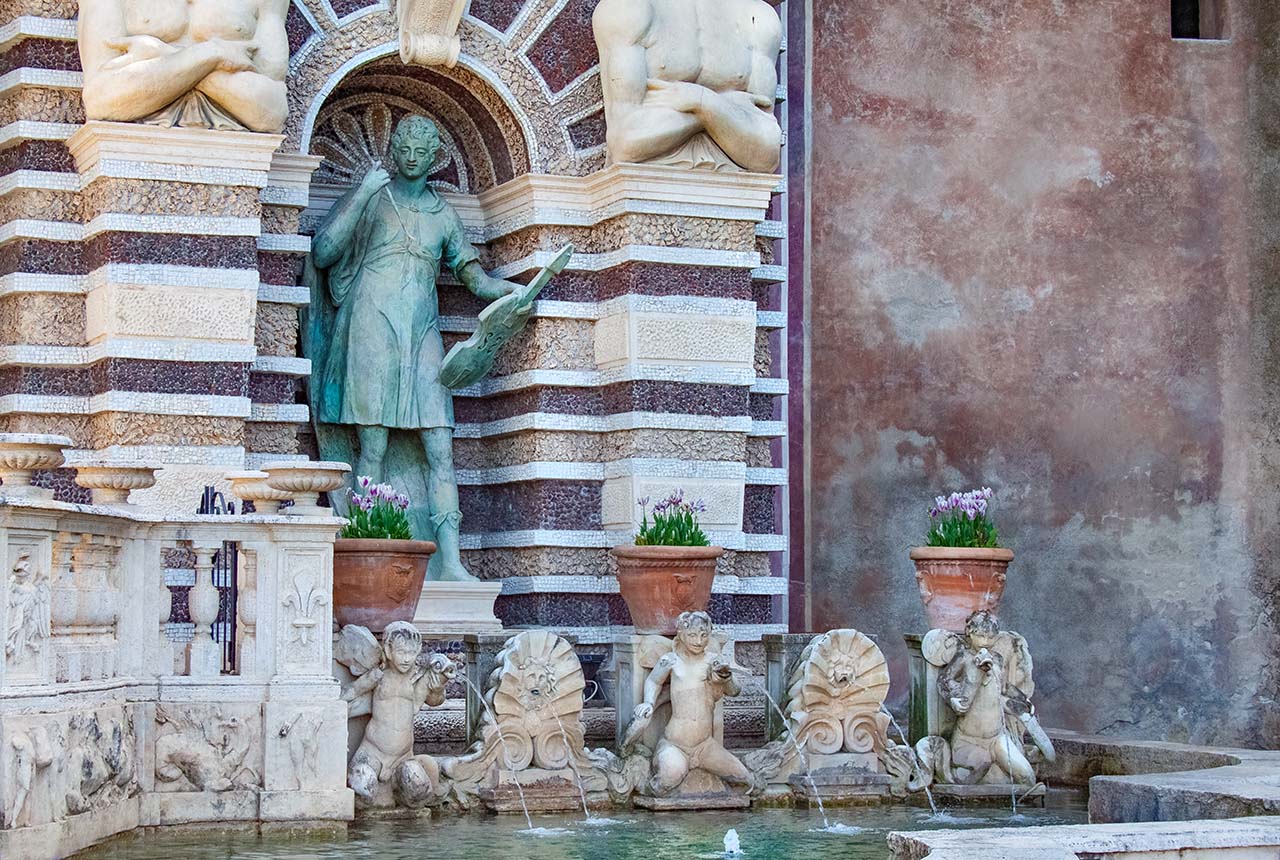
The mechanics behind the Fountain of the Organ are a marvel of sophisticated arrangement where water from the fountain’s reservoir is directed through a series of whirlpools. These whirlpools serve a critical function—they aerate the water, enriching it with air before it flows into a wind chamber.
Within this chamber, the pressurized air and water propel through twenty-two organ pipes, culminating in a harmonious play that echoes through the gardens. This orchestrated performance begins with a dramatic trumpet fanfare, represented by the Statue of Fame, and unfolds into a sequence that mimics a Renaissance madrigal, filling the surrounding gardens with a delicate, enchanting melody.
Artistic & Historical Significance of the Fountain of the Organ
The Fountain of the Organ was revered even in its inception, attracting the attention of notable figures such as Pope Gregory XIII, who visited in 1572. The pope was so taken with the fountain’s innovative sound mechanism that he personally inspected it to confirm that the music was produced by the machinery alone, without human intervention.
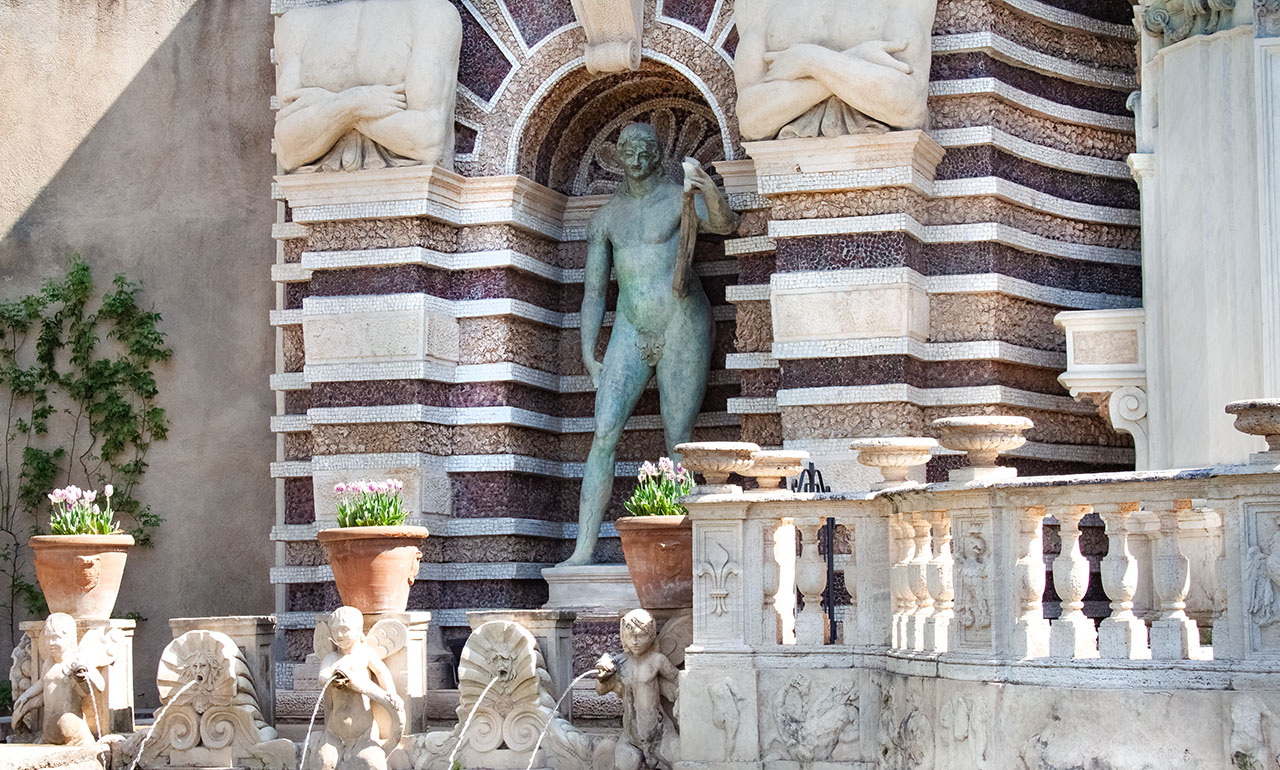
Historically, the fountain was adorned with a statue of Diana of Ephesus at the front, symbolizing fertility and the nurturing power of nature. Although this statue has since been relocated, the fountain still features statues of Orpheus and Apollo, which weave in layers of mythological significance, emphasizing themes of music and harmony that resonate throughout the estate.
Restoration and Preservation of the Fountain of the Organ
Over the centuries, the Fountain of the Organ experienced periods of silence, particularly when its intricate machinery fell into disrepair. However, a significant restoration undertaken in 2003 revived its music-making capabilities.
Today, the fountain boasts 144 pipes that allow visitors to experience the authentic sounds of late Renaissance music, exactly as it was intended centuries ago, with no need for modern technological support.
This careful preservation and restoration effort ensures that the Fountain of the Organ remains a living piece of history, offering a glimpse into the past where innovation, art, and nature coalesced into something truly magical.
The fountain plays music at certain times during the day. Be sure to check the schedule of the music at the entrance of Villa d’Este
Other Must-See Fountains in Villa d’Este, Tivoli
While the Fountain of the Organ is a pivotal feature of Villa d’Este, the gardens boast an array of other exquisite fountains, each with its own unique charm and historical significance.
Here are five other must-see fountains within the villa’s grounds, offering visitors a diverse exploration of Renaissance art and hydro-engineering:
The Hundred Fountains (Cento Fontane)
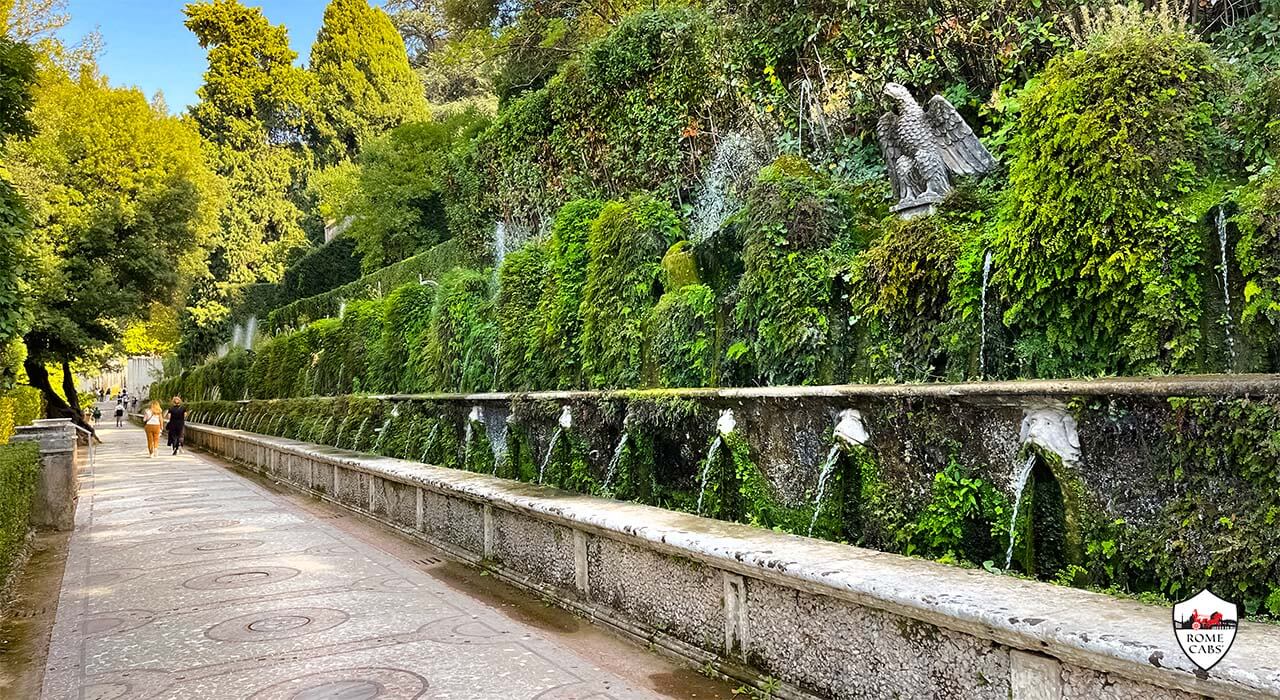
This iconic feature of Villa d’Este runs along a lush, tree-lined pathway. The Hundred Fountains is a true masterpiece of continuous innovation, featuring a long, narrow trough lined on one side by over a hundred sculpted masks.
Each mask represents different faces from humanity to mythological creatures, with water playfully streaming from their open mouths. This fountain not only adds to the serene ambiance with its gentle water sounds but also showcases the artistic breadth of the Renaissance period, creating a picturesque scene that captivates all who wander by.
The Neptune Fountain (Fontana di Nettuno)
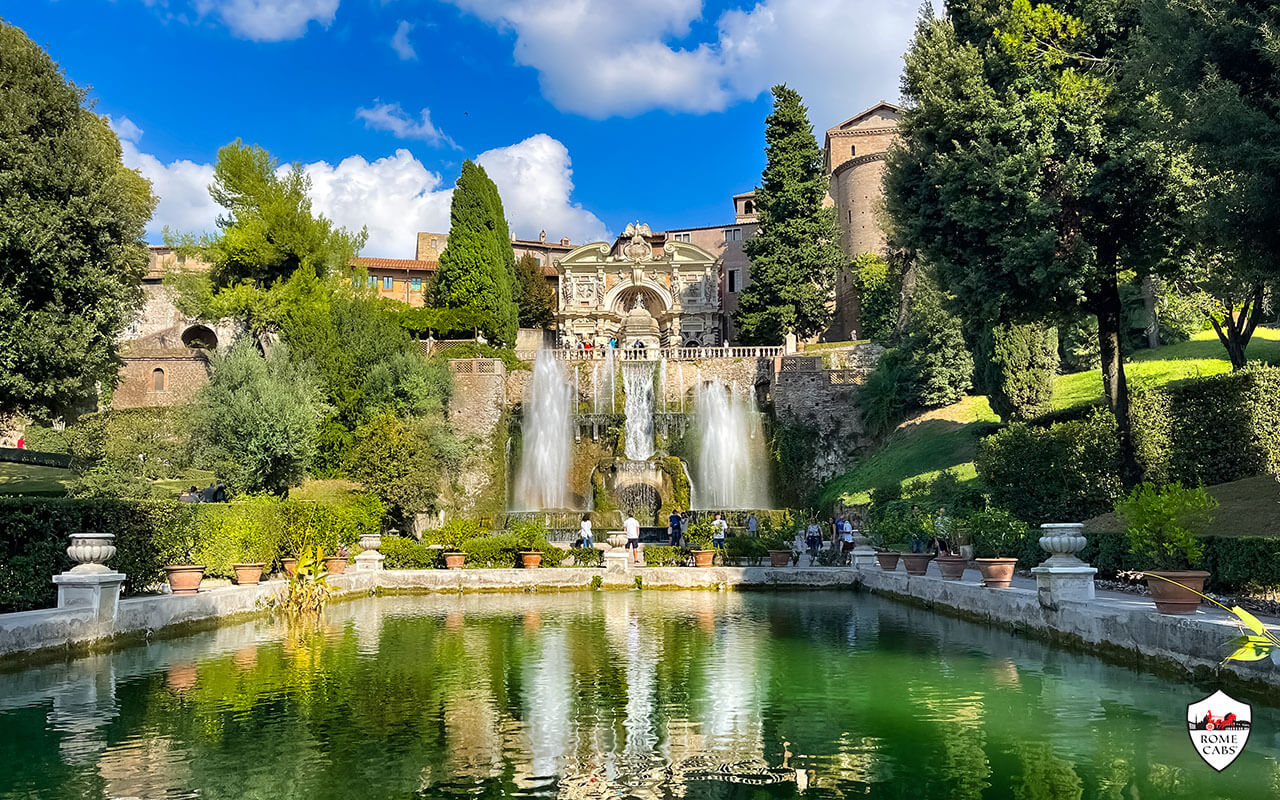
For those seeking a more dramatic visual experience, the Neptune Fountain is a spectacle of power and myth. Recently restored, this fountain boasts vigorous water jets that soar skywards, anchored by a commanding sculpture of Neptune, god of the sea.
The force and height of its jets make it a focal point of the gardens, intended to display the might of the d’Este family as much as the god it represents. It provides a stark contrast to the more melodic and subtle features of other fountains within the gardens.
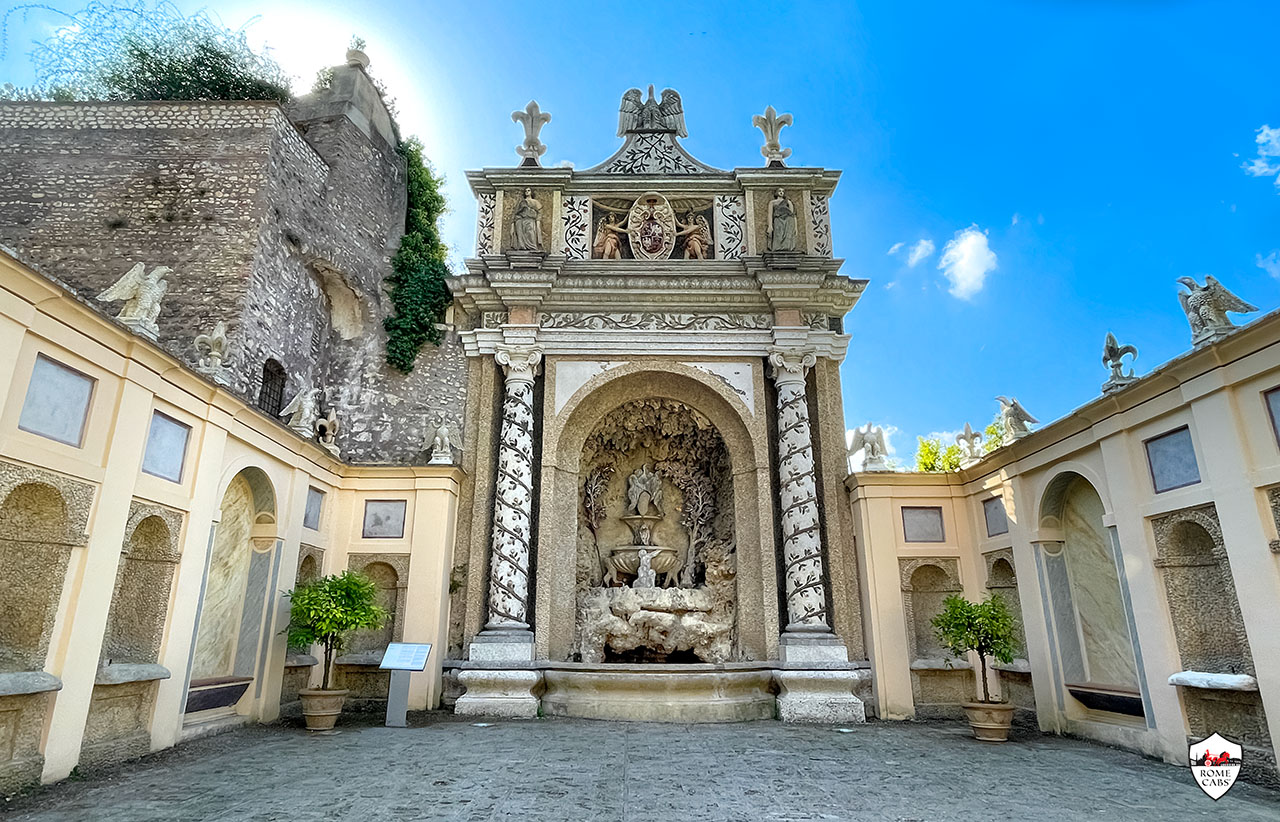
The Owl Fountain (Fontana della Civetta)
Featuring an automaton of an owl within a niche, this delightful fountain once played music and sounds to entertain guests during banquets. The mechanical owl would move and hoot, adding an element of surprise and enchantment to the festivities. This fountain is a testament to the playful and whimsical side of Renaissance culture, reflecting the era’s love for integrating technology, art, and entertainment.
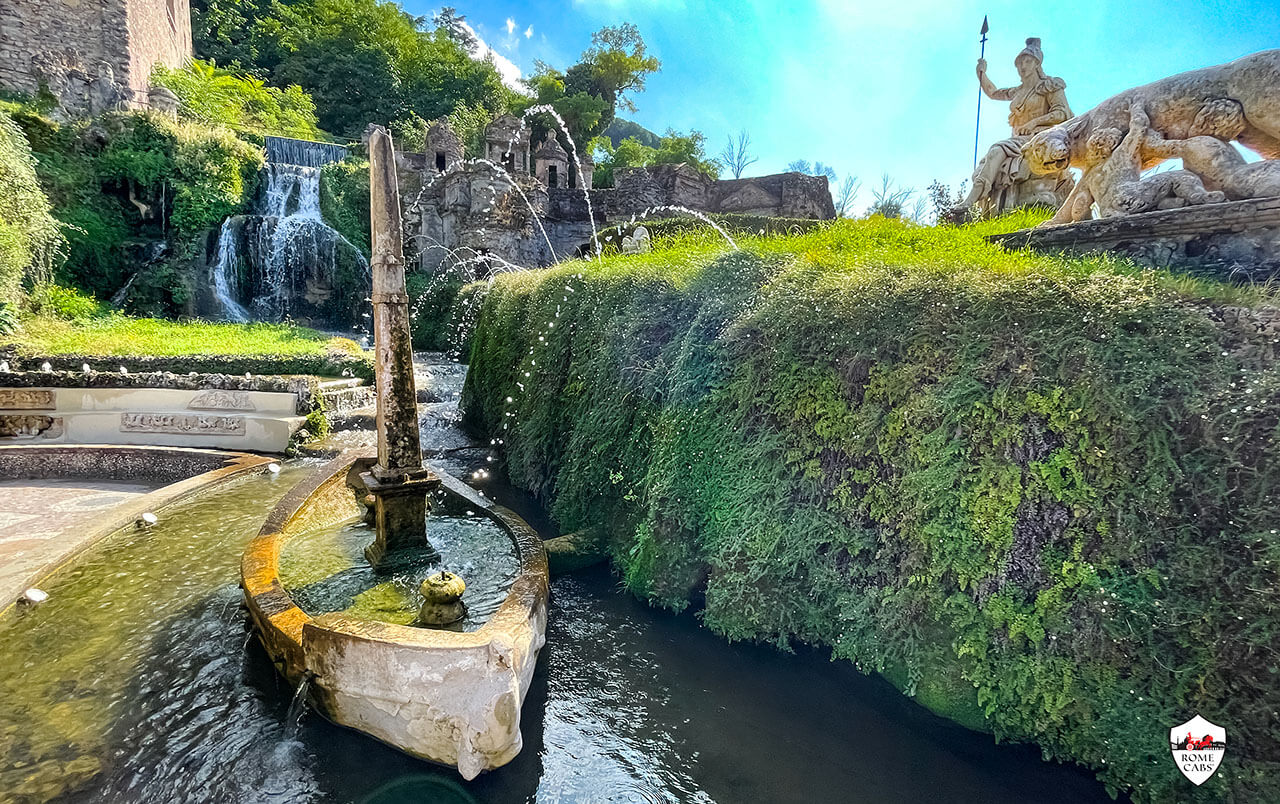
The Rometta Fountain (Fontana di Rometta)
This fountain is a miniature depiction of ancient Rome, illustrating the city’s topography and architecture. It includes representations of famous Roman landmarks such as the Roman she-wolf and the Colosseum. The Rometta Fountain serves as both a tribute to the grandeur of Rome and a symbolic reflection of Cardinal Ippolito II d’Este’s power and cultural aspiration to align himself with the greatness of the ancient empire.
The Fountain of the Dragons (Fontana dei Draghi)
Symbolizing the power and strength of the d’Este family, the Fountain of the Dragons features four winged dragons surrounded by eagles. This dynamic composition was designed to commemorate Pope Gregory XIII‘s visit to the villa in 1572. The dragons spout jets of water that converge in a dramatic central display, which is particularly striking during special events when the fountain is fully activated.

Each of these fountains not only enhances the aesthetic and sensory appeal of Villa d’Este but also embodies the rich cultural and artistic narratives of the Renaissance. They invite visitors to step back in time and experience the ingenuity and creativity of an era that celebrated the fusion of art, technology, and nature in spectacular ways.
Explore Villa d’Este with RomeCabs on
Day Trips from Rome to Tivoli
For travelers eager to explore beyond the bustling streets of Rome, Tivoli offers a tranquil retreat filled with historic sites. Opt for a stress-free journey with RomeCabs, which provides private deluxe vehicles and English-speaking drivers for private day tours from Rome. Each tour includes the convenience of direct hotel pick-up and drop-off, ensuring a smooth start and end to your day.
As you arrive in Tivoli, you’ll discover a town steeped in history, from the grand Villa d’Este with its stunning fountains to the ancient Roman imperial complex at Hadrian’s Villa (Villa Adriana).
RomeCabs’ day tours from Rome are thoughtfully paced, providing plenty of time to explore each site thoroughly and at your leisure. This careful planning ensures that your visit is both enriching and relaxing, without the rush typically associated with standard excursions.
Post-Cruise Tours from Civitavecchia to Tivoli
If your travels conclude at the port of Civitavecchia, consider a post-cruise tour from Civitavecchia to Tivoli with RomeCabs. This post-cruise experience is perfect for cruise travelers, offering pick-up directly alongside your ship.
As soon as you disembark, a professional driver will be ready to greet you, manage your luggage, and whisk you away to the picturesque landscapes of Tivoli. This service is designed to maximize your time and minimize hassle, allowing you to delve into Tivoli’s historical wonders immediately after your cruise.
To wrap up your adventure, RomeCabs ensures a seamless return to your Rome hotel. The convenience of this service is especially beneficial for those with luggage or limited mobility, providing a smooth journey from the picturesque hills of Tivoli back to the urban landscape of Rome. This thoughtful service lets you relax and reflect on your day’s experiences in comfort and style.

A day trip to Tivoli with RomeCabs not only enhances your Italian vacation but also blends historical exploration with modern convenience, creating unforgettable memories of Italy’s rich cultural heritage.
The Fountain of the Organ at Villa d’Este is not just a highlight of Tivoli but a symphony of art and engineering, echoing the innovative spirit of the Renaissance. It stands as a compelling testament to the era’s blend of creativity and technical skill, making it an essential experience for any visitor to Tivoli.
A visit to Villa d’Este offers more than just a glimpse into the past; it invites you on a profound journey through the legacy of one of Italy’s most remarkable periods.
Find RomeCabs also online:
Facebook: https://www.facebook.com/RomeCabsToursAndTransfers
RomeCabs Pinterest: https://www.pinterest.it/romecabs
RomeCabs Twitter: https://twitter.com/RomeCabs
RomeCabs Instagram: https://www.instagram.com/romecabs/
RomeCabs Flickr Photo Gallery: https://www.flickr.com/photos/romecabs/
Discover other unique fountains in Rome on RomeCabs Travel Blogs:
Find RomeCabs online also on:

 RomeCabs Blog Italy - Italy Private Excursions, Rome Tours, Civitavecchia Transfers
Leave a Reply